
Laguna de Oviedo Visitors Guide
 Daniel Mode
Daniel Mode
Daniel Mode Vanessa Howard
Vanessa Howard
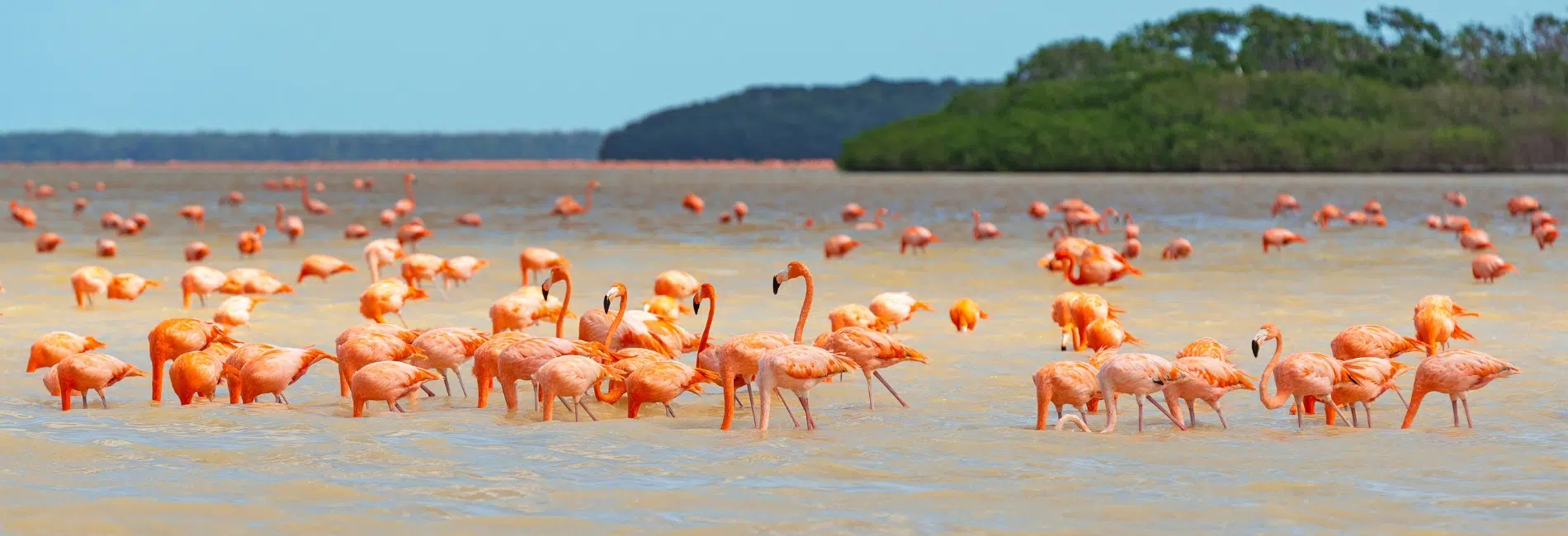
Vanessa HowardLaguna de Oviedo is the largest saltwater lagoon in the Dominican Republic, a 28 km² expanse of milky green water filled with American flamingos, rhinoceros iguanas, and an endemic fish that exists nowhere else on Earth. It sits inside Jaragua National Park (the biggest protected area in the Caribbean islands), carries UNESCO Biosphere Reserve and Ramsar Wetland designations, and offers some of the most rewarding wildlife encounters in the entire Caribbean for under $100. Yet most visitors to the DR have never heard of it.
The lagoon’s remote location in the southwestern corner of Pedernales Province keeps the crowds away, which is both its greatest asset and its biggest vulnerability. With a new cruise port at Cabo Rojo now bringing ships within an hour’s drive and a massive resort development on the horizon, the window to experience this place in its raw, uncrowded state is narrowing. This guide covers everything you need to plan your visit: tours, pricing, wildlife, logistics, and the honest realities of getting there.
This article contains affiliate links. If you click on our links, we may earn a small commission at no extra cost to you. This helps us continue to offer free travel guides, but does not influence our recommendations in any way. Thanks for supporting independent travel content.
Contents
Where Is Laguna de Oviedo?

Laguna de Oviedo sits just off Highway 44 in the remote southwest of the Dominican Republic, on the northeastern edge of Jaragua National Park (the largest protected area in the Caribbean islands). The visitor center and boat launch are located at the community of El Cajuil on the lagoon’s north shore, a couple of kilometers east of the small town of Oviedo.
The nearest mid-sized city is Barahona, about 45 miles and 1.5 to 2 hours to the northeast. Pedernales is roughly 34 miles and about an hour to the west. Santo Domingo is approximately 161 miles away, a solid 5-6 hour drive. The new Cabo Rojo cruise port sits about an hour’s drive to the west. The lagoon is flanked by Jaragua National Park to the south and west and Sierra de Bahoruco National Park rising to the north. Together with Lago Enriquillo, these form the UNESCO-designated Jaragua-Bahoruco-Enriquillo Biosphere Reserve.
How to Get to Laguna de Oviedo
Getting to Laguna de Oviedo isn’t complicated, but it does require some planning. There’s no airport nearby (yet), no tourist shuttle, and no direct bus service to the lagoon itself. Every route involves a combination of highway driving and a short turnoff to the visitor center. The tradeoff is that the logistical barrier filters out casual tourists, which is exactly why you might have the flamingos to yourself.
Driving Yourself
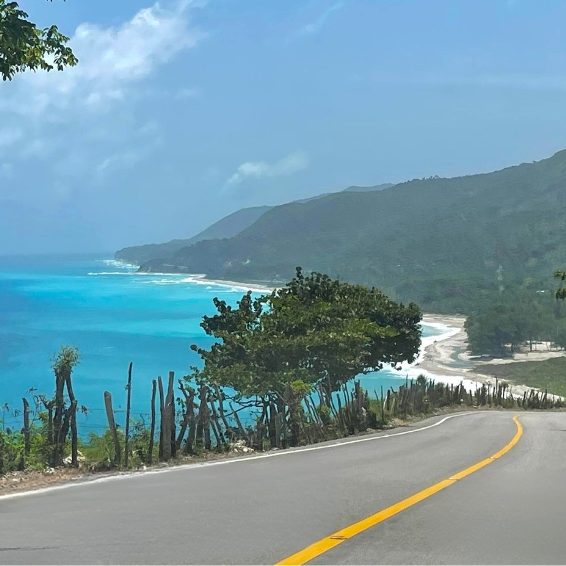
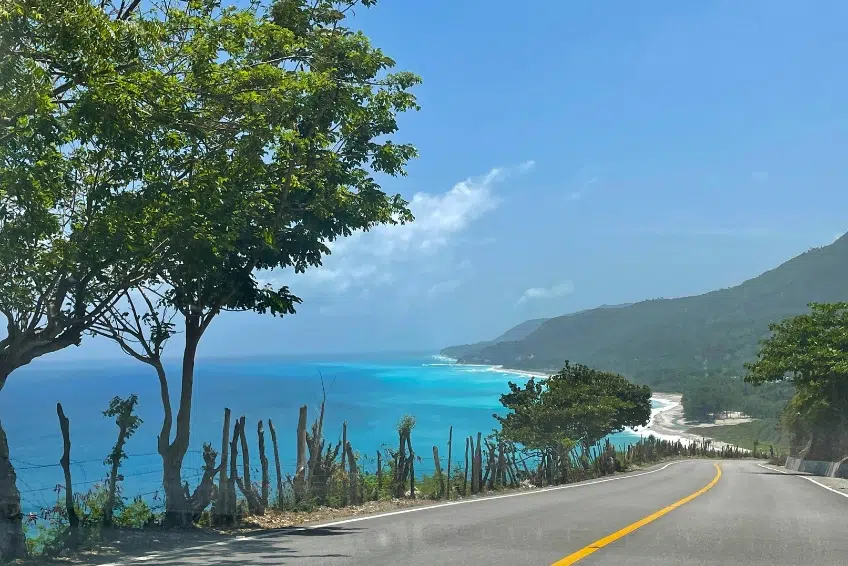
From Barahona, take Highway 44 southwest. The drive is paved, scenic, and straightforward, passing through Paraiso, Los Patos, and Enriquillo before hugging the coast toward Oviedo. Look for the national park sign on the south (left) side of Highway 44 marking the turnoff to El Cajuil. A short dirt road leads to the visitor center and boat dock.
From Santo Domingo, take Highway 2 south to Barahona (about 3 hours on good road), then Highway 44 southwest to the lagoon (1.5-2 hours). Total: 5-6 hours. The Barahona-Enriquillo coastal highway is one of the most spectacular drives in the Caribbean, but it’s also one of the most dangerous: a winding cliffside road with narrow lanes, minimal guardrails, and occasional landslides. Drive only during daylight hours and verify conditions before departing, especially during rainy season.
From Pedernales, take Highway 44 east toward Oviedo. The road is paved, but conditions vary, so drive with caution. About 50 km, roughly one hour.
Important Note: Driving yourself gets you to the visitor center at El Cajuil, where you’ll check in and book a guided boat tour. All lagoon access requires a licensed AGUINAOVI guide. You cannot explore independently. Walk-up booking is available (no advance reservation needed), so driving yourself and hiring a guide on arrival is the most flexible and cost-effective approach. See our Tour Options & Pricing section below for the full breakdown.


Bus and Public Transport
Caribe Tours operates four daily buses from Santo Domingo to Barahona (departures at approximately 6:15 AM, 9:15 AM, 1:45 PM, and 5:15 PM). The trip is around 3.5 hours and costs around $4-8 USD. Service terminates in Barahona. From there, guaguas (minibuses) headed toward Pedernales depart from near the Shell gas station, running roughly every 30 minutes to 2 hours and costing around $5 USD. Tell the driver “entrada de Laguna de Oviedo” or “El Cajuil” to be dropped at the highway turnoff. From there, it’s a short walk or motoconcho ride to the visitor center.
Fair warning: return guaguas must be flagged down from the highway, which can be unreliable, especially late in the afternoon. Have a backup plan.
Motoconchos (motorcycle taxis) in Oviedo or at the highway turnoff cost roughly RD$200-300 ($4-6 USD) for short rides. A taxi from Pedernales to the lagoon runs approximately $20-40 USD, negotiable.
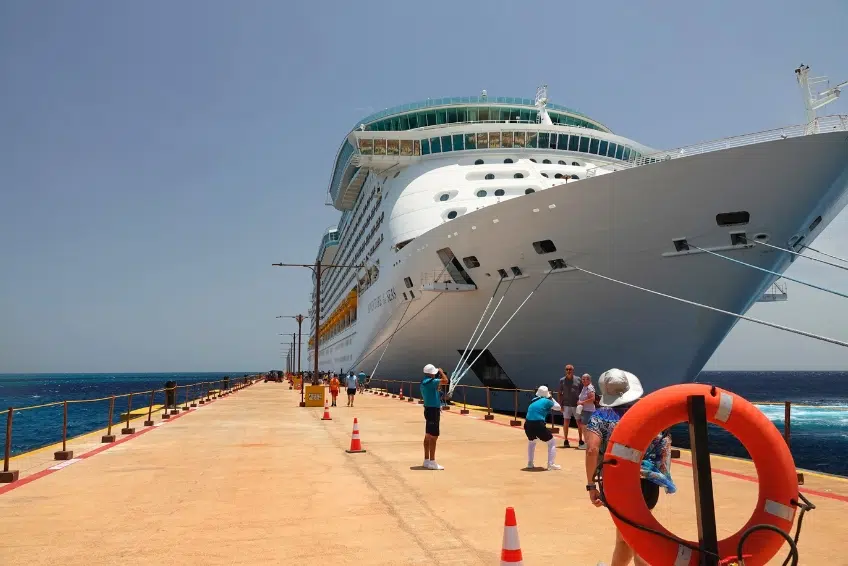
From the Cabo Rojo Cruise Port
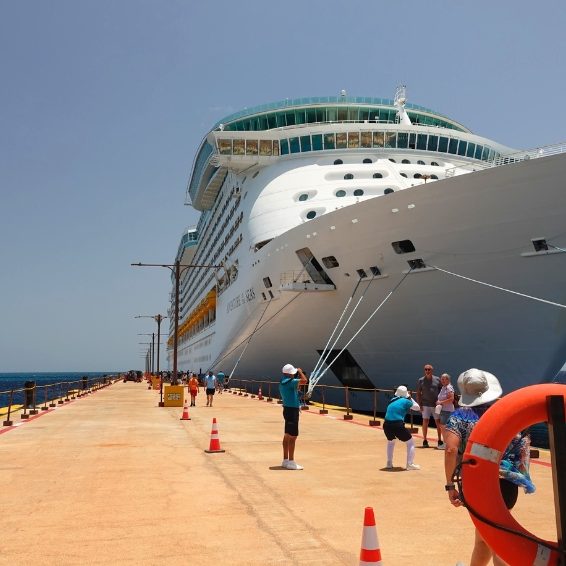
The lagoon is absolutely accessible as a day excursion from the Cabo Rojo Cruise Port. The drive is about one hour each way. Several operators run dedicated cruise excursions:
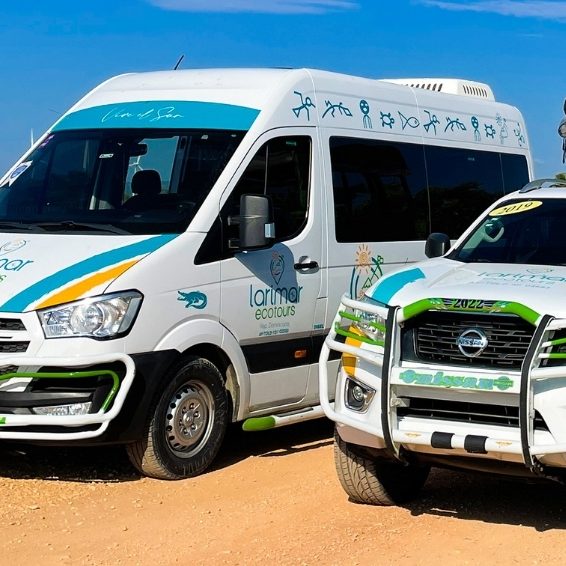
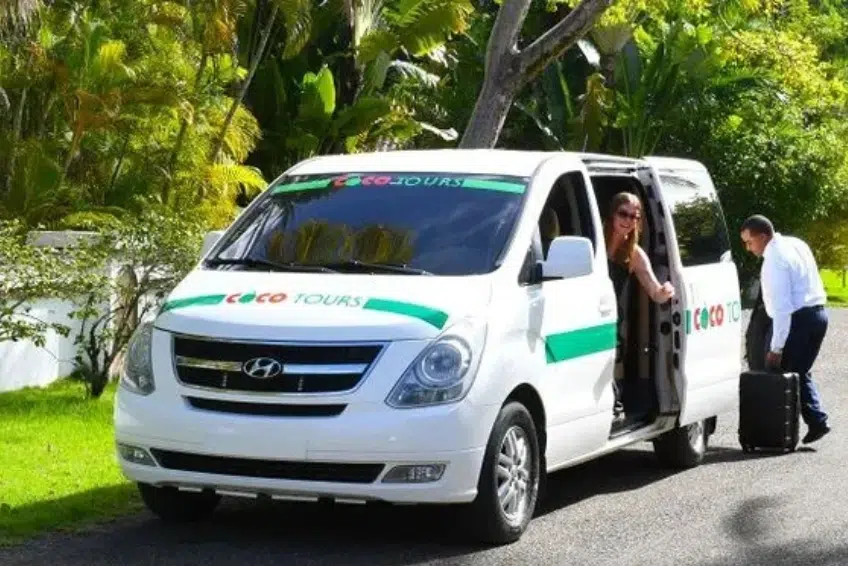
Cocotours offers a private 5.5-hour excursion with bilingual guides and AC transport, guaranteed to return you to the ship on time. Larimar EcoTours runs a dedicated cruise excursion with Safari vehicles seating up to 28 passengers. Norwegian Cruise Line offers a branded “Paseo de los Flamencos” shore excursion directly through the ship. Allow 2 hours for roundtrip driving and 2-3 hours for the tour itself. Combined Laguna de Oviedo + Bahia de las Aguilas full-day packages are also available.

Private Transfers
Cocotours (30+ years in business, bilingual drivers) and Larimar EcoTours both offer private transport from Santo Domingo, Barahona, or Pedernales to the lagoon. Expect to pay roughly $250-350+ USD for a private vehicle from Santo Domingo. Split among a group of 4-6, it becomes much more reasonable and saves hours of logistical headaches. Book at least a few days in advance, especially during peak season.


The New Airport (Coming Soon)
The Cabo Rojo International Airport is under construction with a 3.1 km runway capable of handling Boeing 777 aircraft. Originally targeted for late 2025, the opening has been pushed to late 2026. Once operational, the airport is designed to eventually handle up to 1 million passengers annually as the surrounding resort development matures, which would make it the DR’s third-busiest airport.
About The Lagoon
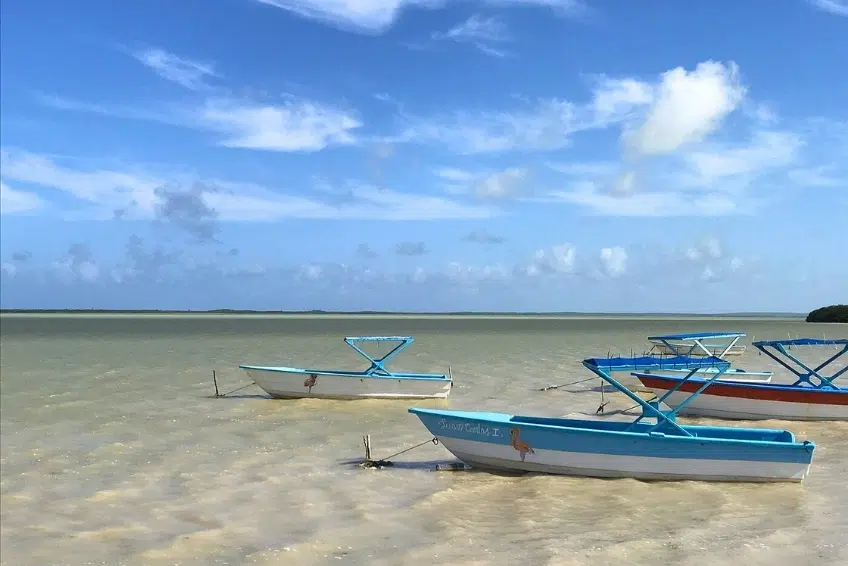
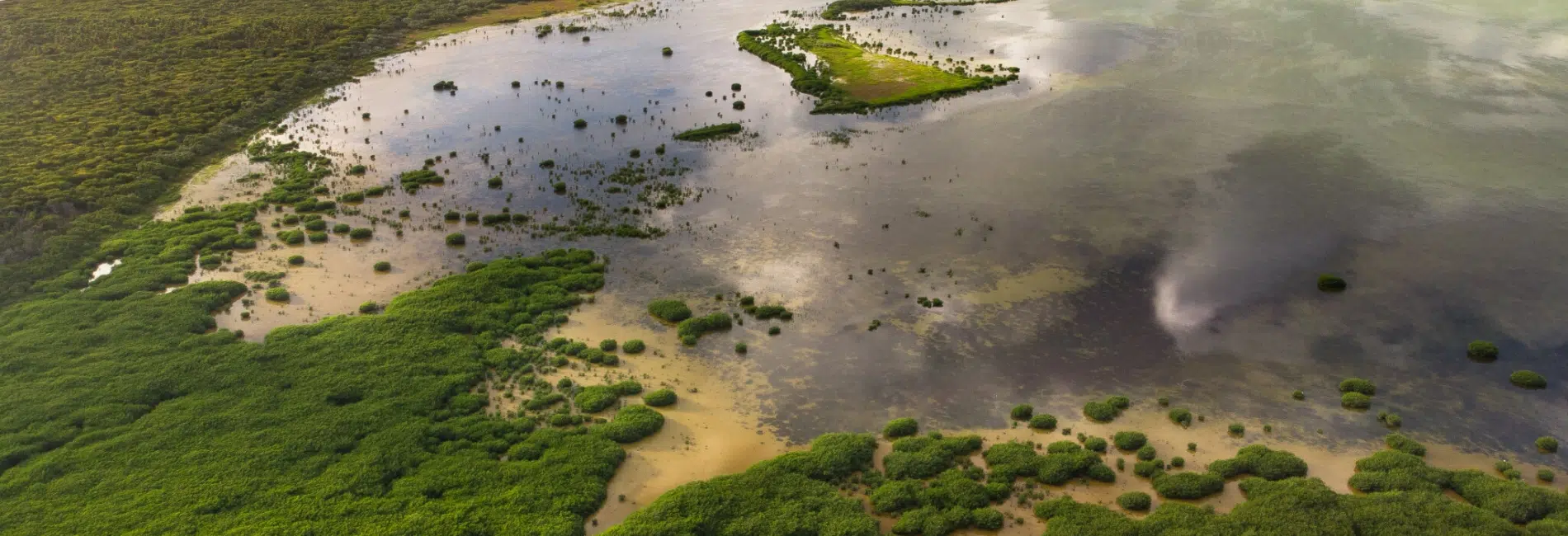
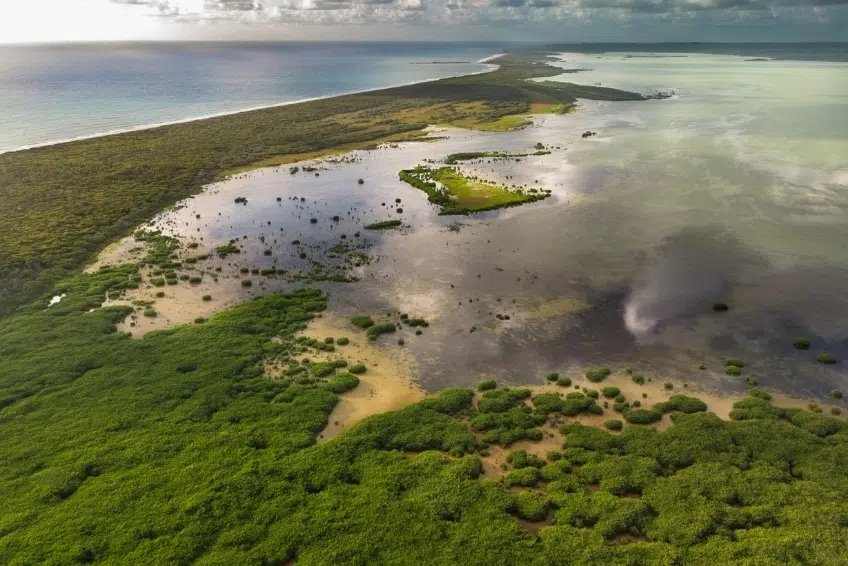
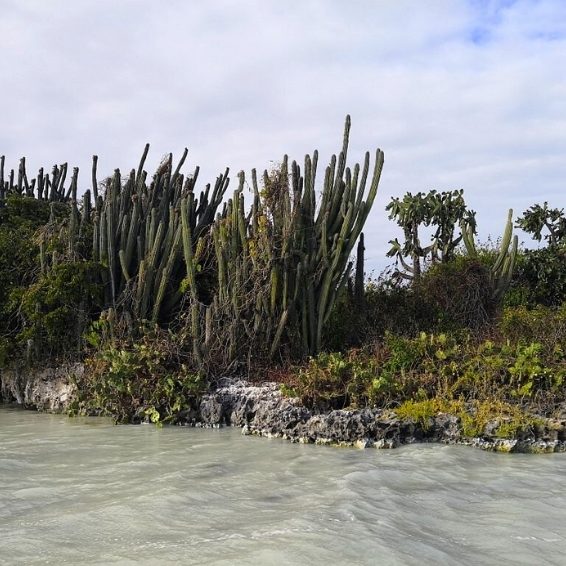
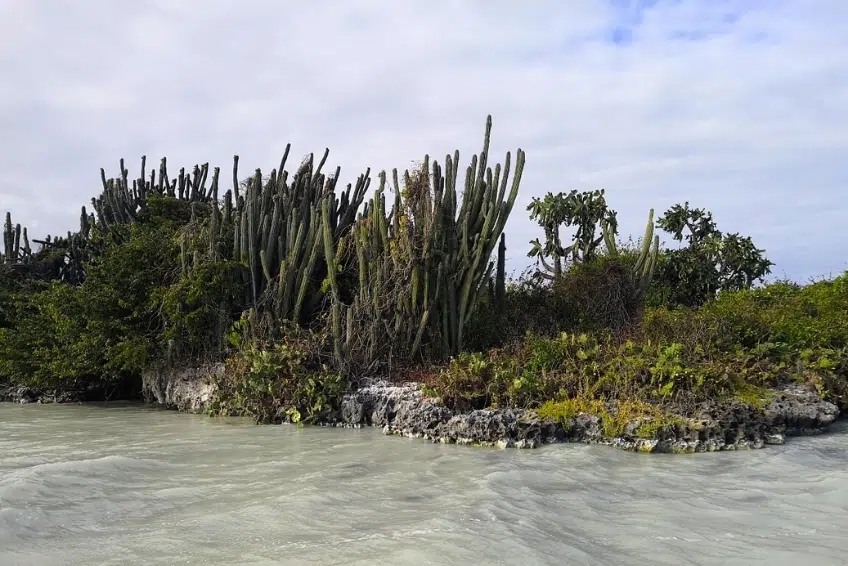
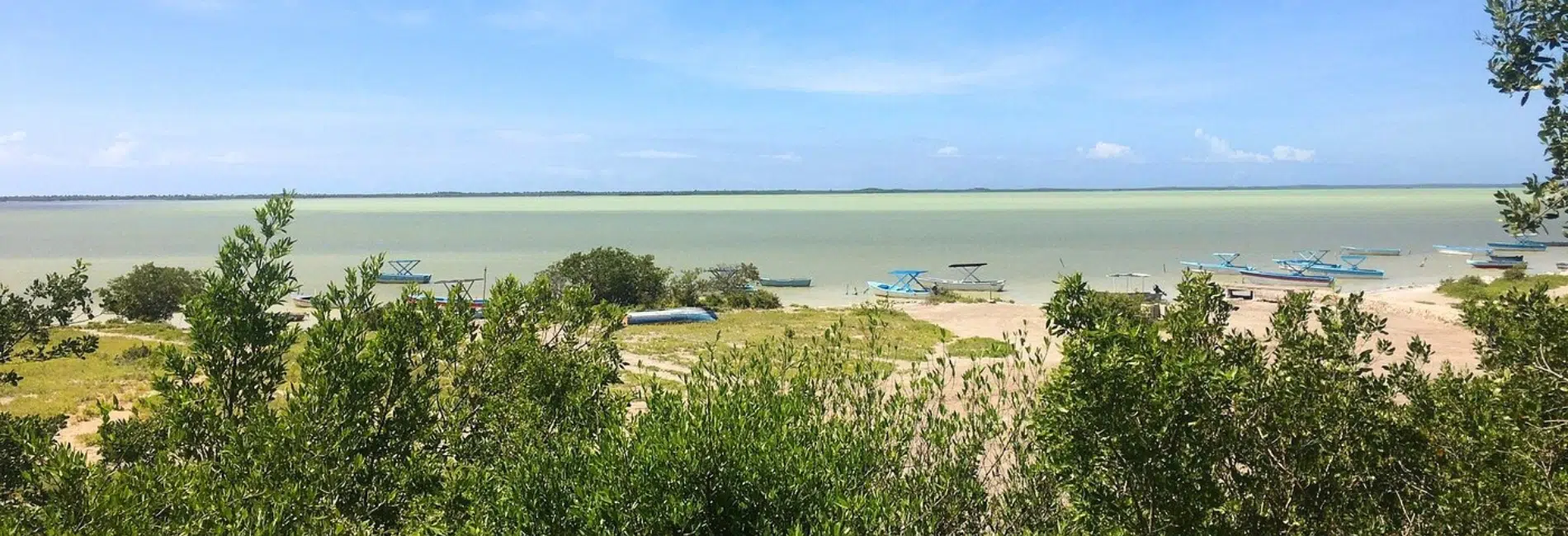
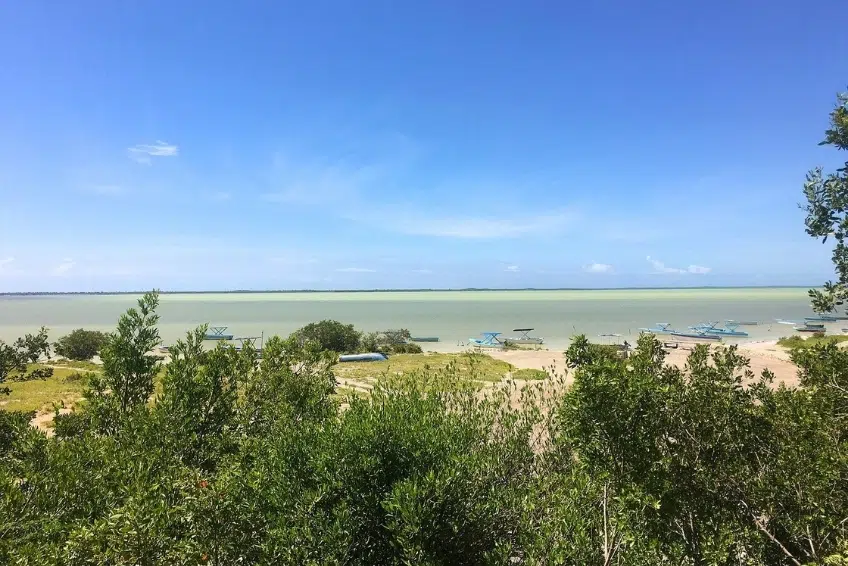
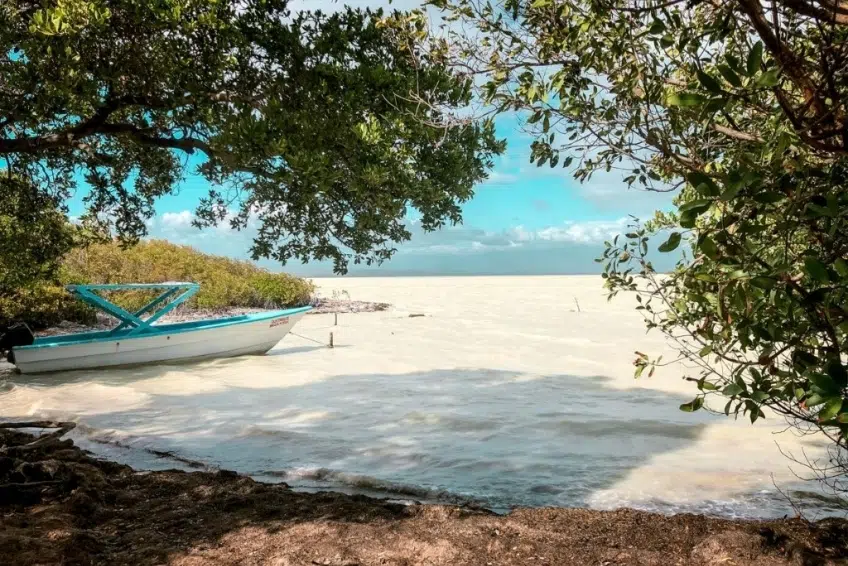
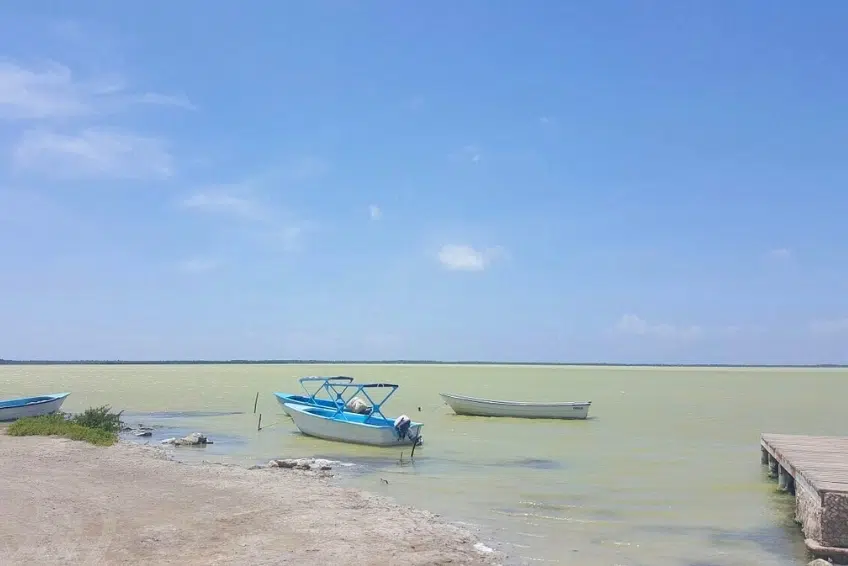
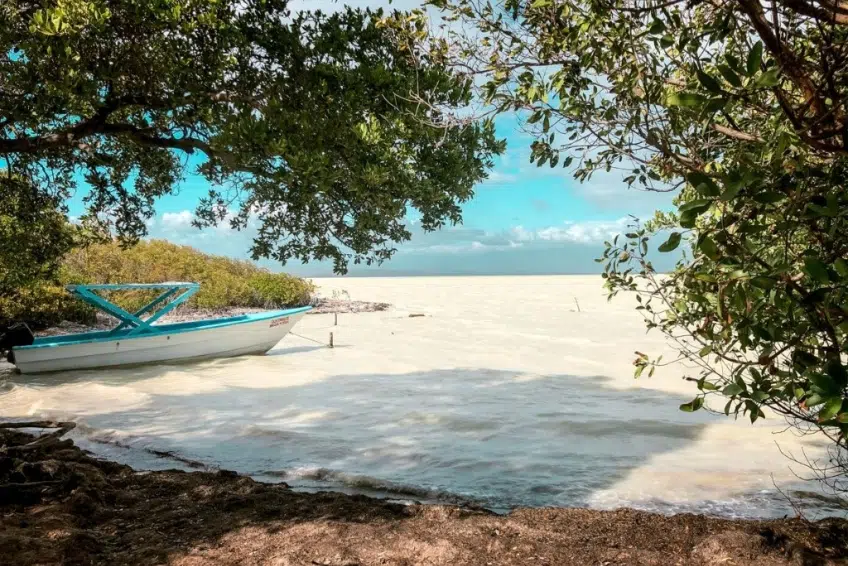
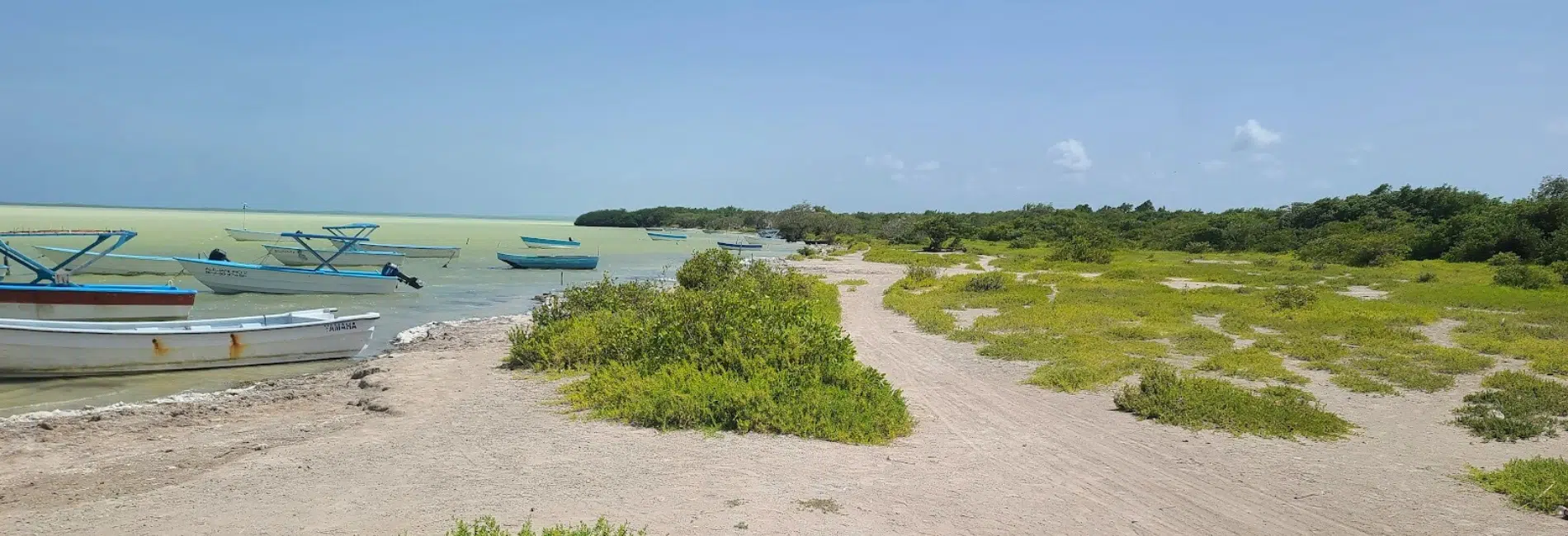
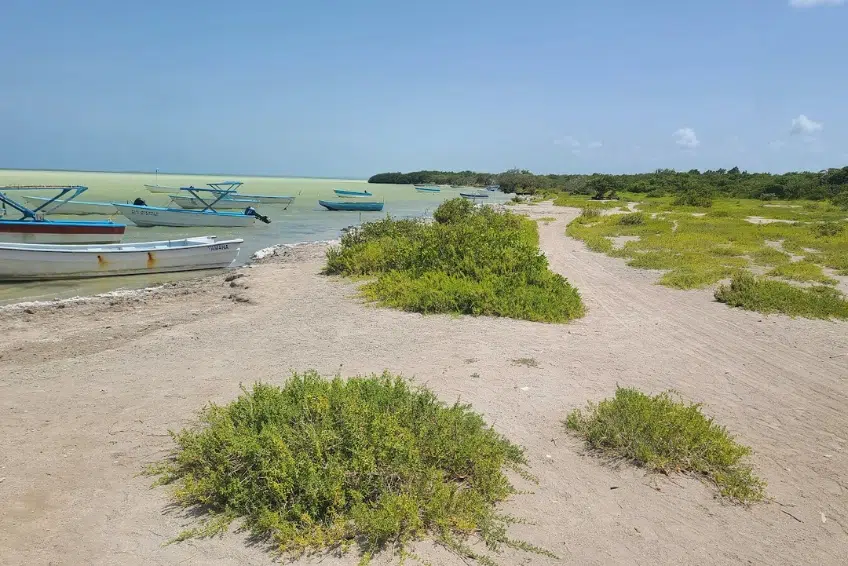
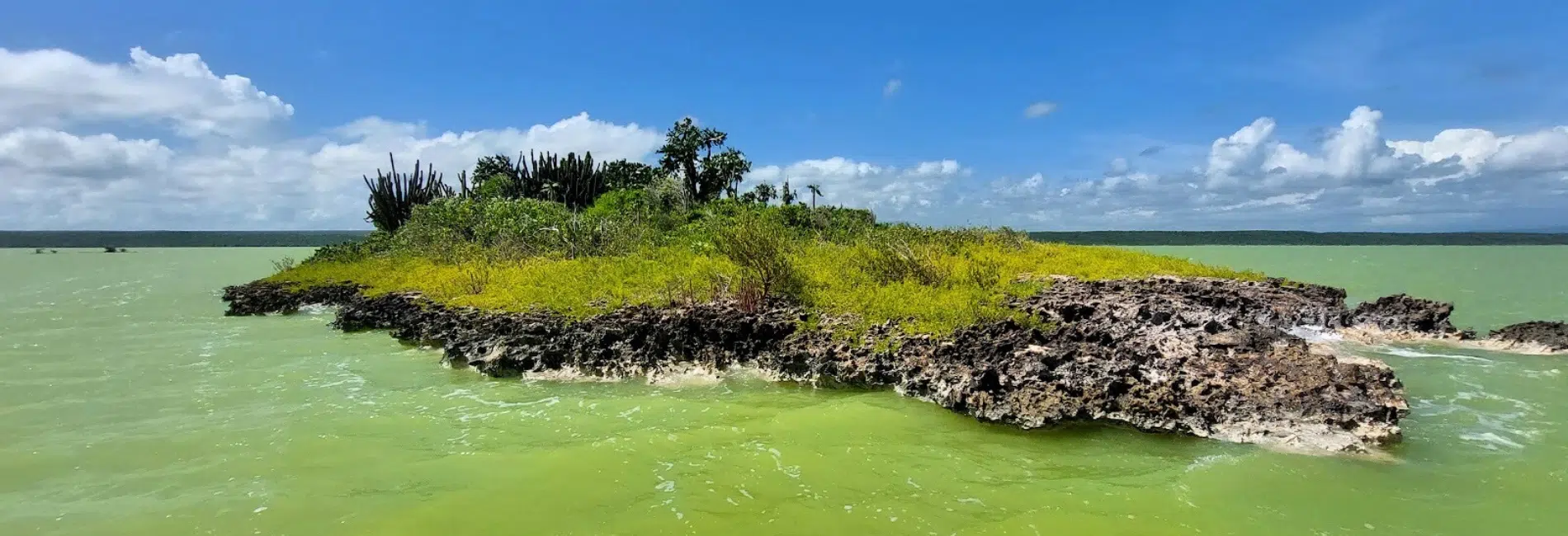
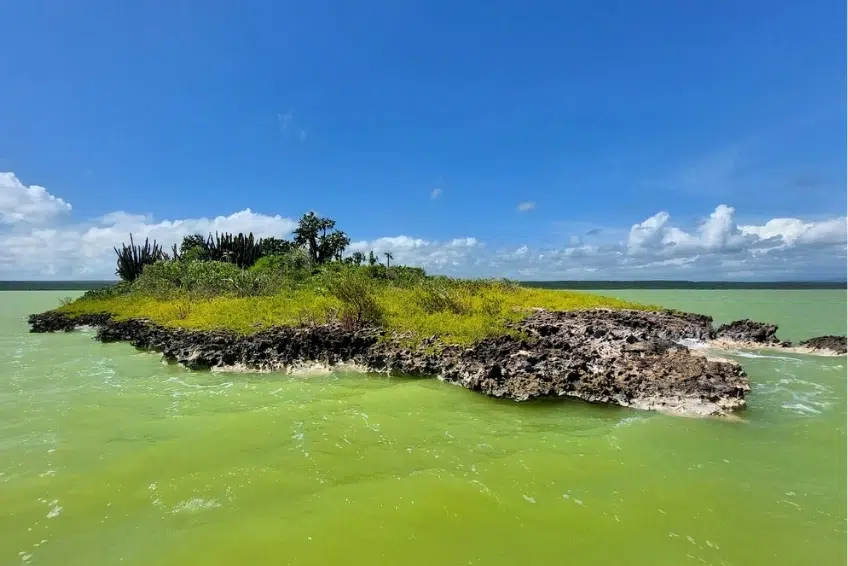
So you’ve made the trek to the southwestern corner of the Dominican Republic and you’re staring at a flat expanse of strange greenish-yellow water stretching to the horizon, dotted with small cactus-covered islands and rimmed by mangroves. It doesn’t look like any Caribbean postcard you’ve ever seen. Good. That’s the point.
An Extremely Salty Lagoon, Not a Lake
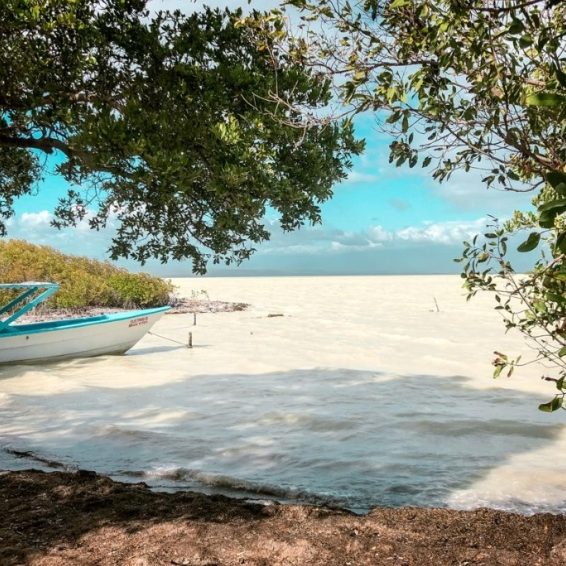
Let’s set the scene. Laguna de Oviedo is one of the largest bodies of water in the Dominican Republic after Lago Enriquillo, rivaling the freshwater Laguna Cabral in surface area. Its 27-28 km² of surface area averages only about 1.5 meters deep and contains 24 small cays and islets scattered across its milky waters. That weird color? It comes from limestone sediments dragged upward through an underground karstic system.
The lagoon has no direct surface connection to the Caribbean Sea. Seawater seeps in through underground karstic channels beneath the narrow coastal strip. Freshwater enters from springs fed by the Sierra de Bahoruco mountains. This mixing, combined with intense tropical evaporation, produces salinity approximately three times that of normal seawater. Think of it as the Dominican Dead Sea, except with flamingos.
Salinity fluctuates with the seasons: the dry months (December-April) concentrate salt through evaporation, while the rainy season (May-October) dilutes it with freshwater. This seasonal pulse drives the biological rhythms of everything living here, from the brine shrimp that feed the flamingos to the endemic pupfish that lives in no other body of water on Earth.
The Mangrove Ecosystem
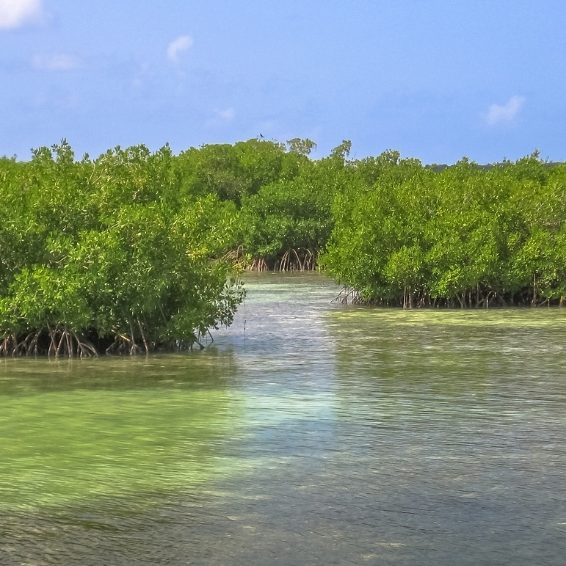
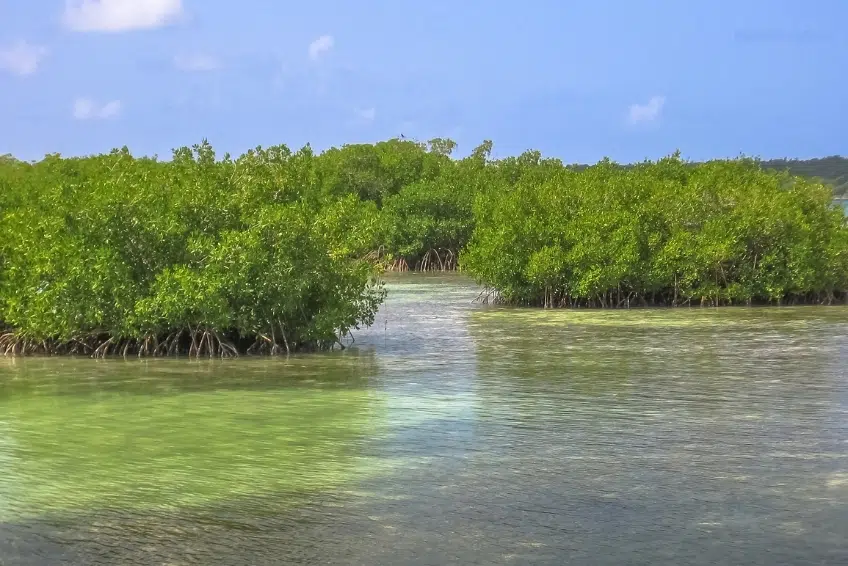
The lagoon’s shoreline supports all four Western Atlantic mangrove species: red, black, white, and button mangrove. The mangrove area covers approximately 1,573 hectares (roughly 3,900 acres) and functions as a nursery for juvenile fish and crabs, nesting habitat for waterbirds, a storm barrier, and one of the most efficient carbon sinks on Earth.
Despite protections, the mangroves face real threats: overgrazing by free-ranging livestock, illegal clearing, seasonal harvesting of blue land crabs, non-degradable waste accumulation, and the spread of invasive neem trees. The Dominican Republic has lost more than a third of its mangroves over the past 50 years. In 2021, Grupo Jaragua partnered with Seacology to launch a five-year national mangrove conservation initiative centered on the lagoon.
The Town of Oviedo
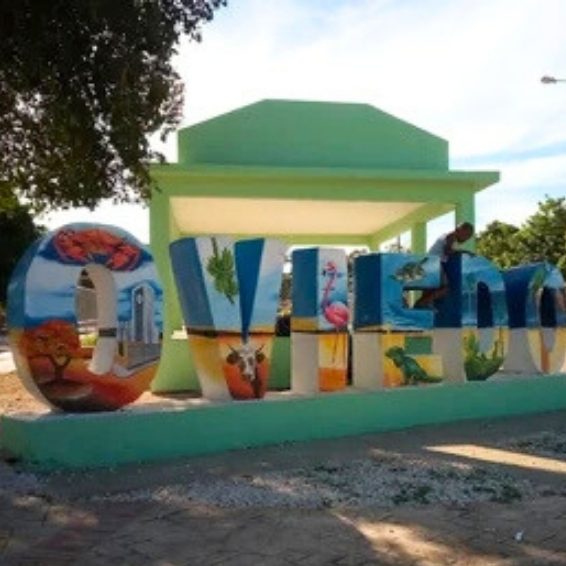
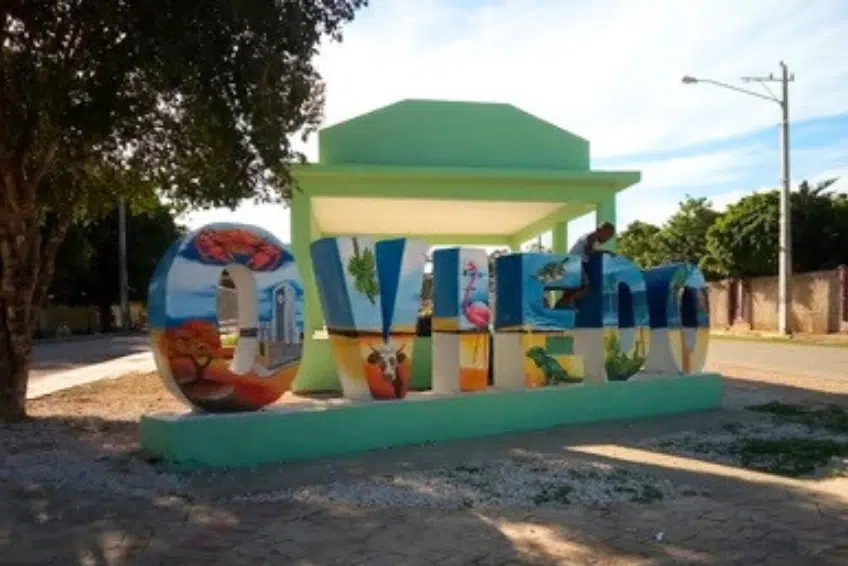
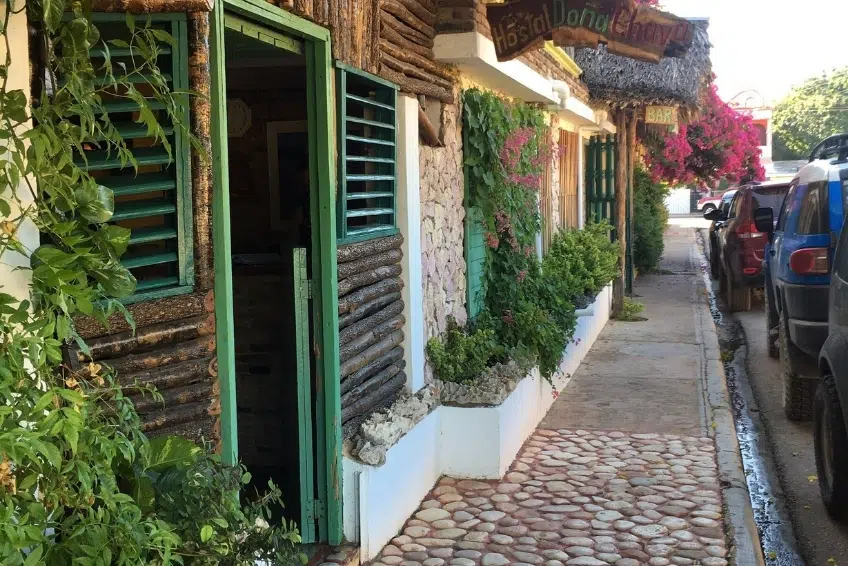
Oviedo itself is a small, quiet town a couple of kilometers west of the lagoon on Highway 44. There isn’t much here for tourists: a handful of comedores, colmados (corner stores), and community-run guesthouses. But the town has a remarkable story.
On September 29, 1966, Hurricane Ines (Category 5 at peak, making landfall with devastating winds) completely destroyed the original town of Oviedo, which sat on the lagoon’s shores. The storm killed approximately 100 people across the Dominican Republic, with Oviedo among the hardest-hit communities. Only the town hall, built during the Trujillo era, survived. President Joaquin Balaguer decreed the town be rebuilt 5 kilometers to the northwest, and the first 100 replacement houses were constructed in 1968. The ruins of old Oviedo remain accessible as a tour stop today.


Infrastructure and Safety
There are no facilities at the lagoon beyond basic restrooms at the visitor center. No restaurants, no snack bars, no vending machines, no gift shops. Bring everything you need.
The primary hazards are heat and sun exposure (no shade on the water, and temperatures can exceed 32°C / 90°F) and sharp coral rock on Cayo Iguana. Life jackets are provided on all boats. The lagoon is extremely shallow (1-5 feet), so drowning risk is minimal. Mosquitoes can be intense in mangrove areas. Rhinoceros iguanas are not aggressive but may nip at bright-colored toenails (seriously, avoid bright red or pink nail polish). The nearest hospital is Hospital Provincial Dr. Elio Fiallo in Pedernales, roughly 55 km away. Barahona has more comprehensive medical facilities at 72 km. Travel medical evacuation insurance is strongly recommended for any trip to this remote area.
Cash is essential. There are no ATMs in Oviedo and no card readers at the lagoon. Withdraw sufficient Dominican pesos in Barahona or Santo Domingo before arriving.
Things To Do At Laguna de Oviedo
The lagoon itself is the main event, but the wildlife diversity within this single site is extraordinary. You could easily spend two days here without repeating yourself. Here’s what you can actually see and do, plus detailed tour options and a step-by-step walkthrough of the most popular tour.
click to see more images
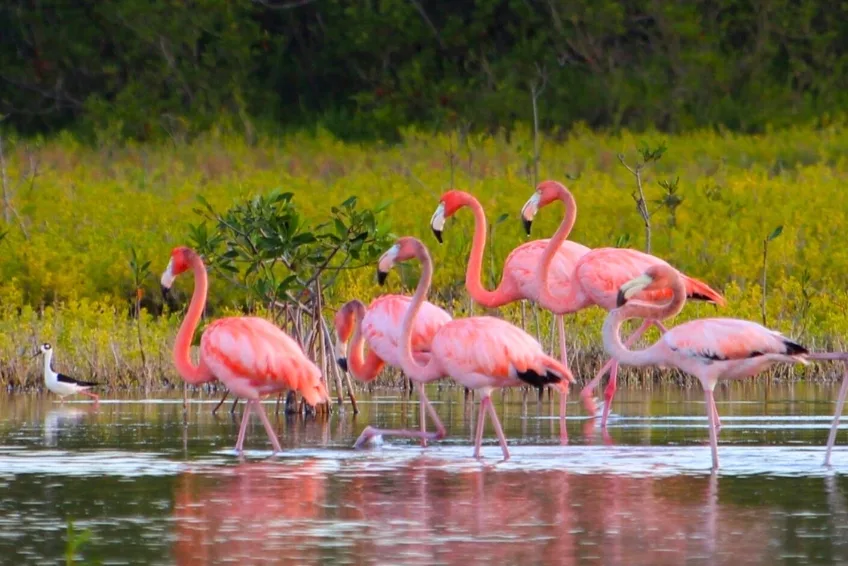
1. American Flamingos
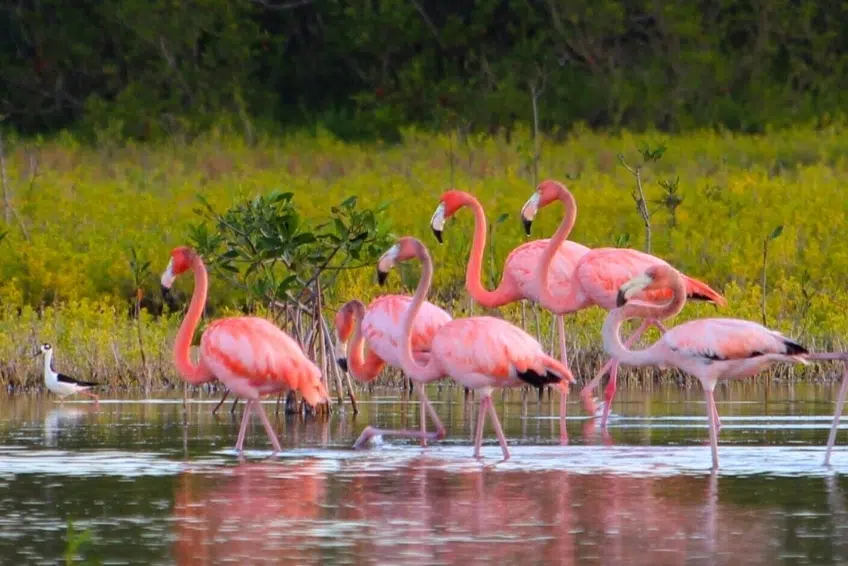
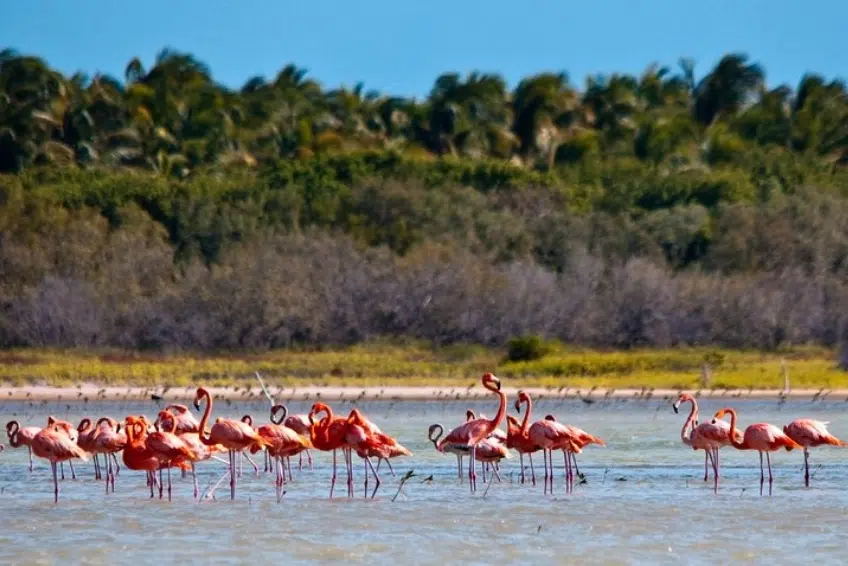
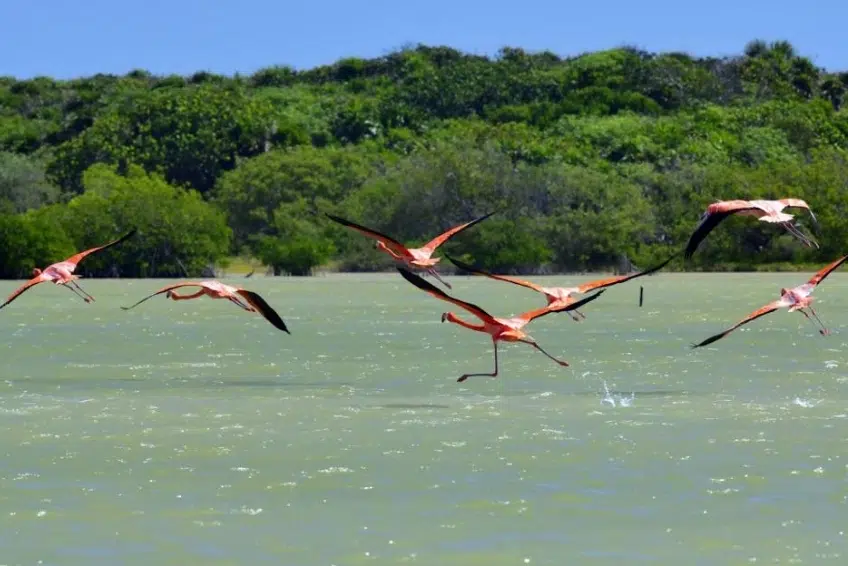
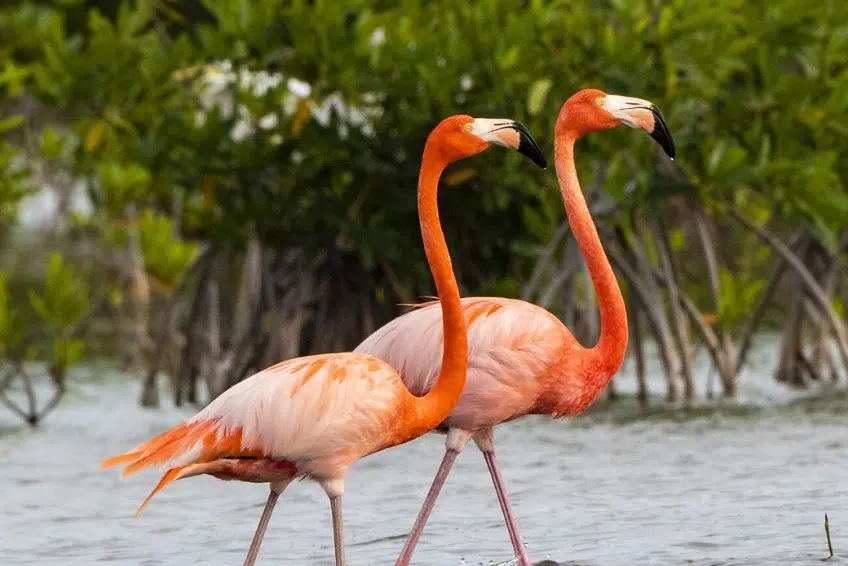
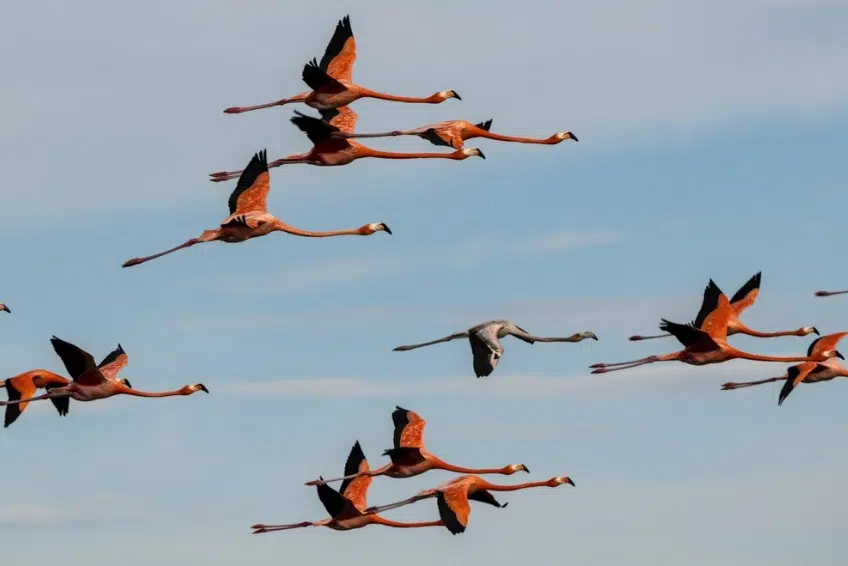
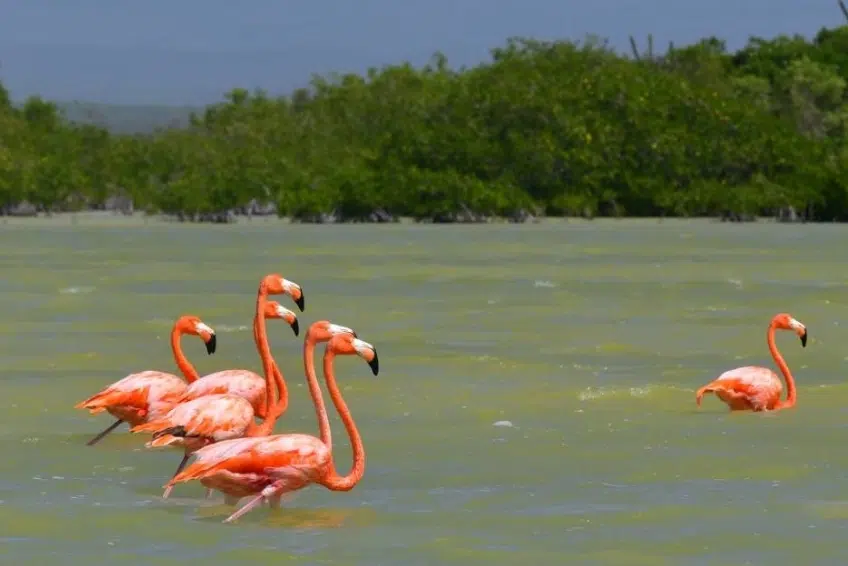
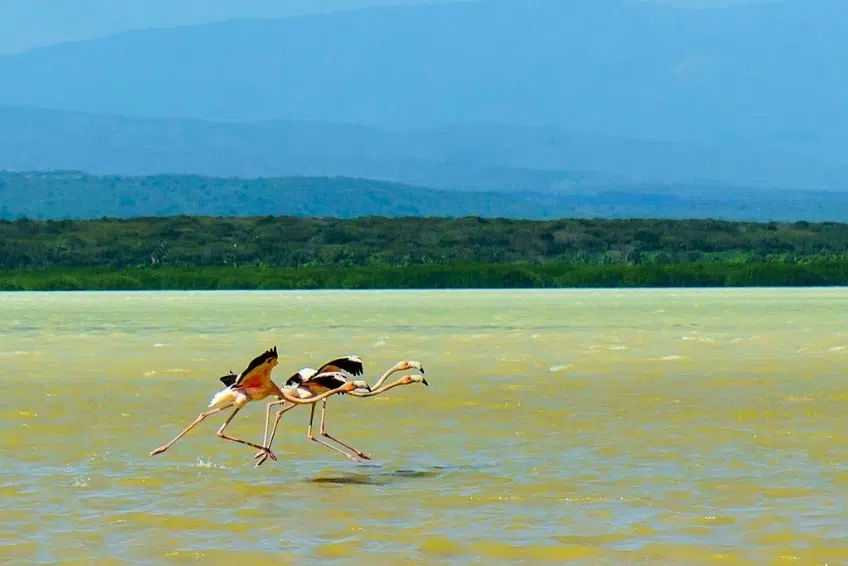
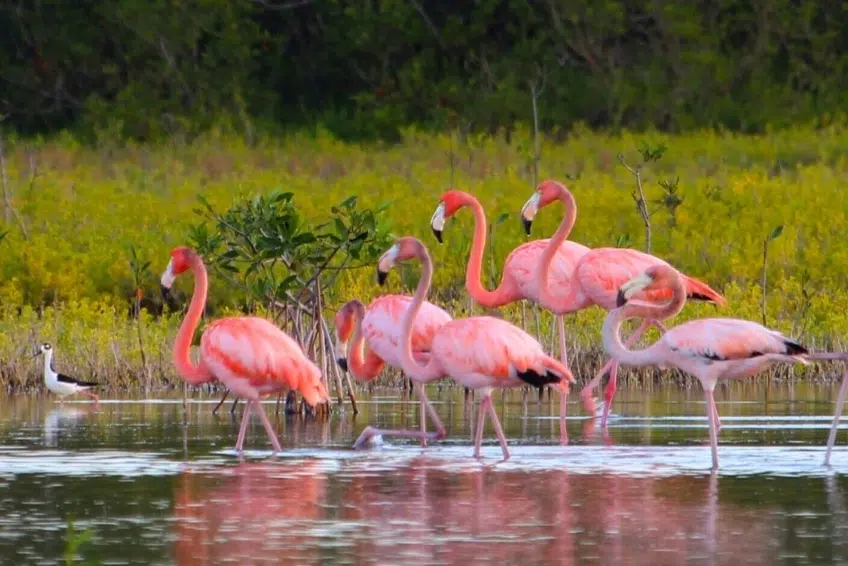
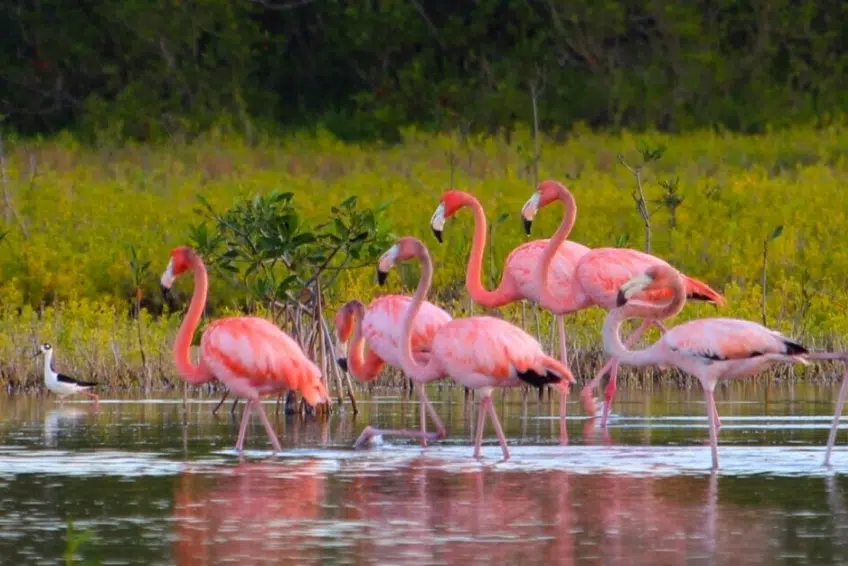
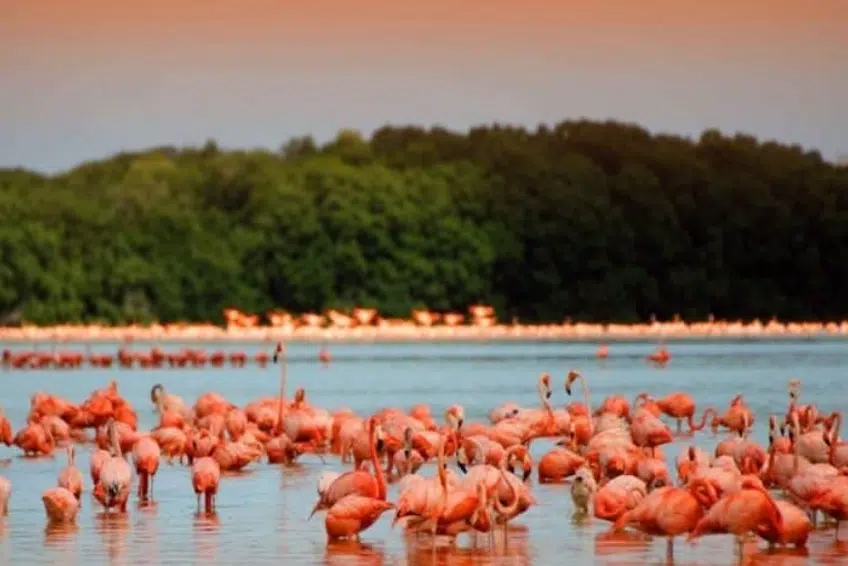
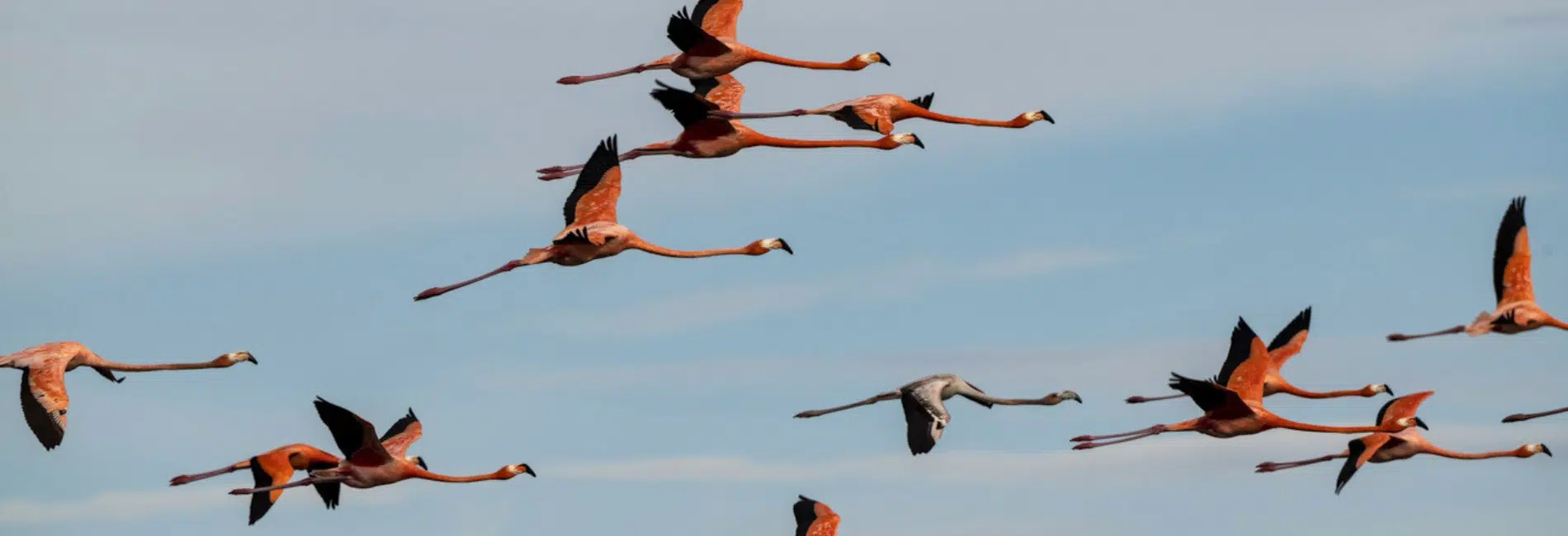
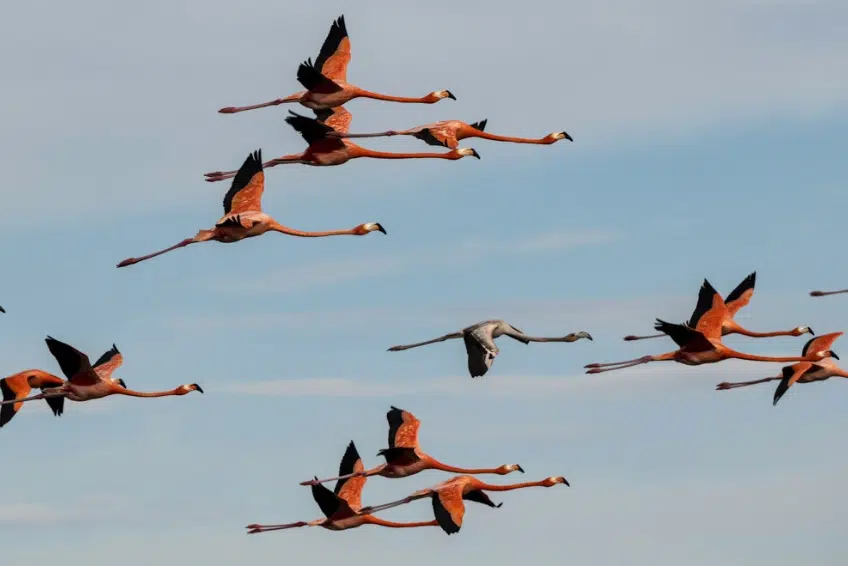
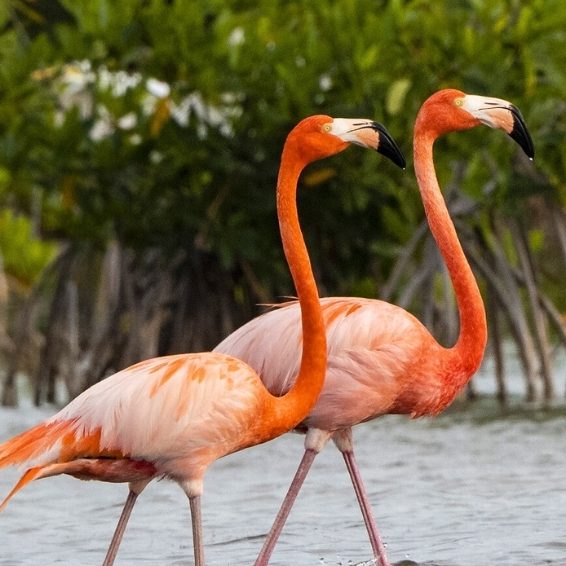
The headline attraction, and rightfully so. American flamingos (Phoenicopterus ruber) visit the lagoon annually from breeding colonies elsewhere in the Caribbean (mainly Great Inagua, Bahamas). The most recent published surveys by Grupo Jaragua counted approximately 2,400 individuals in January 2010 and 2,600 in March 2011. Peak viewing runs December through April, though some birds remain year-round.
We need to be honest about expectations. Flamingo numbers fluctuate significantly from day to day and year to year. Some visitors see hundreds of birds in breathtaking pink flocks. Others encounter smaller groups of a dozen or so. The birds are wild, not captive, and they move around the lagoon based on water levels, food availability, and disturbance. Binoculars are close to essential, because the best viewing often happens at a distance that doesn’t spook the flock. When a large group takes flight, it’s one of the most spectacular wildlife moments in the Caribbean.
Discover flamingos and so much more with this Explore Laguna de Oviedo Tour.
click to see more images
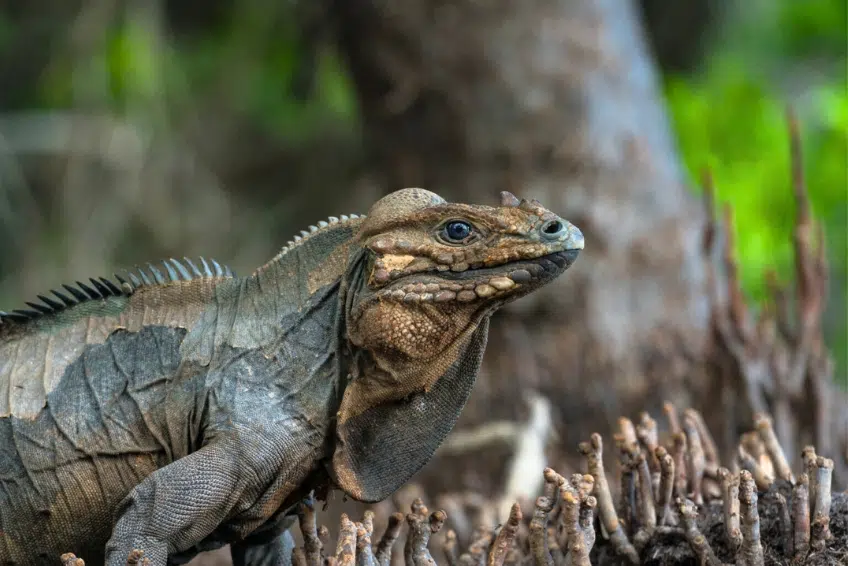
2. Rhinoceros Iguanas on Cayo Iguana
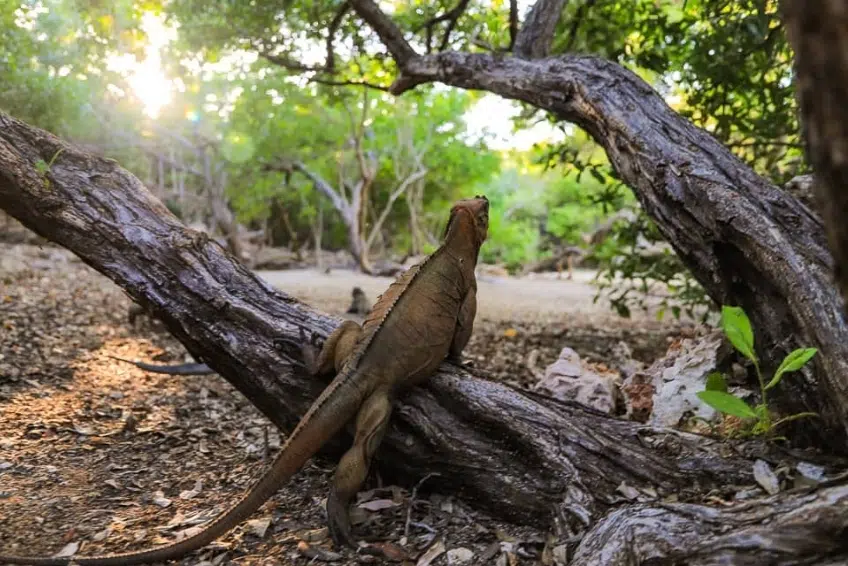
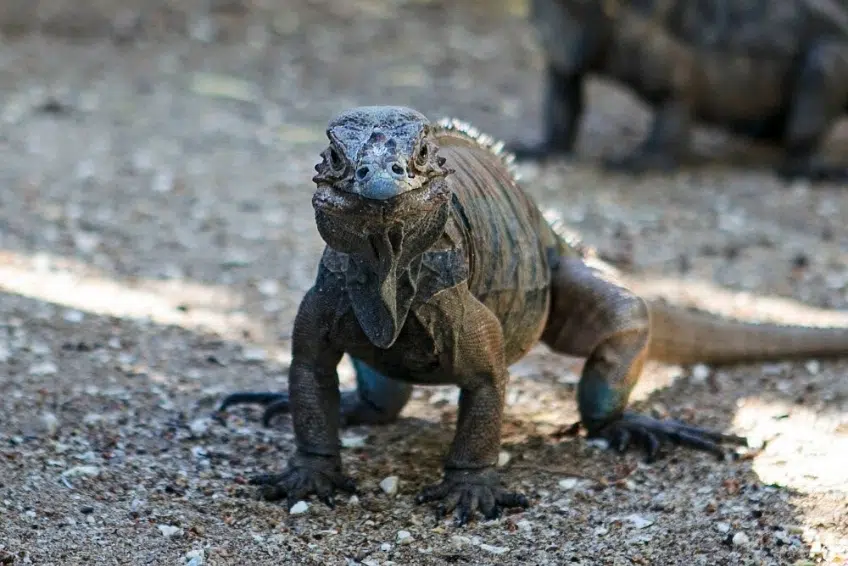
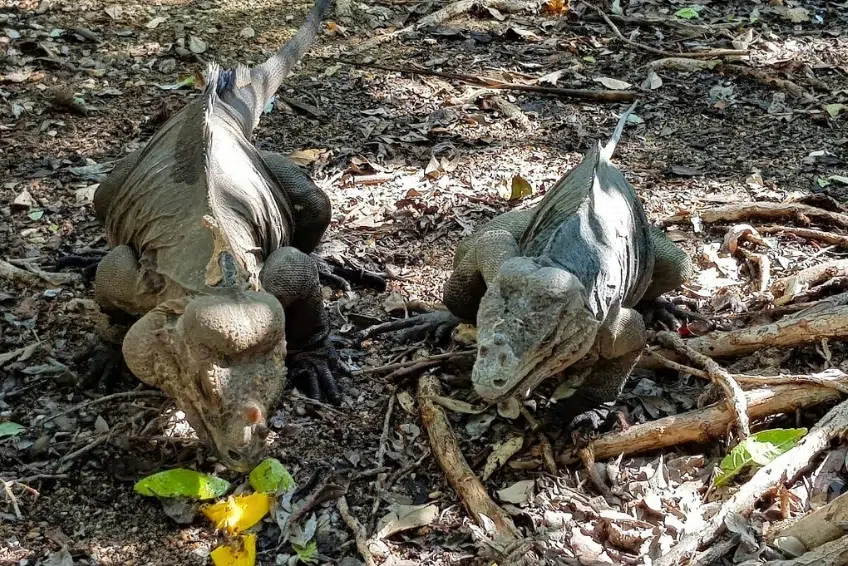
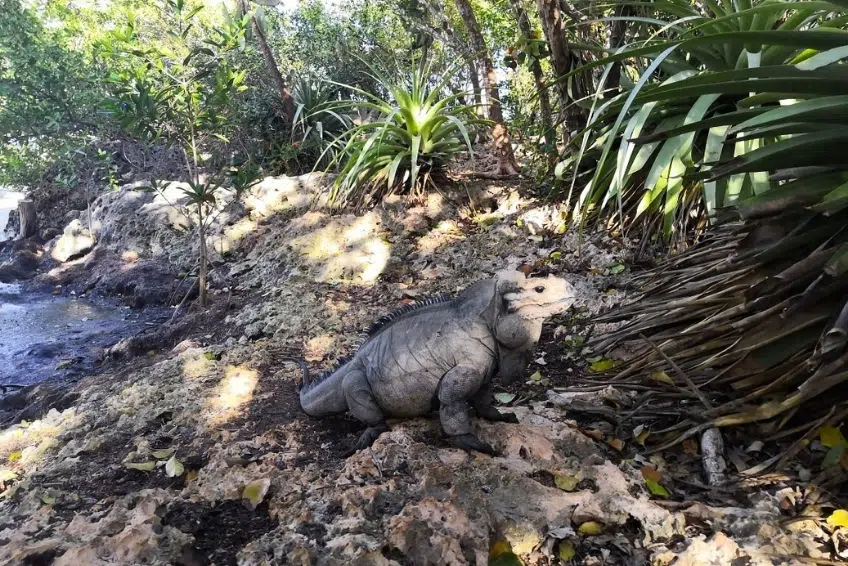
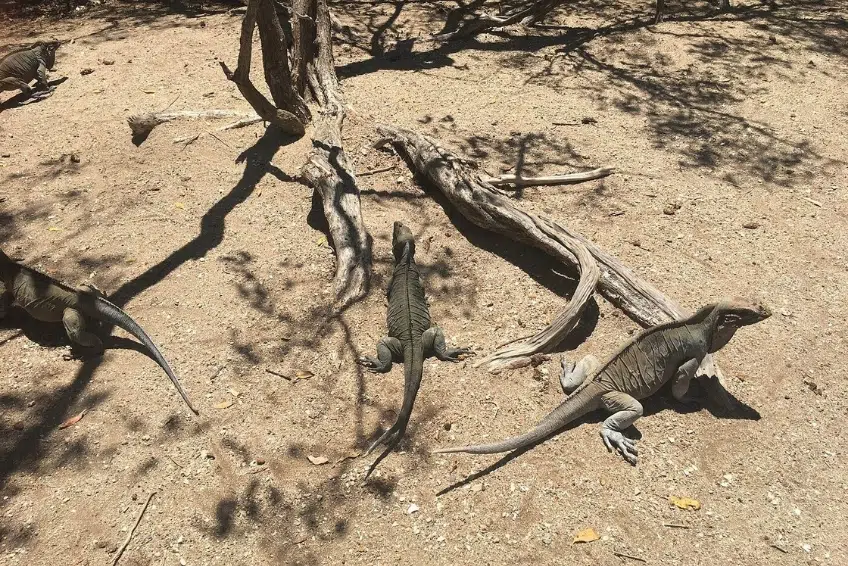
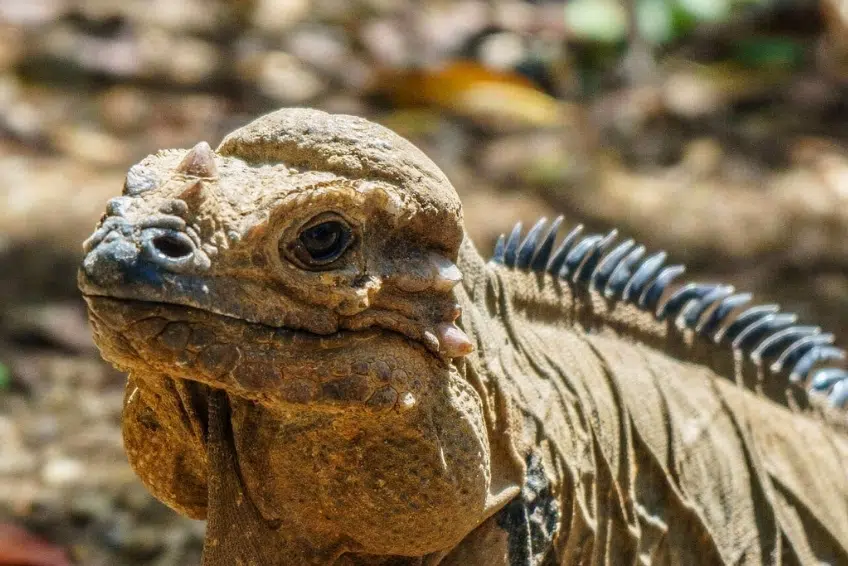
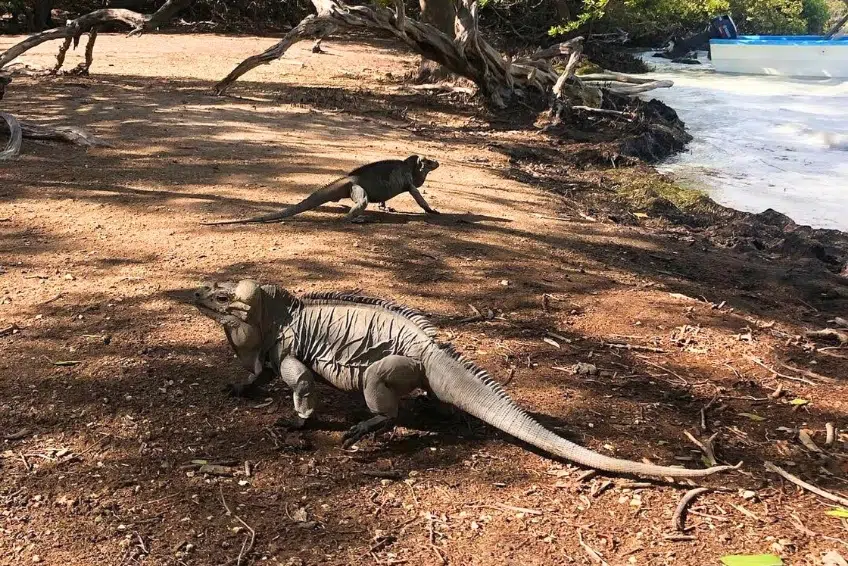
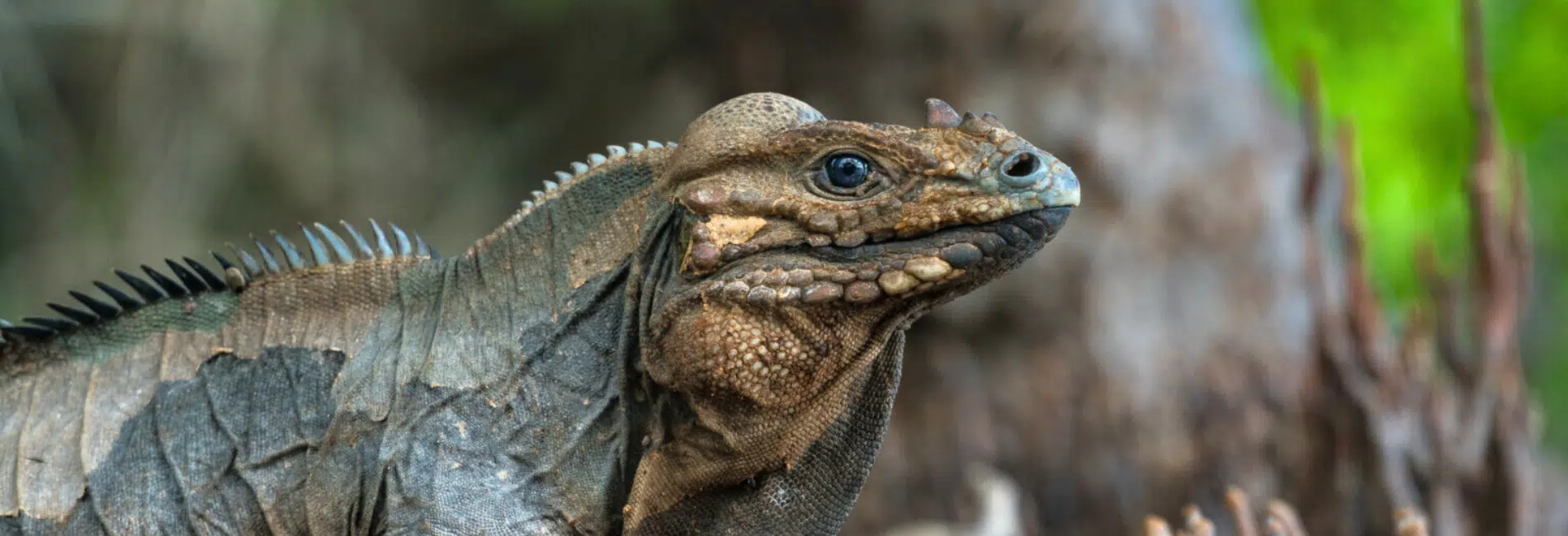
This is the tour’s most interactive wildlife encounter, and it’s the part most visitors talk about afterward. Rhinoceros iguanas (Cyclura cornuta, IUCN Endangered) are confirmed residents of Cayo Iguana, one of the 24 islets in the lagoon. The iguanas have become habituated to visitors over years of guided tours. Your guide feeds them wild cherries and fruit, and they approach within arm’s reach. They’re large (up to 1.36 meters), prehistoric-looking, and completely unfazed by humans.
One important warning: avoid bright red or pink toenail polish. The iguanas mistake bright-colored toes for fruit and may nip. Closed-toe shoes are essential anyway because Cayo Iguana’s surface is razor-sharp coral rock.
click to see more images
3. Birding (Nearly 150 Species)
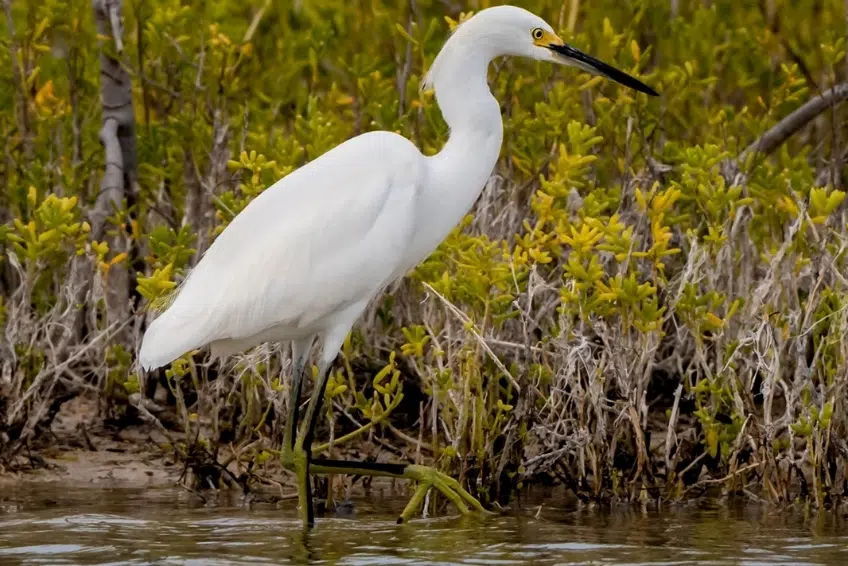
Beyond flamingos, Grupo Jaragua reports close to 150 bird species specifically at the lagoon, with 179+ across the broader Jaragua National Park, including 19 Hispaniola endemics, 64 migratory species, and 7 IUCN Red List species. This is one of the DR’s premier birding destinations.
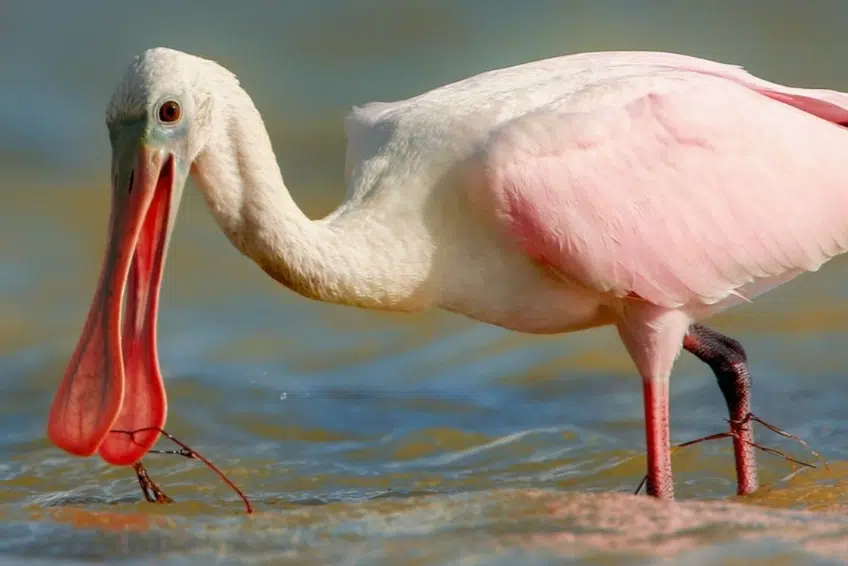
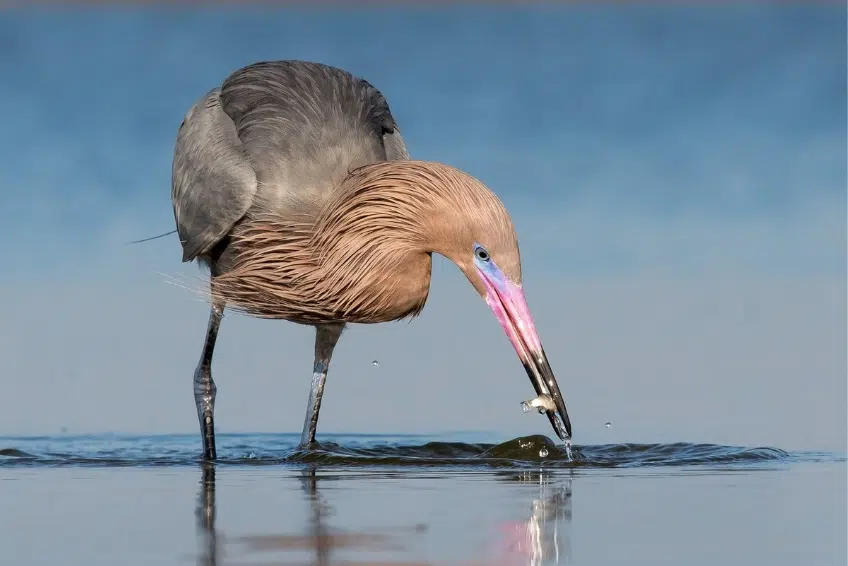
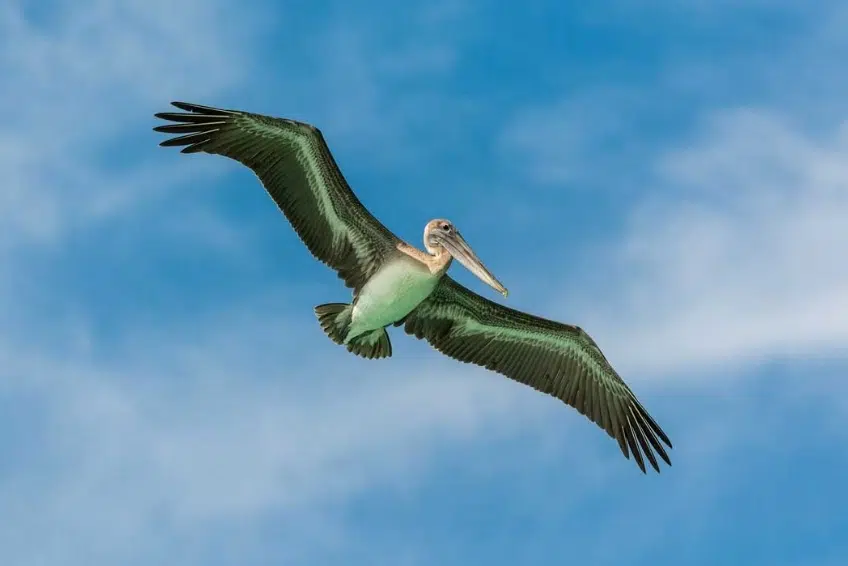
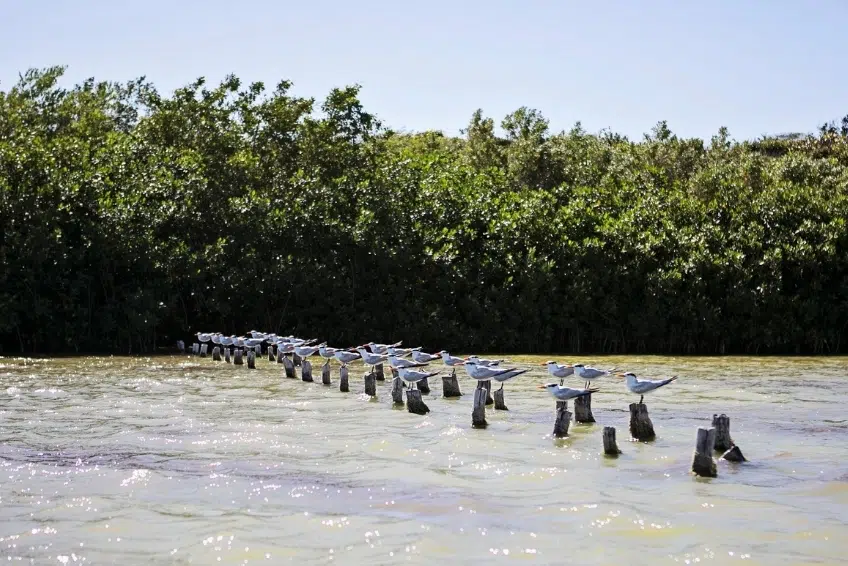
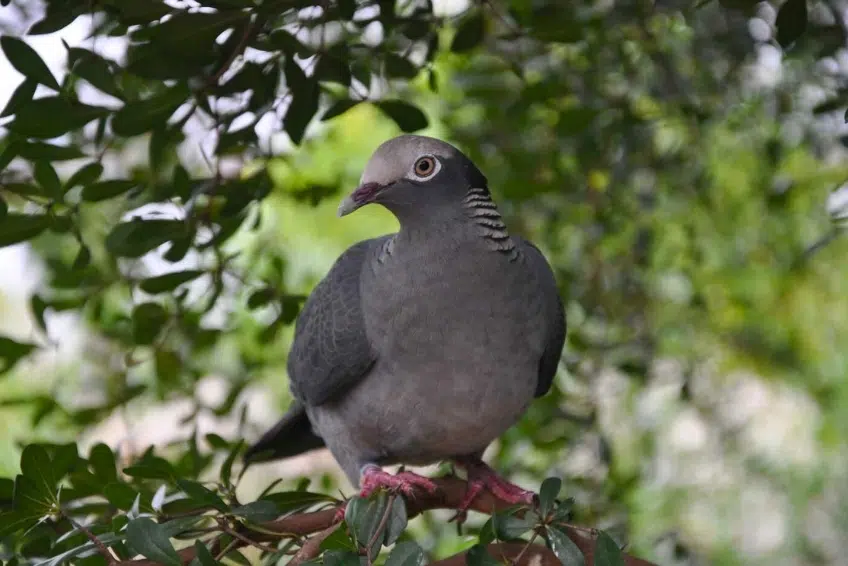
Species regularly observed include roseate spoonbills (confirmed nesting in the mangroves), white-crowned pigeons (Near Threatened), West Indian whistling-ducks (Near Threatened), brown pelicans, reddish egrets, white ibis, magnificent frigatebirds (nesting on cays), ospreys, royal terns, and dozens of shorebird species. Serious birders should arrange a specialized tour through Grupo Jaragua or an operator like Tody Tours for maximum species coverage.
click to see more images
4. Arroyo Salado
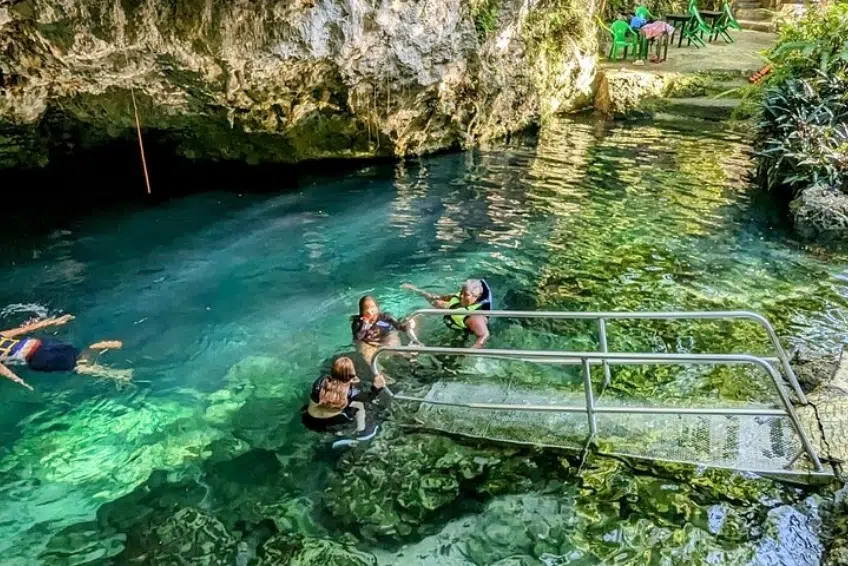
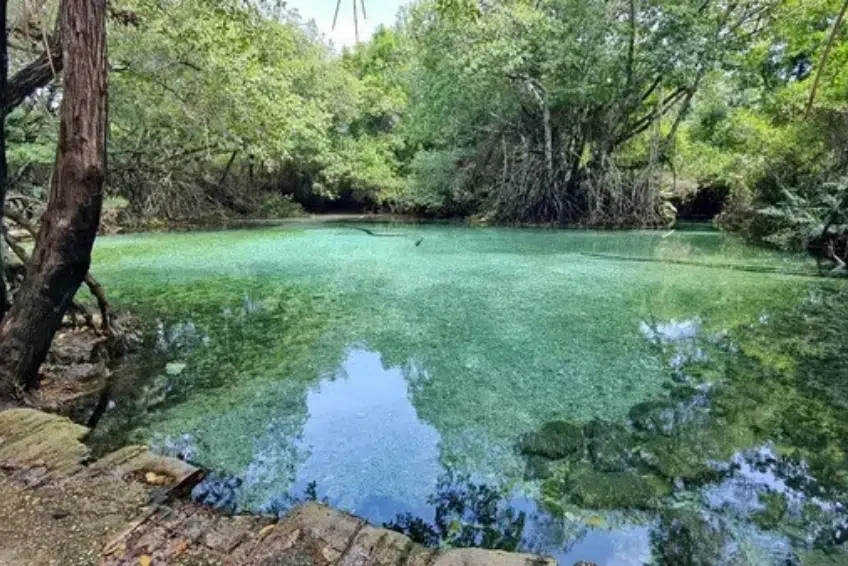
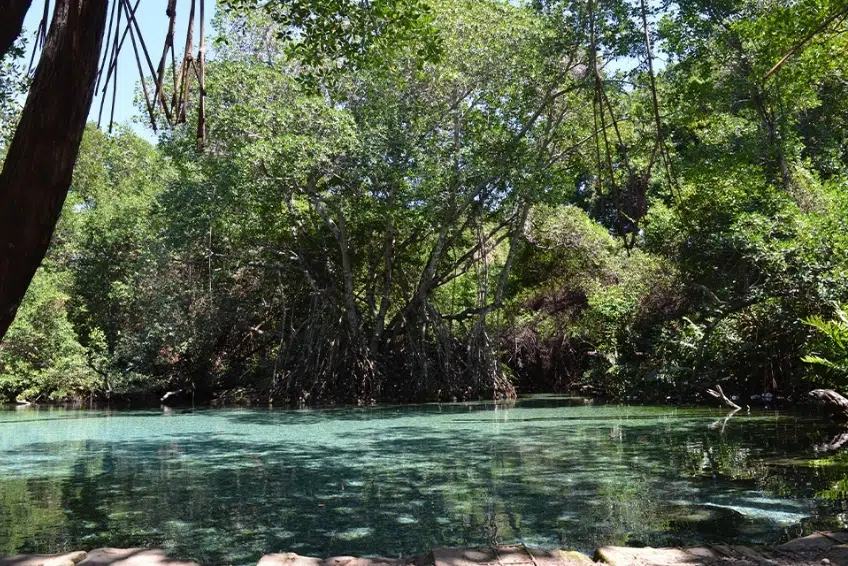
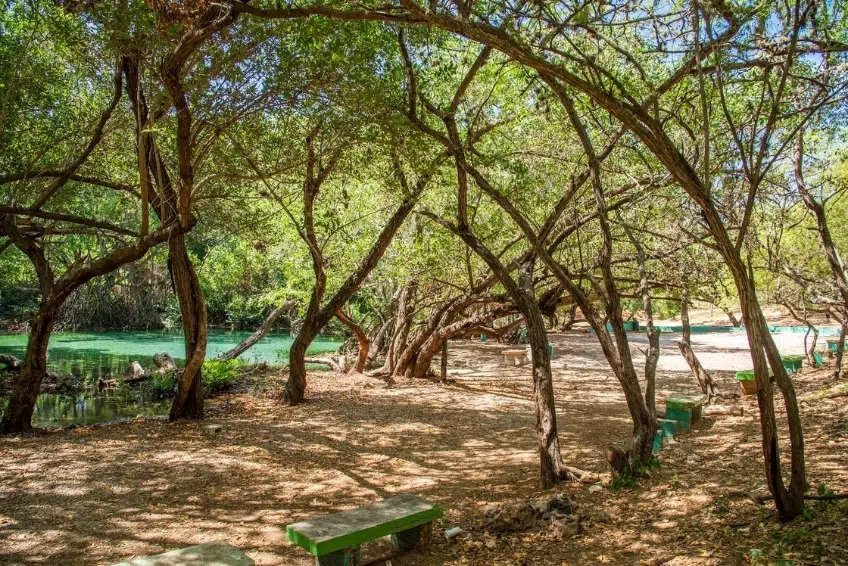
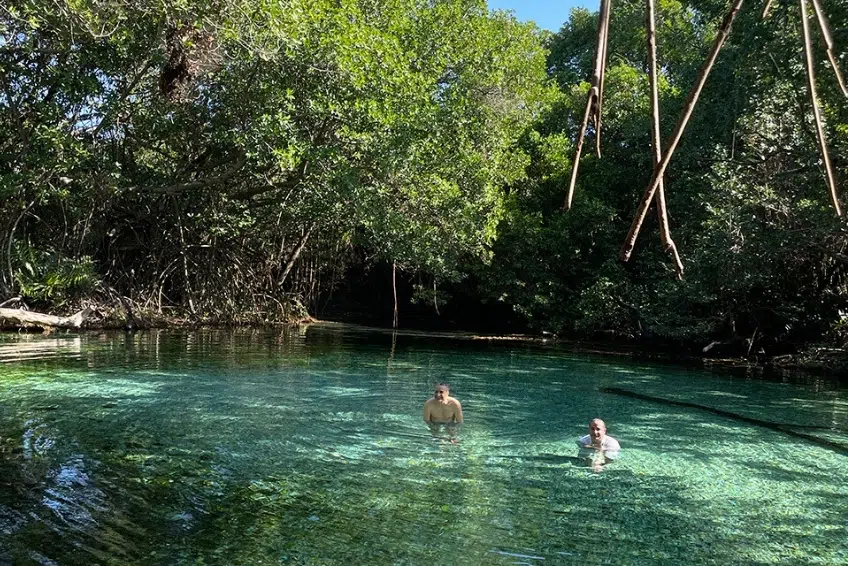
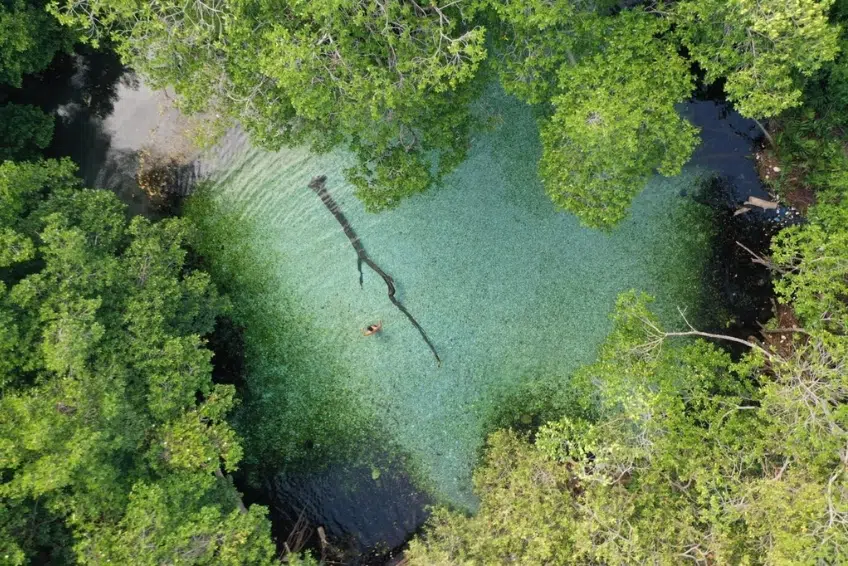
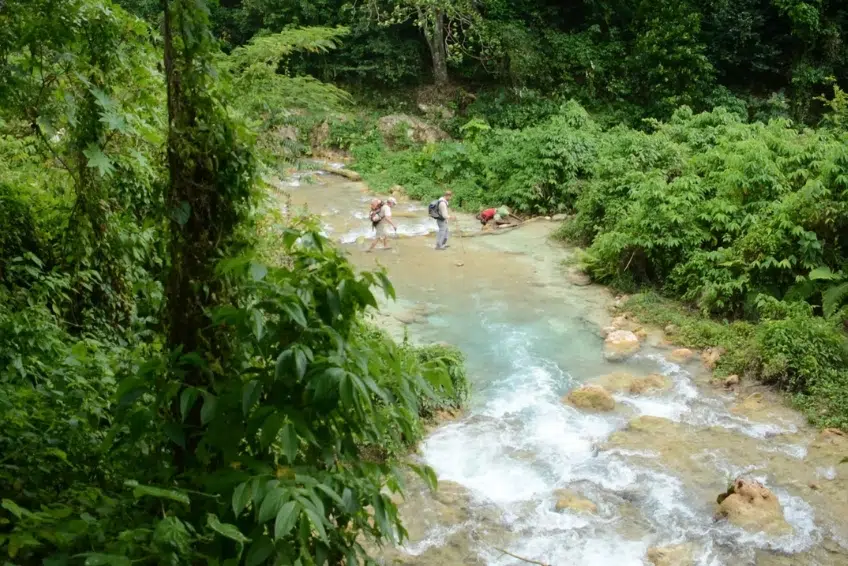
This one is a sleeper hit. Just a 5-minute drive from the lagoon off Highway 44, Arroyo Salado is a crystal-clear natural freshwater spring surrounded by lush mangroves that provide much needed shade after hours of exposed lagoon sun. Despite its name (“salty stream”), the water is fresh or slightly brackish.
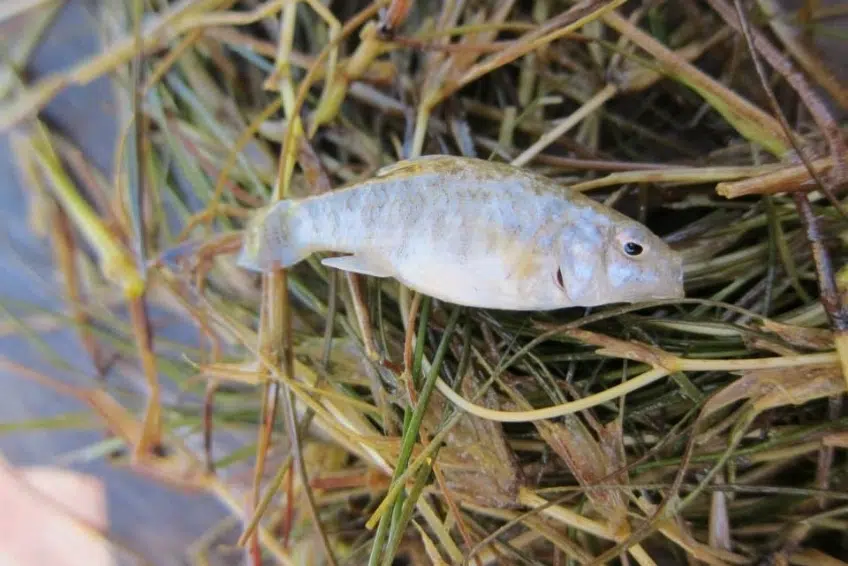
The draw: endemic pupfish and shrimp nibble your feet while you wade in. It’s like a free natural fish spa, and it’s surprisingly relaxing. The Oviedo pupfish (Cyprinodon nichollsi), described by scientist M.L. Smith in 1989, is endemic to this single lagoon system and exists nowhere else on the planet. Males reach an unusually large 9 cm for the genus, and the species has adapted to survive in extreme salinity that would kill most fish. You’re wading with one of the rarest fish in the Caribbean, and it’s nibbling your toes!
There are no facilities whatsoever (no bathrooms, no vendors, no chairs), so bring everything. AGUINAOVI guides offer access for just RD$500 (around $8 USD). Many visitors call it the best part of their day. Combined Arroyo Salado + Laguna de Oviedo tours are available through Larimar EcoTours.
Take a look at this All Inclusive Laguna de Oviedo + Arroyo Salado Tour, which also includes hidden gems like Los Pozos de Romeo Frances.

click to see more images
5. The Mud Bath
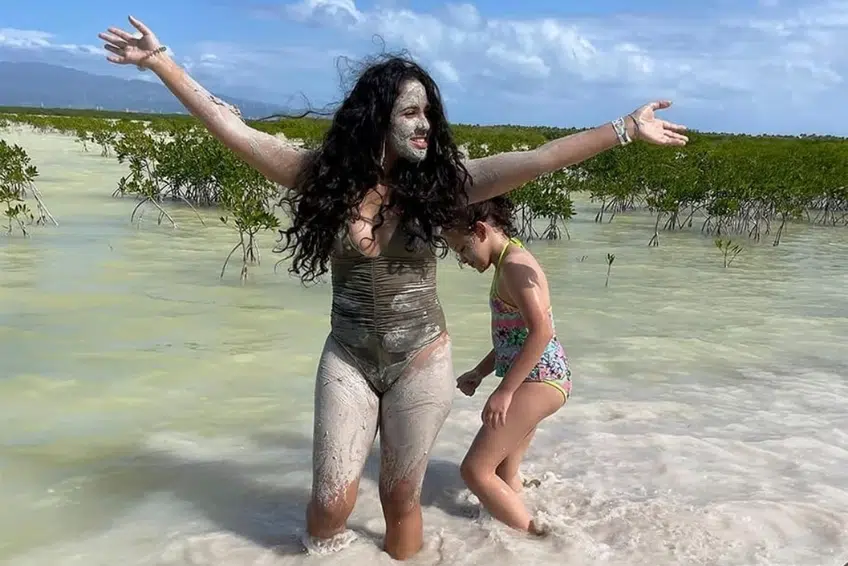
About halfway through the Full Tour, the captain anchors in a shallow area, and you step out into knee-deep water over silty sediment. You scoop mineral-rich clay from the bottom, coat your skin, let it dry in the sun, then rinse off. Visitors compare it to Iceland’s Blue Lagoon (we’d say that’s generous, but it’s genuinely fun). The clay is rich in minerals and supposedly great for your skin. Getting back into the boat afterward requires some agility and a hand from the captain. Wear swimwear you don’t mind getting muddy.
Check out this Laguna de Oviedo Adventure Tour that includes the mud baths and a trip to Bahia de Aguilas.
click to see more images
6. Sea Turtle Nesting (Seasonal)
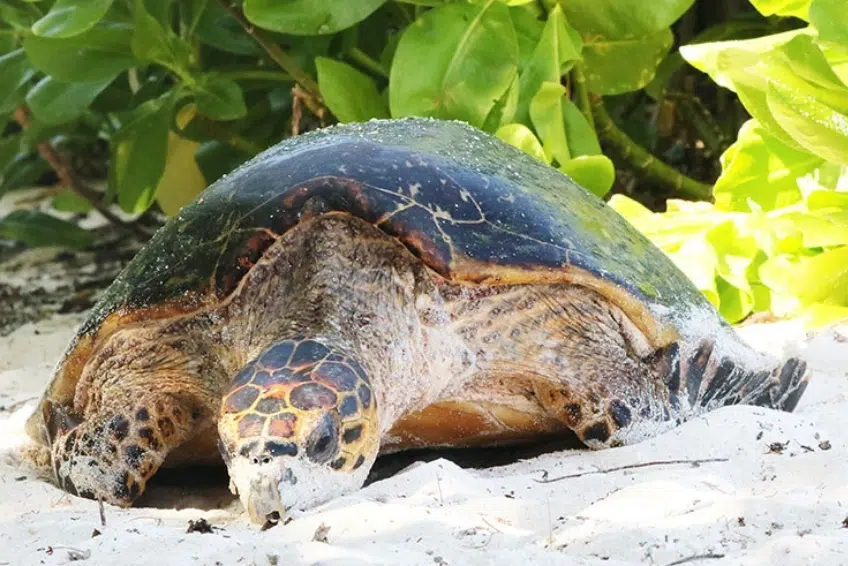
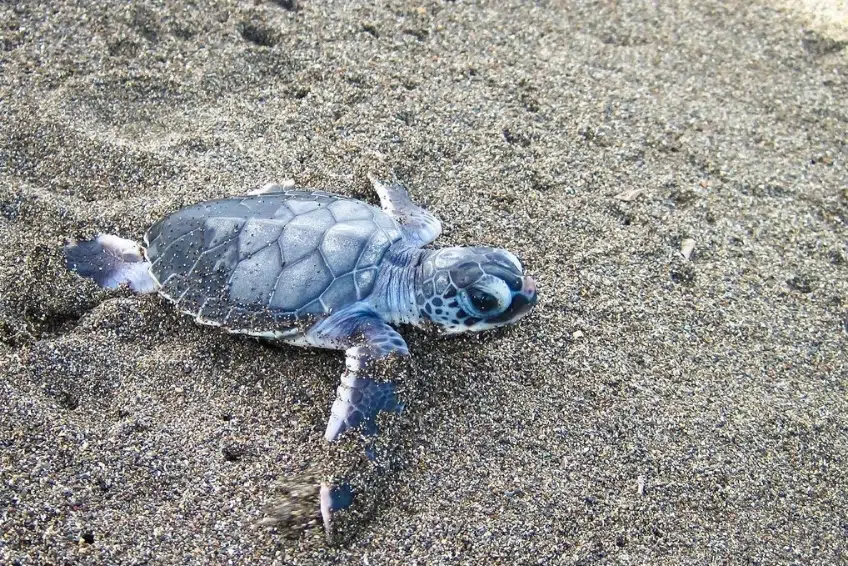
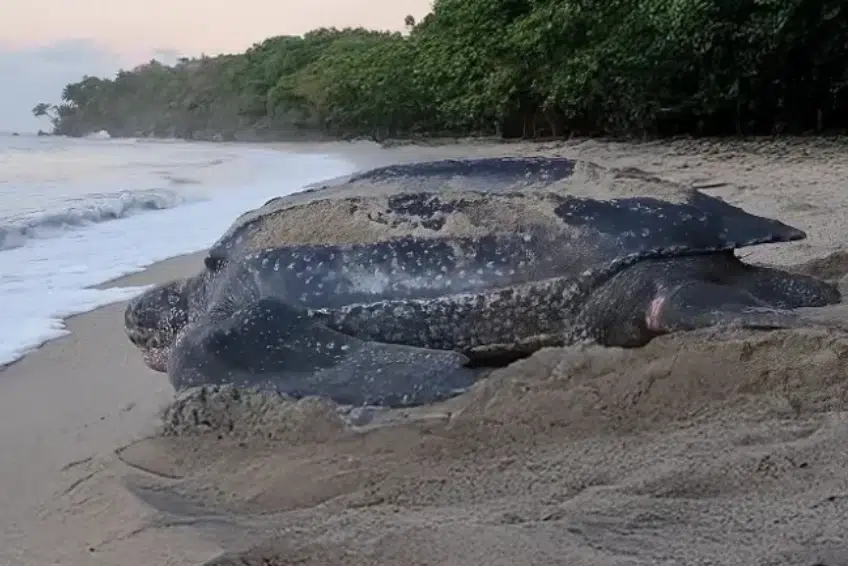
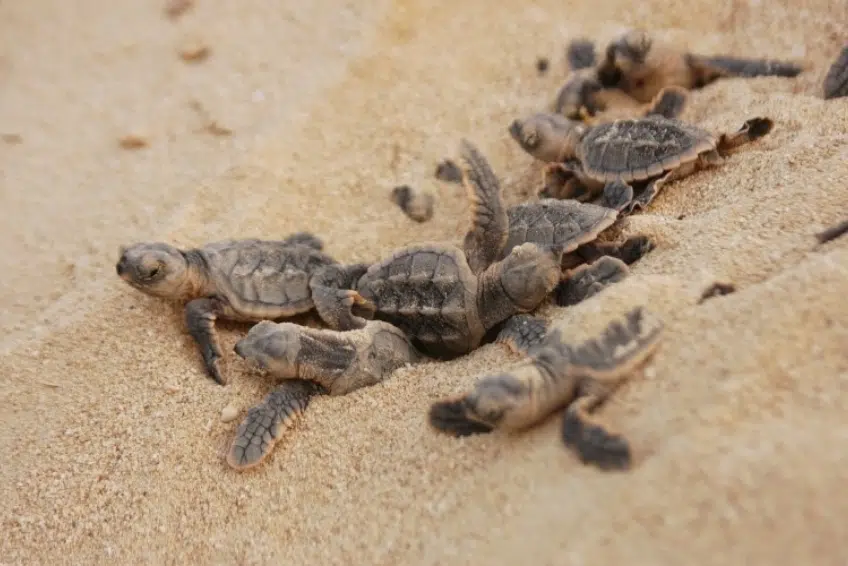
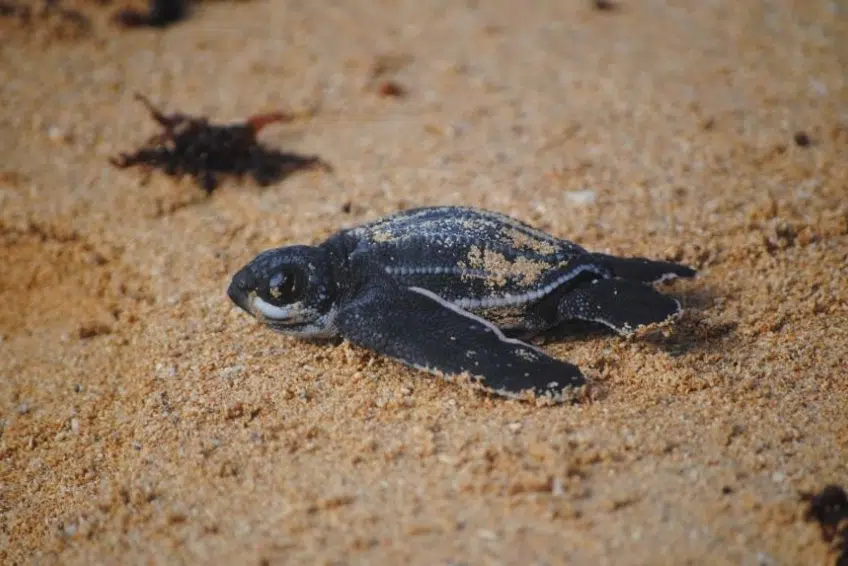
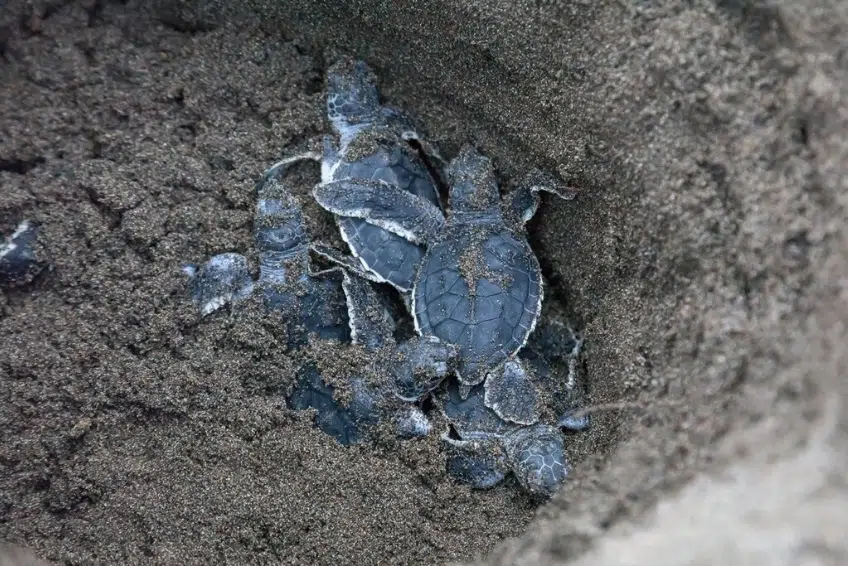
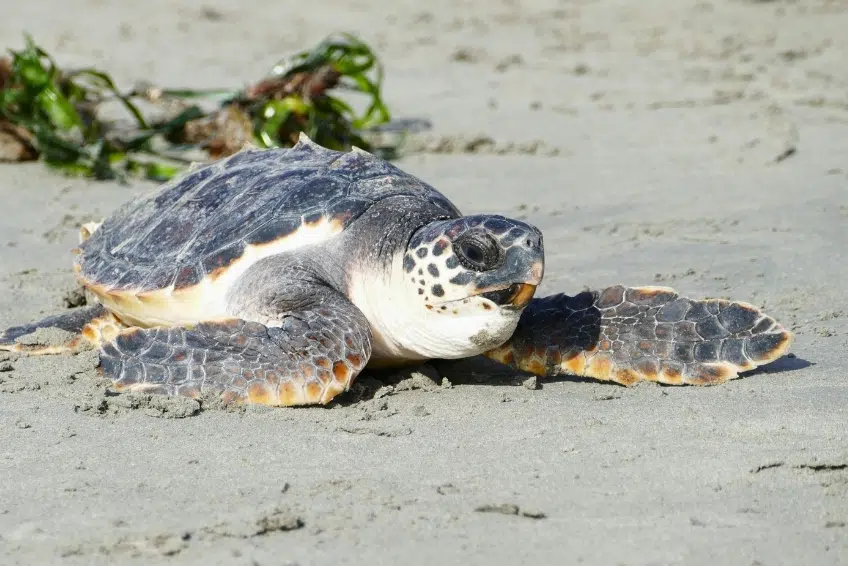
Leatherback, hawksbill (Critically Endangered), and green sea turtles nest on Mosquea Beach, the sand strip separating the lagoon from the Caribbean. Nesting season runs March through July, with a special Night Turtle Watching Tour operating April through June (6 PM-6 AM, RD$7,000 / around $115 USD). Watching a 500 kg leatherback haul herself onto the beach under starlight is a once-in-a-lifetime experience, but it requires an overnight commitment and the willingness to sit on a dark beach for hours with no guarantee of a sighting.

click to see more images
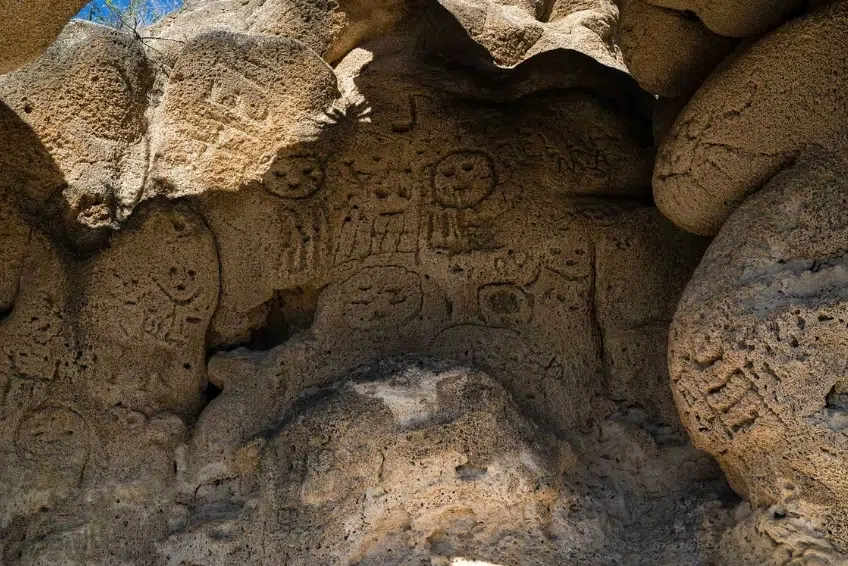
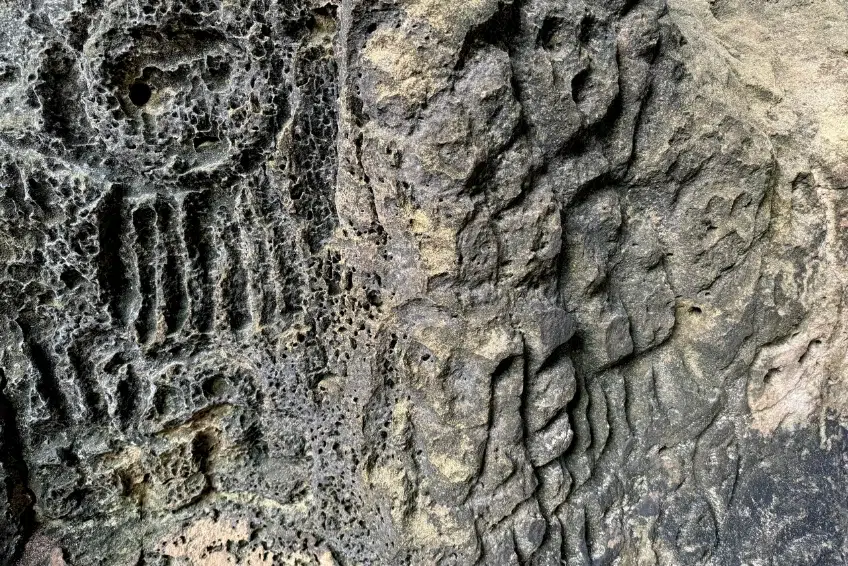
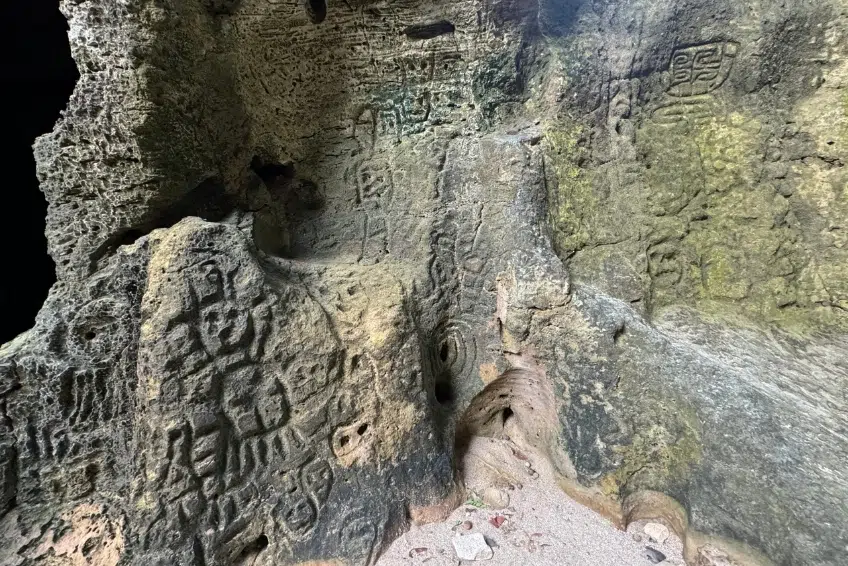
7. Taino Petroglyphs at El Guanal
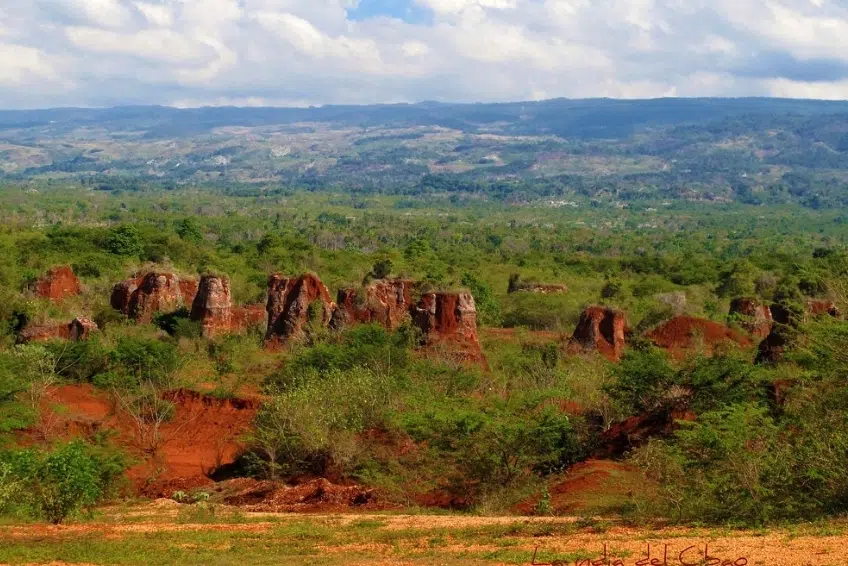
The park contains 15 archaeological sites with cave paintings, petroglyphs, and bas-reliefs left by the island’s original Taino inhabitants. The dedicated Taino Heritage Tour (1.5 hours, RD$4,500 / around $75 USD) takes you by boat to El Guanal, where approximately 50 petroglyphs are carved into rock faces. The oldest pre-Columbian site in the park dates to approximately 2590 BCE. The lagoon sits within the historic territory of the Cacicazgo of Xaragua, one of five major Taino chiefdoms on Hispaniola and considered the most culturally refined, ruled by Cacique Bohechio and his sister Anacaona.
click to see more images
8. Nearby Attractions Worth Combining
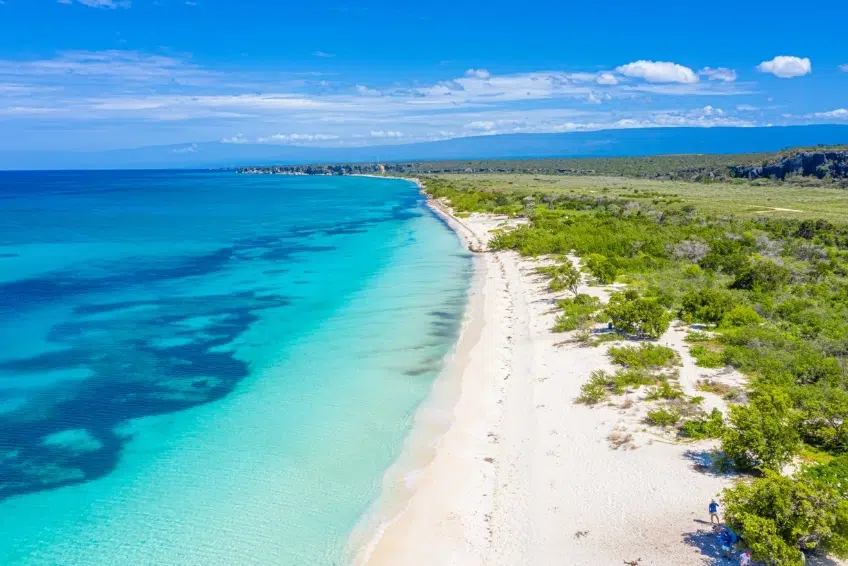
Bahia de las Aguilas is about 65-70 km west of Oviedo by road (routing through Pedernales), widely considered the most beautiful beach in the Dominican Republic: 8 km of pristine white sand with zero development. Access by boat from La Cueva or by 4WD through the park. Many operators combine Bahia with the lagoon as a full-day package.
Check out this Bahia de las Aguilas 2 Day All Inclusive Beach Paradise Tour or this Bahia de las Aguilas Full Day Private Tour With Lunch and Open Bar Tour.
Or this incredible Bahia de Las Aguilas Safari Experience with transportation from the Cabo Rojo Cruise Port.
Hoyo de Pelempito, the massive geological depression (around 700 meters deep), is about 30 km from Pedernales. The last 7 km requires 4WD. Best combined with a Pedernales overnight.
Take a look at this adventure tour where you explore Hoyo de Pelempito, Bahia de la Aguilas, and other Cabo Rojo hidden gems.
Sierra de Bahoruco National Park is the premier birding destination on Hispaniola, harboring 30 of the island’s 32 endemic bird species. Accessible from either Pedernales or Barahona.
Seriously into birding? Check out this Half Day Sierra de Bahoruco Bird Watching Tour or if you want even more time bird watching don’t miss this top rated 3 Day Sierra de Bahoruco Bird Watching Tour.
Check out our complete Pedernales Visitors Guide for the full breakdown of all nearby attractions, hotels, restaurants, and logistics.
Tour Options & Pricing
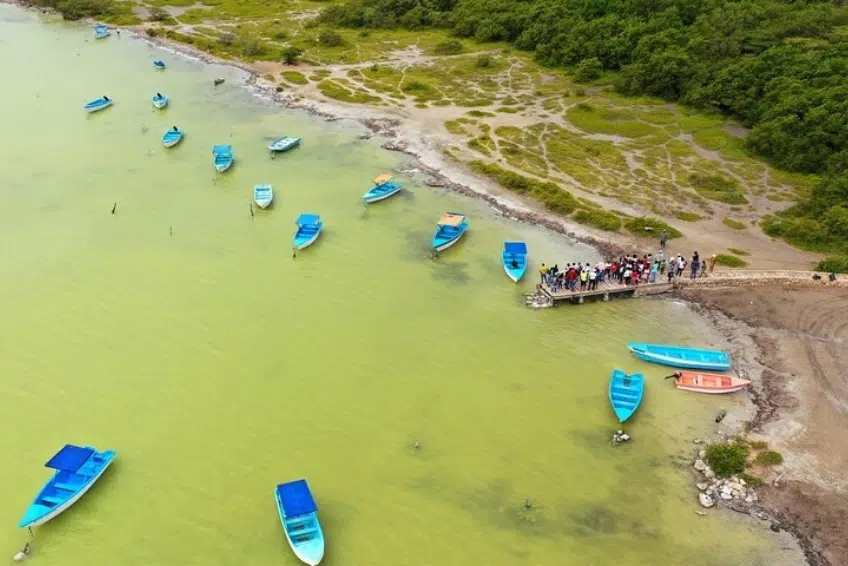
All lagoon tours are managed by AGUINAOVI (Asociacion de Guias de la Naturaleza de Oviedo), the local guides’ association trained and supported by Grupo Jaragua. A guide is mandatory. You cannot explore the lagoon independently. Tours depart from the visitor center at El Cajuil.
Prices below are per group/boat (not per person), based on Grupo Jaragua’s official pricing. Boats carry a maximum of 4-5 passengers plus guide and captain. The park entrance fee of RD$150 (around $3 USD) per person is separate and paid at the visitor center. Grupo Jaragua explicitly asks visitors not to negotiate prices down, as the guide absorbs the loss while boat and fuel costs remain fixed. Tips for the captain and guide are expected and appreciated.
Quick Visits (Under 1.5 Hours)
Flamingo Stroll Walking Tour: 20-30 minutes, RD$1,500 (around $25). A guided walk along the northwest shore toward Cano Escobin. The most affordable way to see the lagoon, but limited in scope.
Flamingo Express Boat Tour: 1 hour, RD$4,000 (around $65). A boat ride to the flamingo viewing areas with an optional mud bath. Good if you’re short on time but want to get out on the water.
Arroyo Salado: Variable, RD$500 (around $8). A freshwater spring just 5 minutes from the lagoon where endemic pupfish nibble your feet. Best added onto another tour.
Half-Day Tours (2-3.5 Hours)
Flamingos & Iguanas Full Tour: 2-2.5 hours, RD$5,500 (around $90). OUR TOP PICK. The complete experience: southern cays, Cayo Iguana with rhinoceros iguanas, flamingo viewing, and the mud bath. This is the one we recommend for first-time visitors, and it’s the most popular for a reason. Add Arroyo Salado afterward for just RD$500 more.
Mosquea Beach: 2-2.5 hours, RD$3,000 (around $50). Boat ride to the turtle nesting beach on the sand strip separating the lagoon from the Caribbean.
Taino Heritage: 1.5 hours, RD$4,500 (around $75). Boat to El Guanal to see approximately 50 Taino petroglyphs, plus flamingo viewing on the return.
Night Turtle Watching: 6 PM to 6 AM, RD$7,000 (around $115). April through June only. An overnight vigil on Mosquea Beach watching leatherback sea turtles nest. A once-in-a-lifetime experience, but no guarantee of a sighting.

Tour Operators (English-Speaking Packages)
Walk-up booking is possible at the visitor center, but we’d recommend booking in advance during peak season. Tours operate daily. Early morning departures are strongly recommended for cooler temperatures and more active wildlife. AGUINAOVI guides primarily speak Spanish only. For English-speaking guides, book through a tour operator:
Larimar EcoTours offers a private full-day tour at around $129 USD/person, including a dedicated cruise ship excursion option from Cabo Rojo (max 28 people, Safari vehicle). Combined Laguna + Bahia de las Aguilas packages are available.
Cocotours runs private shore excursions from Cabo Rojo cruise port, including a “Pedernales + Laguna Oviedo” combo (around 5.5 hours). Quote-based pricing, bilingual guides, AC transport, lunch.
Ecotour Barahona runs a full-day “Flamingo Island” tour from Barahona, from $126 USD/person. Includes AC transport, bilingual guide, park entrance, boat, and drinks.
Laguna de Oviedo Tour Itinerary
The Flamingos & Iguanas tour (2-2.5 hours) is the most popular and delivers the complete experience. Here’s what actually happens, step by step.
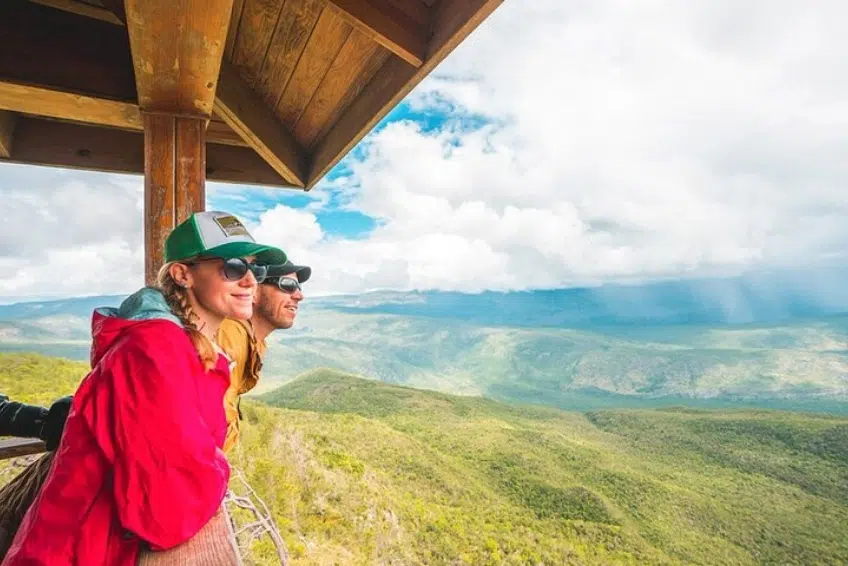
- Arrival and check-in. You drive to the visitor center at El Cajuil off Highway 44. Pay the RD$150 entrance fee at a small hut and receive a wristband. Basic restrooms are available. A lookout tower funded by Seacology offers panoramic lagoon views before you even board. Worth climbing for photos.
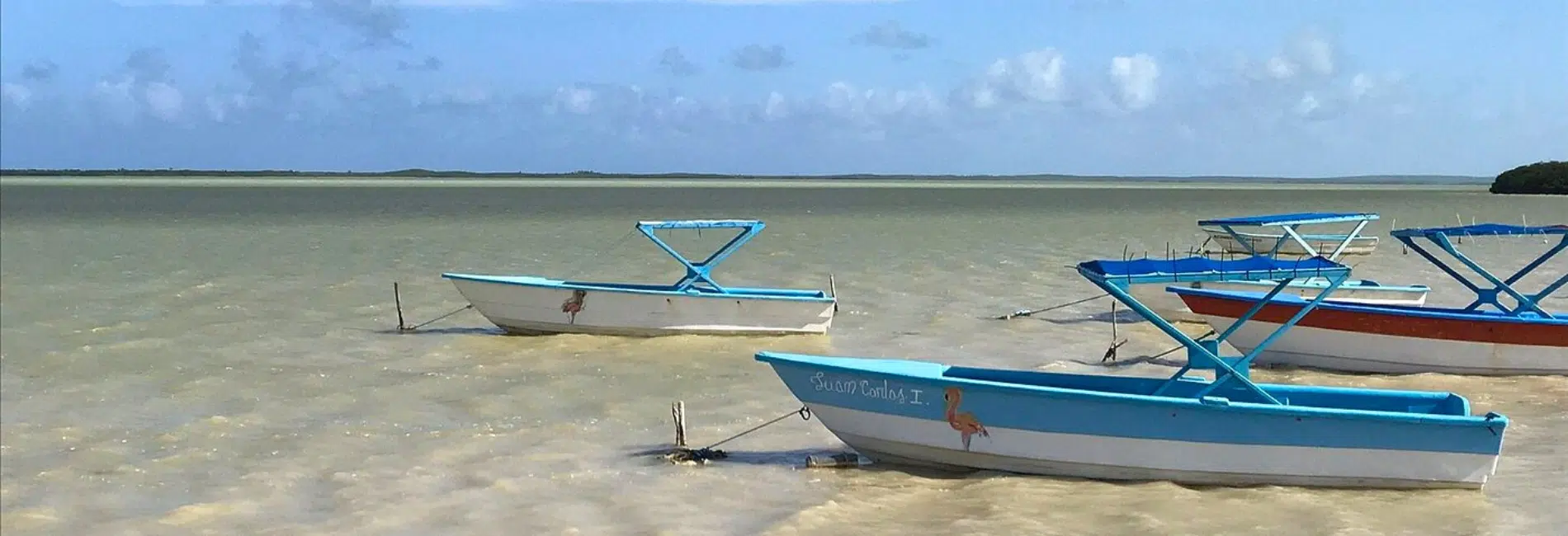
- Boarding. You board a small flat-bottom motorboat at the dock. Maximum 4-5 passengers plus guide and captain. Life jackets are provided. Some boats have canopy shade, but this is not guaranteed. Leave wallets and unnecessary valuables in your locked vehicle.
- Boat ride to Cayo Iguana (around 20 minutes). The striking greenish-yellow water is more vivid in person than in photos. Your guide identifies birds along the way: herons stalking the shallows, spoonbills, cormorants, frigatebirds overhead. You pass small cays studded with cacti and nesting birds.
- Cayo Iguana. You disembark onto sharp coral rock (this is where those closed-toe shoes earn their keep). A sandy clearing hosts a resident colony of rhinoceros iguanas that approach within arm’s length. The guide feeds them wild cherries and fruit. From a viewpoint on the island, you can see the lagoon, the Caribbean Sea, the national park, and the Bahoruco mountains simultaneously.
- Flamingo viewing. The boat cruises toward the northern lagoon areas where flamingos congregate. Pink specks resolve into tall, elegant birds feeding in the shallows. Guides know the best current locations. On good days, hundreds are visible. On poor days, only small groups. Binoculars significantly enhance this portion.
- Mud bath (optional, free). The captain anchors in a shallow area. You step out into knee-deep water over silty sediment. You scoop mineral-rich clay, coat your skin, let it dry, then rinse. Fun, slightly awkward getting back into the boat, and a genuine conversation starter.
- Return. The boat ride back features scenic mountain views with wind turbines on the ridgeline. Total elapsed time: roughly 2-2.5 hours.
Where to Eat in Laguna de Oviedo
Let’s be blunt. There is no food at the lagoon. The visitor center has restrooms but no restaurant, no snack bar, no vending machine. Bring everything you need.
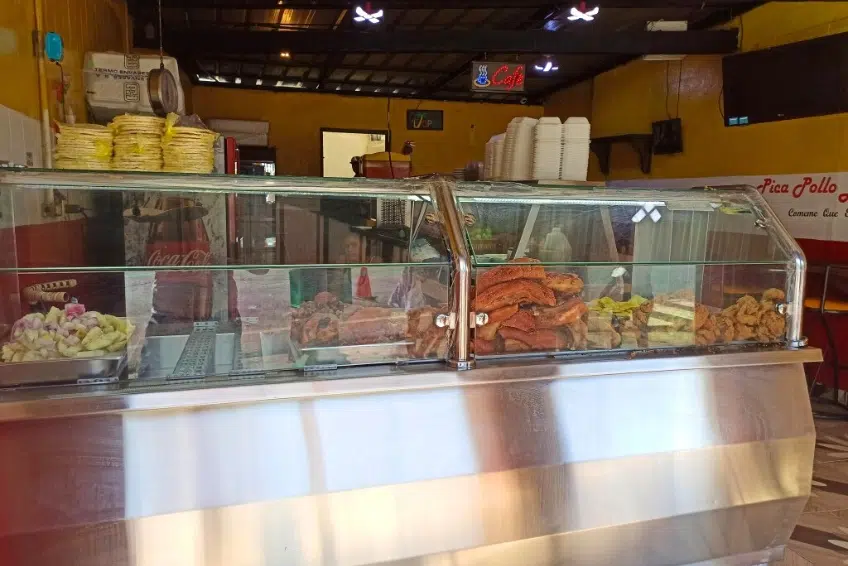
In Oviedo Town
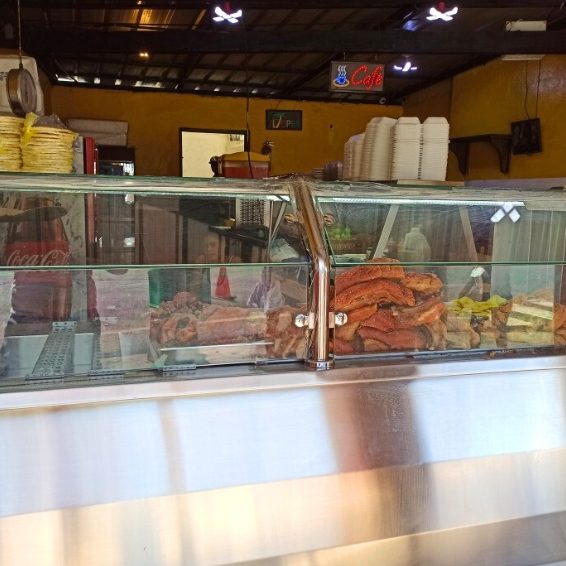
Oviedo has a few basic comedores (small family-run eateries) serving rice, beans, fried fish, and plantains for $3-5 USD, plus colmados for drinks and snacks. These are the real-deal Dominican home-cooking places. Plastic chairs, TV blaring in the corner, and plates of food that will keep you going all day. Don’t expect ambiance, but the portions are generous, and the prices can’t be beat.
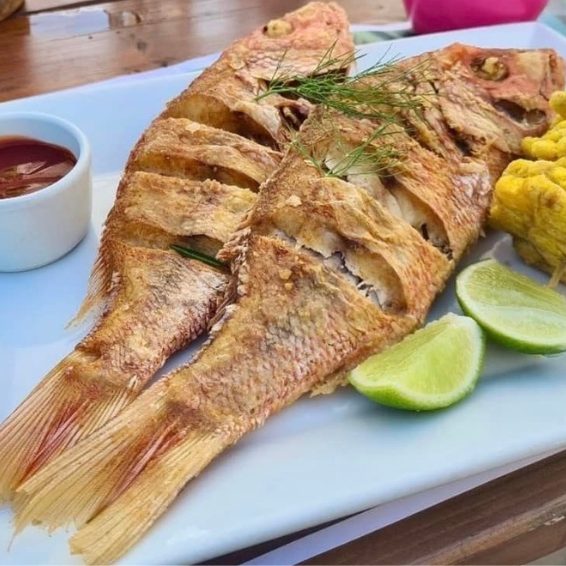
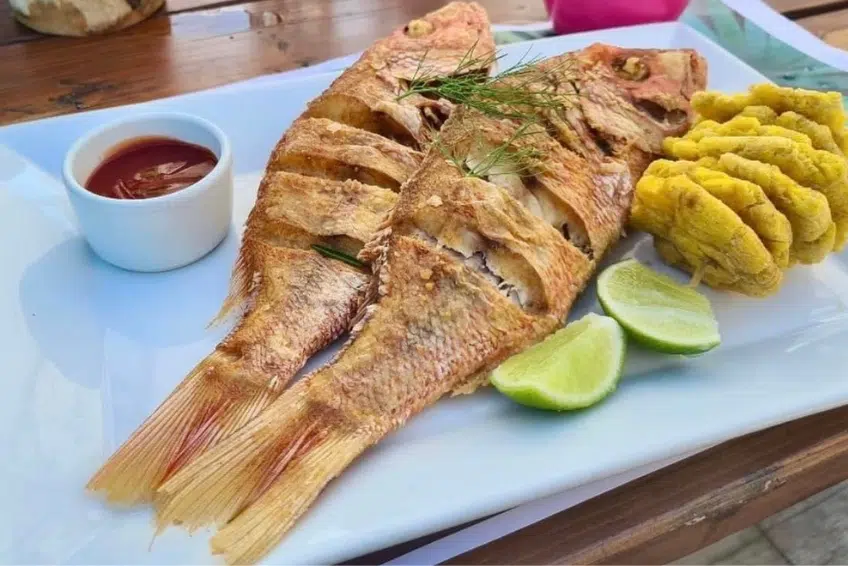
Between Barahona and Oviedo
The towns of Paraiso and Los Patos along Highway 44 have roadside seafood restaurants worth stopping at on your drive to or from the lagoon. Expect fresh fried fish with moro rice and tostones for under $10. These are excellent lunch stops if you’re driving from Barahona.
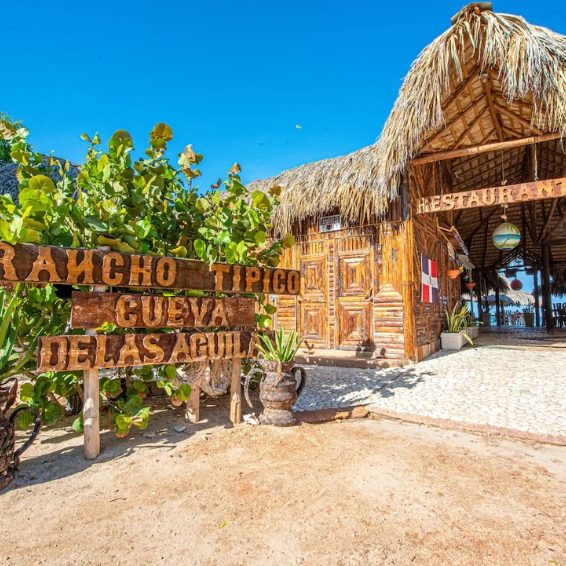
Pedernales/Cabo Rojo Area (around 1 hour west)
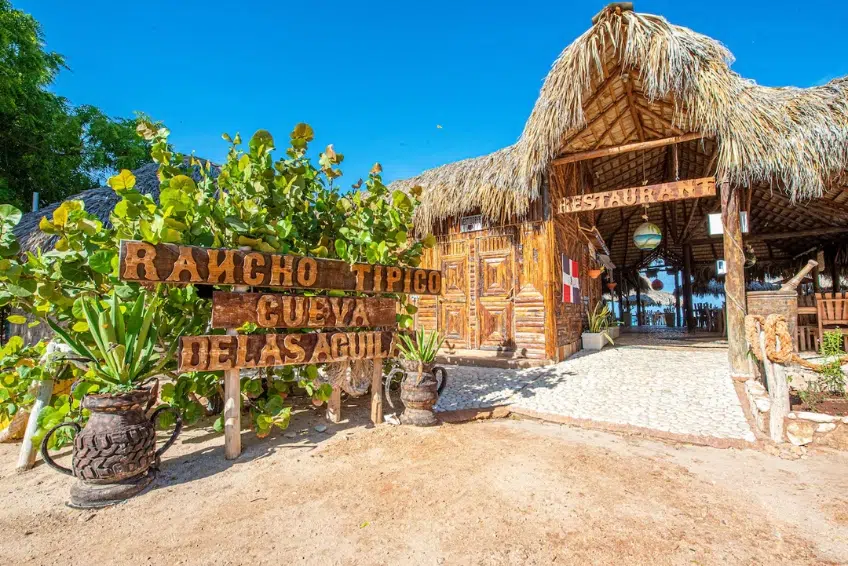
Rancho Tipico Cueva de las Aguilas is probably the top-rated restaurant in the province, and it earns the ranking. This beachside spot at La Cueva serves the legendary Bahiafongo, a mofongo stuffed with mixed seafood that we’d drive the coastal highway again just to eat. They also do lobster mofongo, seafood paella, and fried fish straight off the boats. Mofongos run $7-13 USD. The restaurant also arranges boat tours to Bahia de las Aguilas and offers tent accommodations for around $35/night (no air conditioning).
Bocanye, Grill & Seafood, on Calle Libertad, is a solid Caribbean seafood spot with a varied menu and good portions. It’s one of the better homestyle restaurants in town and worth a visit, especially if you’re staying more than one night.
Restaurante Jalicar on Calle Libertad is our pick for the best value meal in town. Generous family-style plates of pescado frito, lambi al ajillo, and chicken with rice and beans for around RD$1,000 ($17 USD) for the table. No frills, just excellent home-cooked Dominican seafood at prices that feel like a steal.


What to Order
Traditional dishes worth seeking out
- Mofongo (mashed plantains with garlic, often stuffed with seafood)
- Pescado frito (whole fried fish with moro rice and tostones)
- Lambi (conch, prepared various ways)
- Cangrejo con tostones (crab with fried plantains).
For something quick and easy, many street vendors sell empanadas and yaniqueques (fried dough) for pocket change.
Meals across the region typically cost RD$300-1,000 ($5-17 USD). Cash only at virtually every establishment. Check out our Dominican Republic Food Guide for more on what to eat and how to order.
Where to Stay
There are no hotels at the lagoon and very limited options in Oviedo itself. For 1 day at the lagoon, Barahona is the more comfortable base with superior dining and hotel options. For 2+ days exploring the full Pedernales region (lagoon + Bahia de las Aguilas + Hoyo de Pelempito + Sierra de Bahoruco), stay in Pedernales to minimize driving. Here’s what’s available.
In Pedernales
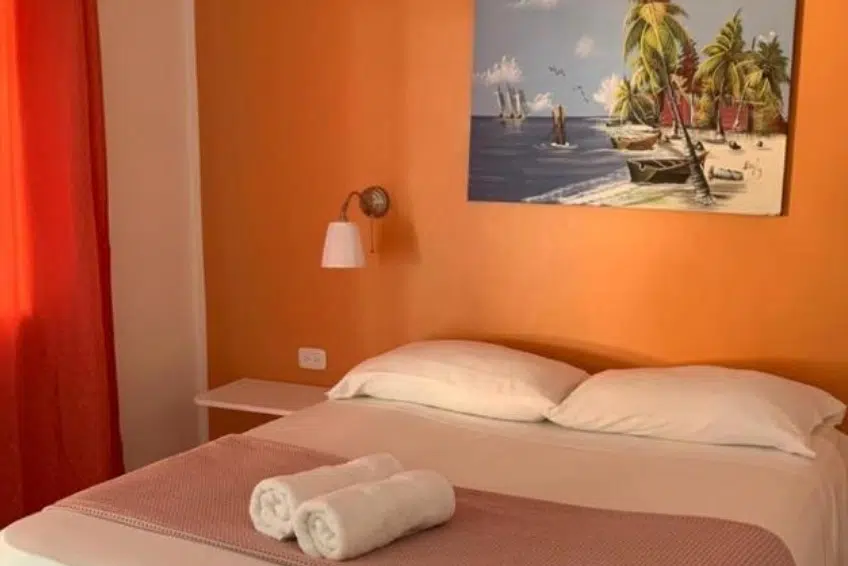
Hotel Pedernales Italia
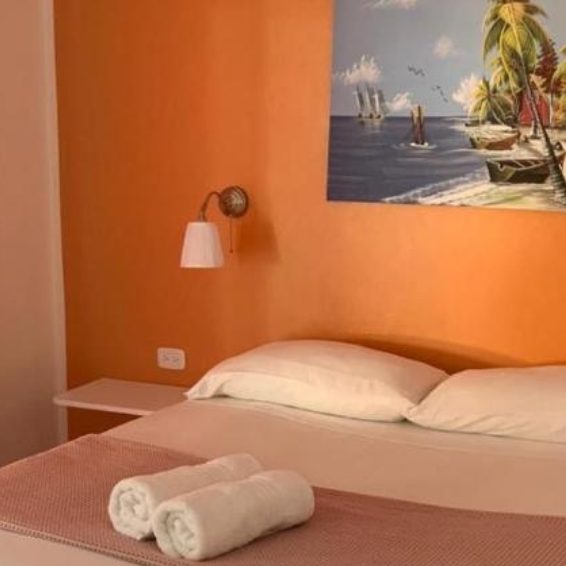
Hotel Pedernales Italia (around $37-44/night) is our top recommendation in Pedernales, full stop. Run by Italian couple Gianni and Viviana, this small 8-room guesthouse is the kind of place that makes you feel like a houseguest rather than a customer. The rooms are clean, air-conditioned, and comfortable. The homemade Italian-Dominican meals (breakfast included, dinner available) is some of the best food in Pedernales. But what really sets it apart is Gianni’s encyclopedic knowledge of the area and genuine willingness to help guests plan excursions, arrange transport, and navigate the region. He’ll give you more useful information about the surroundings than the Ministry of Tourism. The only caveat: Gianni speaks Spanish and Italian but has limited English, so brush up on your Spanish or bring a translation app. Book in advance, as eight rooms fill fast. Check Prices here
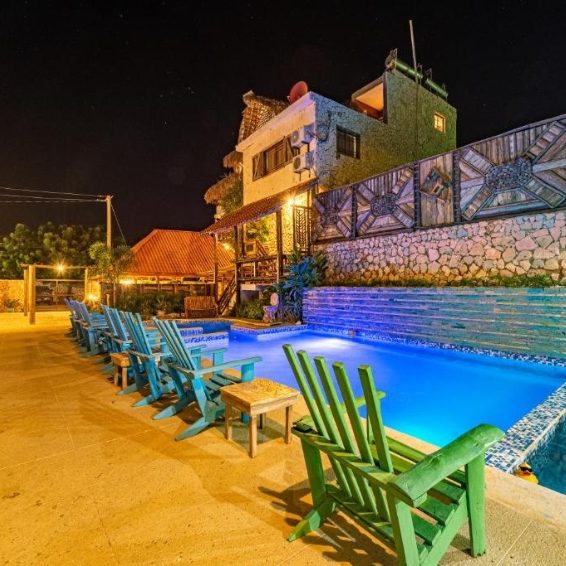
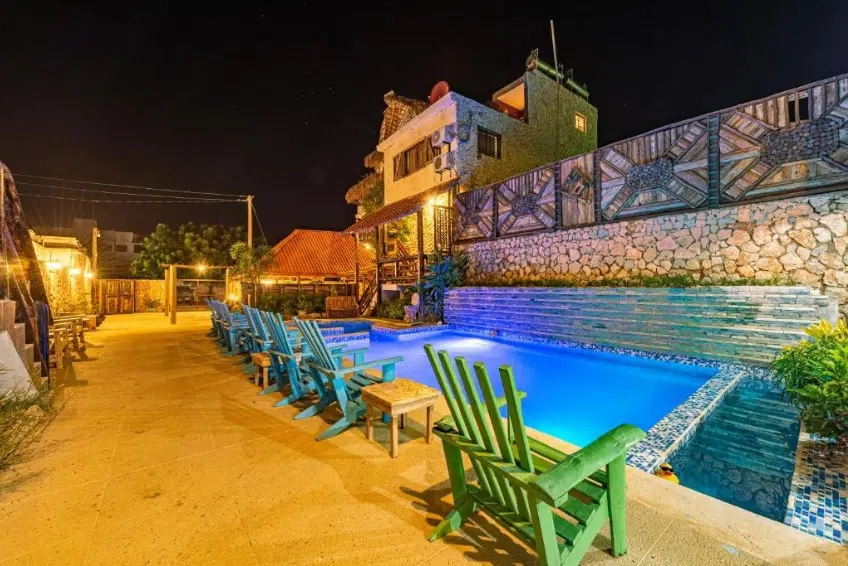
Hotel Vista de Aguilas Ecolodge
Hotel Vista de Aguilas Ecolodge (around $69-82/night) is the nicest physical property in town: handmade wooden furniture, seashell lamps, a small pool, spa services, and an on-site restaurant with farm-fresh juice. The rooms are air-conditioned with private bathrooms, and the complimentary cooked-to-order breakfast is solid. The staff goes out of their way to help with tour planning and logistics, and the overall feel is a genuine boutique eco-hotel. If you want the most comfortable room in Pedernales and don’t mind paying a bit more, this is the one. Our only nitpick: dinner options are limited, so plan to eat elsewhere for evening meals. Check Prices here
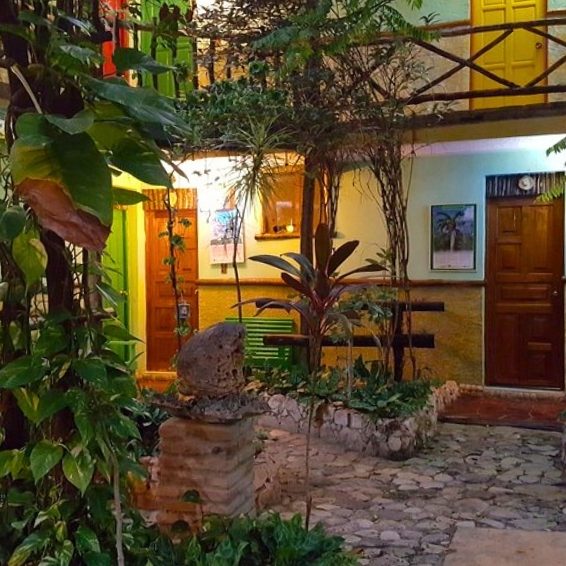
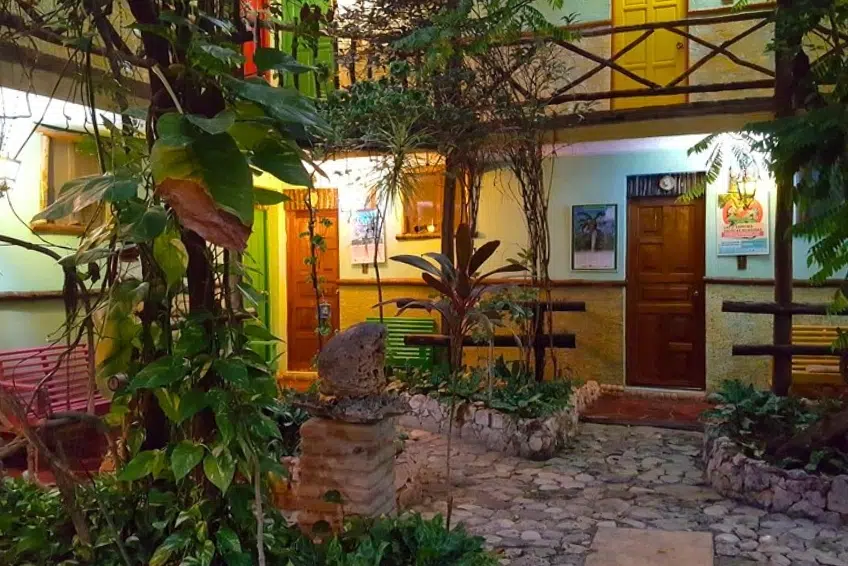
Hostal Dona Chava
Hostal Dona Chava (around $30-45/night) is a wonderful surprise. Don’t let the word “hostal” fool you, this is a proper 21-room guesthouse that’s been family-run for three generations. The lush garden courtyard is one of the most relaxing spaces in Pedernales, filled with plants, comfortable rocking chairs, and a bar where you’ll end up trading stories with other travelers. Rooms have air conditioning, and the staff treats every guest like family. The location is excellent, right near the bus stop and a short walk to everything in town. If you’re on a budget, this is the best value in the region. If you’re not on a budget, it’s still worth considering for the atmosphere alone. Check Prices here
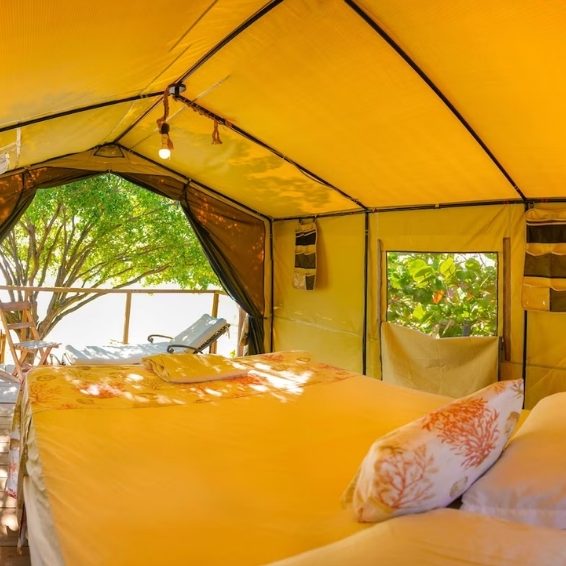
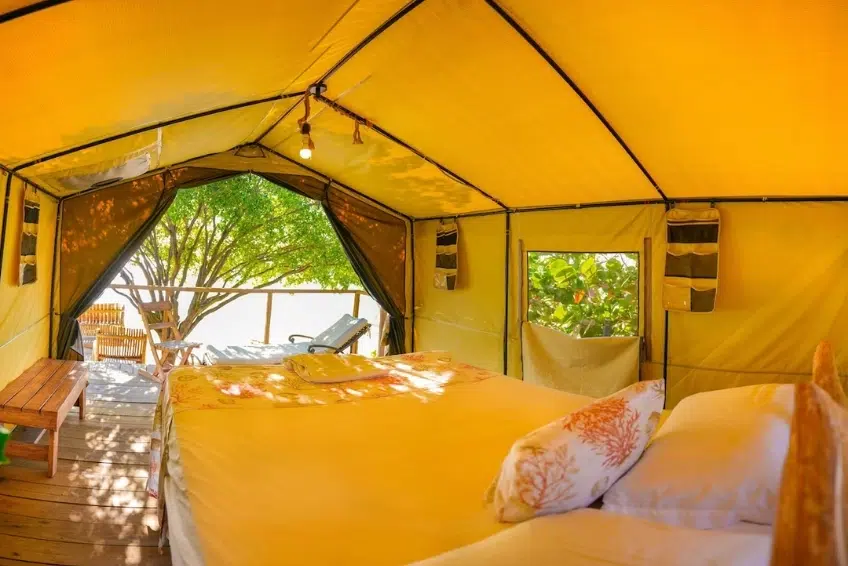
Glamping at Cabo Rojo
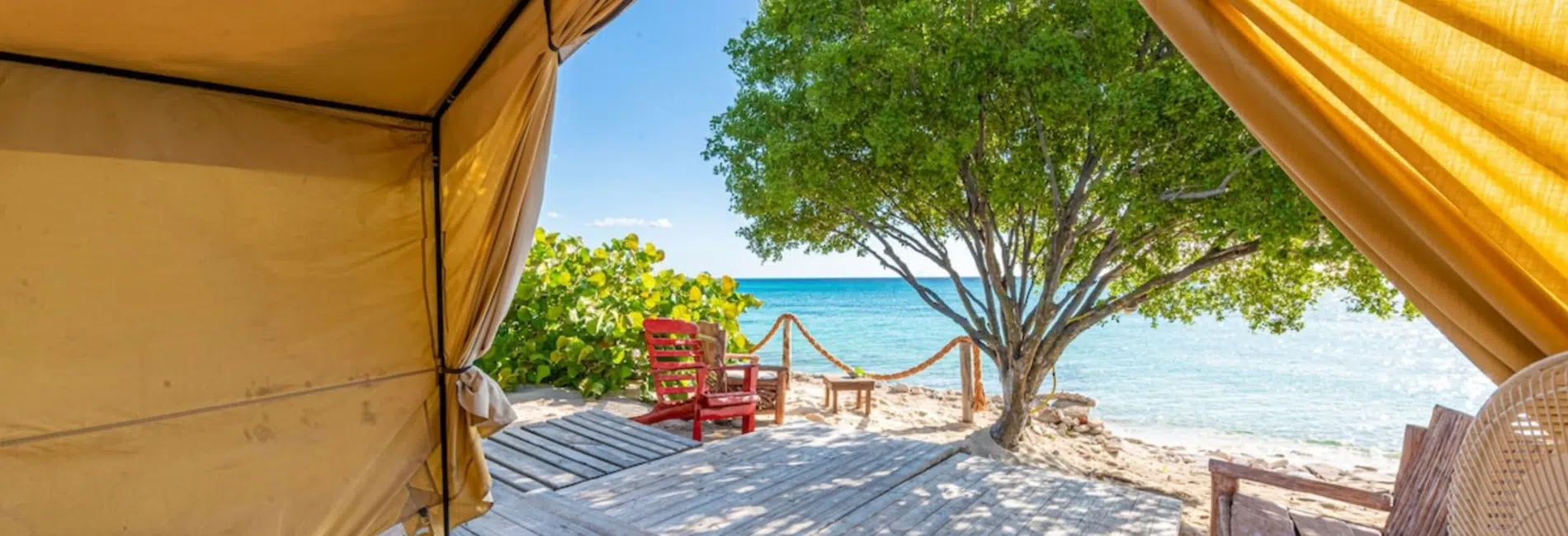
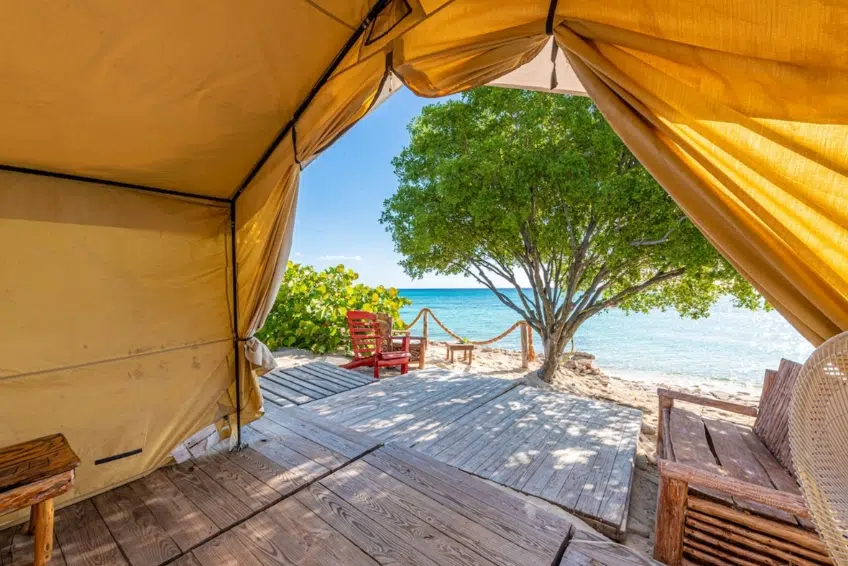
The signature adventure experience for the area is Glamping EcoLodge Cueva de las Aguilas (around $66-195/night depending on tent type, breakfast included), beachfront tents with real beds on a private beach near La Cueva. The location is legitimately stunning as you fall asleep to the sound of waves and wake up steps from the Caribbean. The on-site Rancho Tipico restaurant serves excellent seafood (it won Restaurant of the Year in 2025), and they arrange boat tours to Bahia de las Aguilas directly from the property. With 35+ tents, this is by far the most popular accommodation in the region, and it books up fast. That said, keep your expectations calibrated. There’s no air conditioning (fans only), no WiFi and shared bathrooms for most tent types. Heat and mosquitoes can be intense, especially May through October. On busy weekends and cruise ship days, the staff can get overwhelmed, and service slows down. We’ve seen tent zippers that needed repair and a general sense that popularity is outpacing maintenance. It’s glamping, not a resort. That being said, come with the right mindset and you’ll love it.
In Barahona, Oviedo and Cabo Rojo
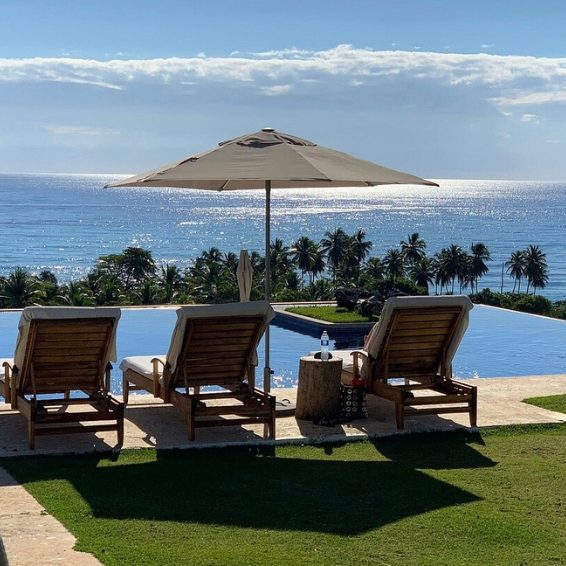
In Barahona (around 1.5-2 hours from lagoon)
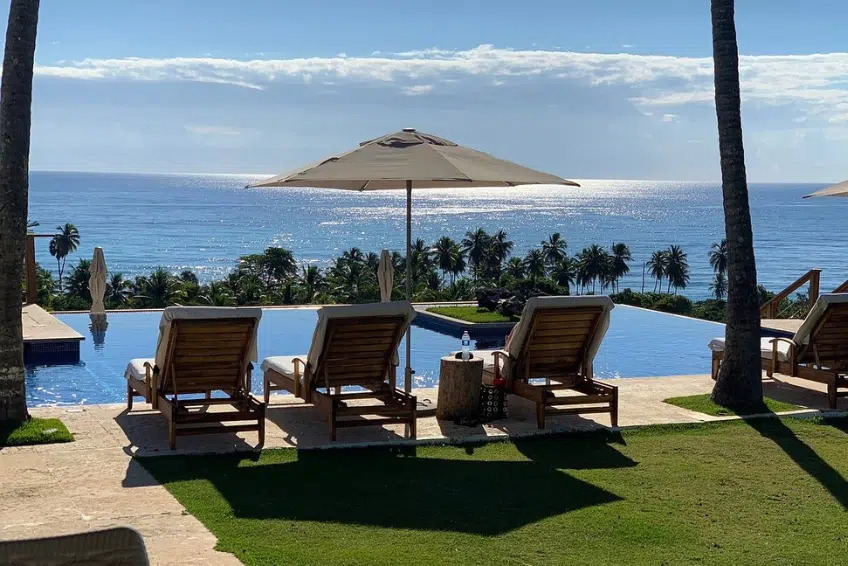
Barahona offers a wider range and generally better amenities. Casa Bonita is the luxury standout (hilltop infinity pool, Caribbean Sea views, around $150-250+/night). Mid-range options include Hotel Caribe (around $58/night, breakfast/dinner included) and Hotel El Quemaito (around $121/night, oceanfront). Budget travelers should check out Hotel Loro Tuerto (around $25-30/night) and numerous guesthouses in the area.
In Oviedo (5 minutes from lagoon)
Oviedo has a handful of community-run guesthouses ($15-30 USD/night) with genuine hospitality but very basic amenities. If proximity to the lagoon is your priority and you don’t mind simple accommodations, staying here saves significant driving time and lets you start a tour at dawn. Ask at the visitor center for current recommendations.
What's Coming Soon
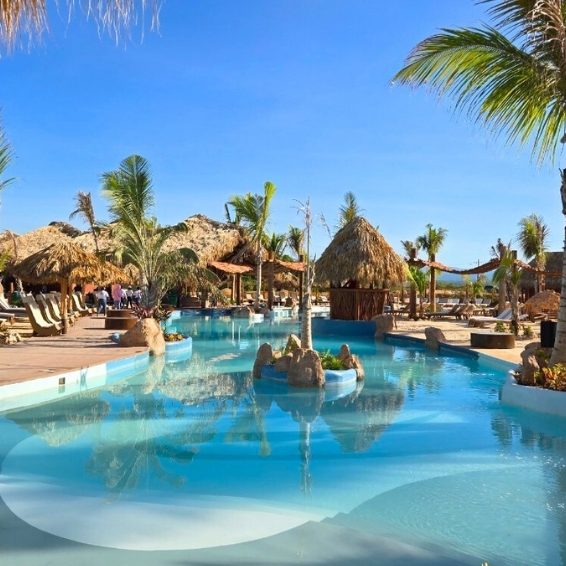
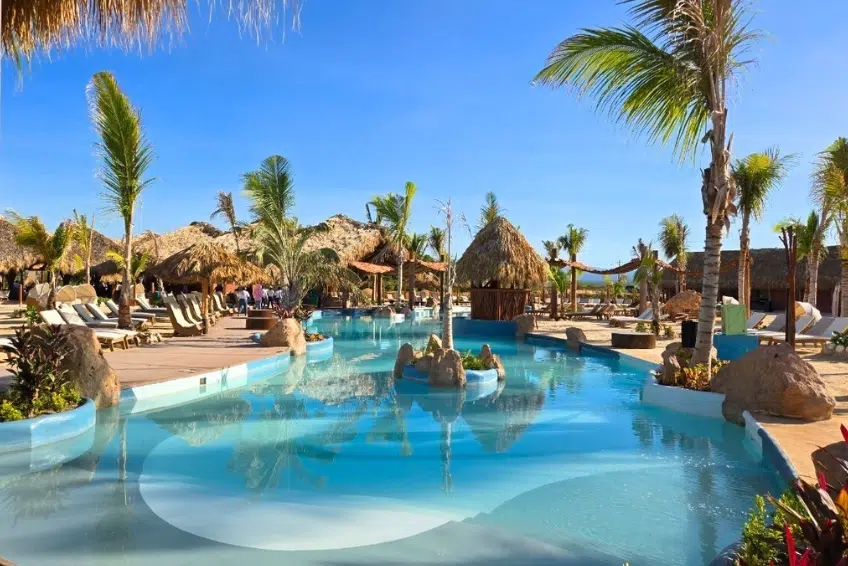
The Cabo Rojo mega-resort development will fundamentally change the accommodation landscape. Iberostar Cabo Rojo (588 rooms) is expected to open in early 2027 as the first major all-inclusive resort. La Quinta by Wyndham (110 rooms) was planned for 2025 but its current status is unclear. Secrets Hyatt (507 rooms) and Dreams Hyatt (504 rooms) are targeted for 2027. The long-term plan calls for 12,000 hotel rooms by 2033 from chains including Hilton, Marriott, Karisma, and Sunwing. The Pedernales of 2030 will look nothing like the Pedernales of today.
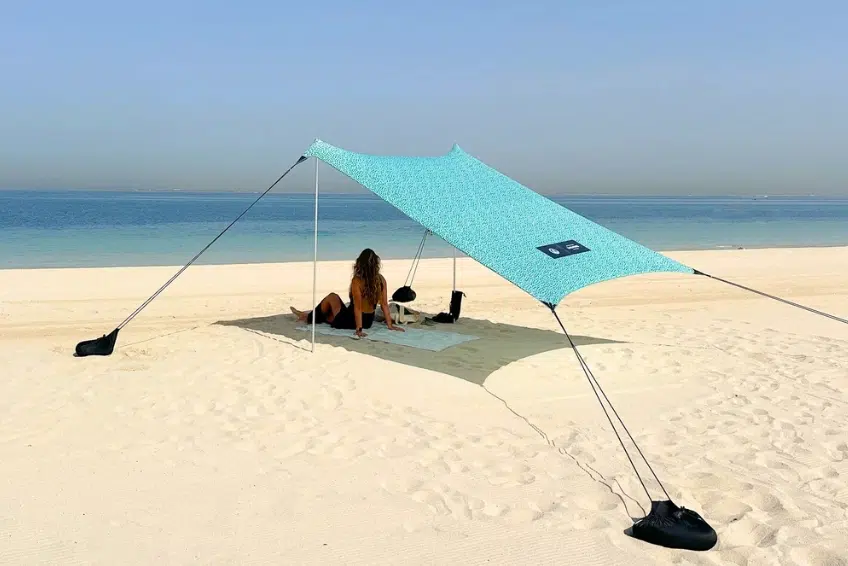
What to Pack
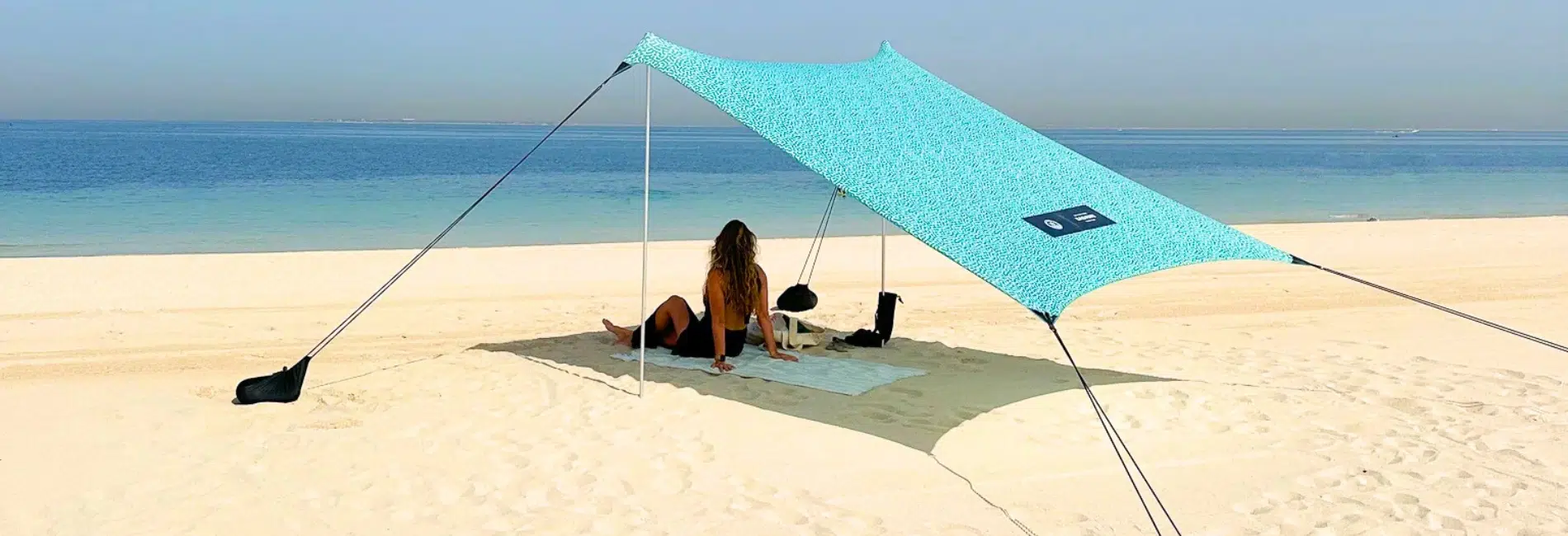
The lagoon demands more preparation than a typical Caribbean excursion. There is no shade on the water, no vendors on the islands, and no shops within a quick drive. If you forget something, you’re stuck without it. Here’s what to bring.
The Essential Packing List
- Reef-safe/biodegradable sunscreen (SPF 50+) (Non-negotiable. Water reflection doubles UV exposure. Apply liberally and reapply. Reef-safe is required inside the national park.)
- Wide-brimmed hat and polarized sunglasses (The glare off the pale water is intense.)
- At least 1-2 liters of water per person (More in summer months. There are zero vendors on the lagoon.)
- Sturdy closed-toe water shoes (Essential for Cayo Iguana’s razor-sharp coral rock. No sandals. No flip-flops.)
- Swimwear and a Beach towel (For the mud bath and/or Arroyo Salado swim)
- Dry change of clothes (You will get wet and/or muddy.)
- Binoculars (We cannot stress this enough. Flamingos are often at a distance that rewards magnification. This is the single item that most improves the experience.)
- Camera with telephoto/zoom lens (200mm+ for quality flamingo and bird photos)
- Waterproof bag or dry bag (For electronics during the mud bath and boat spray)
- DEET-based mosquito repellent (Mangrove areas can be brutal)
- Snacks (For tours longer than 2 hours)
- Cash in Dominican pesos (No card readers exist here)
- Moisturizer (The high salt concentration dries skin significantly)
- Portable battery charger (Cell coverage is unreliable outside Oviedo)
Leave wallets, purses, and unnecessary valuables in your locked vehicle. Bright-colored toenail polish should be avoided (iguanas mistake red/pink toes for fruit).
Best Time to Visit
The lagoon sits in one of the driest corners of the Dominican Republic, with a hot semi-arid climate that barely changes throughout the year. Daytime highs hover around 32°C (89°F) most months. But when you visit shapes what you’ll see, because the wildlife calendar matters more than the weather forecast.
Dry Season
December through April is when you want to be here. The dry season delivers the highest flamingo concentrations, comfortable temperatures (68-82°F), peak North American migrant bird presence, and the least rainfall. February and March are particularly good choices as winter migrants are still present, breeding season is beginning, and flamingo numbers hit their peak. Seas are calm for combination boat trips to Bahia de las Aguilas. Even during “high season,” crowded at the lagoon means sharing it with maybe one or two other boats.
Shoulder Season
May-June and November are also good times to visit. Temperatures push up toward 90°F and humidity increases, but flamingo sightings can still be excellent. Sea turtle nesting peaks April through June, and the special Night Turtle Watching Tour operates only during this window. The landscape is greener and more lush. The tradeoff is punishing midday heat on the water with zero shade. Start your tour at dawn or skip it entirely during midday.
Rainy Season
July through October tests your commitment. This is the peak rainy season and the heart of hurricane season, and daytime temperatures push well past 100°F. Heavy rains can flood walking paths and make the approach road muddy. However, the landscape is dramatic, you’ll have the lagoon virtually to yourself, and prices drop. Hurricane Ines struck on September 29, 1966, destroying the original town of Oviedo. Monitor forecasts and purchase travel insurance with evacuation coverage.
Time of Day
Start as early in the morning as possible. The heat on the lagoon becomes genuinely punishing by midday, and wildlife is most active at dawn. Several visitors also praise sunset tours for the extraordinary light and color on the water. Avoid midday tours entirely during the summer months.
Laguna de Oviedo FAQ
Frequently Asked Questions
How much does it cost to visit Laguna de Oviedo?
Visiting Laguna de Oviedo costs RD$150 (around $3 USD) per person for the Jaragua National Park entrance fee, plus the AGUINAOVI guide boat tour. Tour prices are set by AGUINAOVI (Asociacion de Guias de la Naturaleza de Oviedo) and range from RD$500 (around $8) for Arroyo Salado to RD$7,000 (around $115) for the overnight sea turtle watching tour. The most popular option, the Flamingos and Iguanas Full Tour, costs RD$5,500 (around $90) per boat for up to 5 passengers, covering flamingo viewing, rhinoceros iguanas on Cayo Iguana, and the mud bath over 2-2.5 hours. Split among a group of 4-5, that is under $20 per person. All payments are cash only in Dominican pesos. Grupo Jaragua asks visitors not to negotiate prices down, as boat fuel and captain costs are fixed regardless of group size.
Our tour pricing section lists every available tour with timing, what each includes, and the operator options for English-speaking groups.
Can I visit Laguna de Oviedo without a guide?
No. A licensed AGUINAOVI guide is mandatory for all access to Laguna de Oviedo inside Jaragua National Park, with no exceptions. AGUINAOVI guides are trained by Grupo Jaragua, the Dominican conservation NGO that manages the lagoon’s ecotourism program, and know the locations of active flamingo feeding areas, rhinoceros iguana colonies, sea turtle nesting beaches, and Taino archaeological sites. Walk-up booking is available at the visitor center at El Cajuil on the lagoon’s north shore, so no advance reservation is needed outside peak season. AGUINAOVI guides primarily speak Spanish. For English-speaking guided tours, operators including Cocotours, Larimar EcoTours, and Ecotour Barahona all offer bilingual experiences that incorporate the AGUINAOVI boat tour.
Our tour operators section compares every English-speaking option with pricing, group sizes, and what each package includes from Santo Domingo, Barahona, and the Cabo Rojo cruise port.
Will I definitely see flamingos at Laguna de Oviedo?
Flamingo sightings at Laguna de Oviedo are highly likely but not guaranteed, as the birds are wild and move freely across the lagoon’s approximately 27-28 square kilometers based on water levels, food availability, and disturbance. Grupo Jaragua surveys have counted over 2,400 American flamingos (Phoenicopterus ruber) at the lagoon during peak periods. The best viewing window is December through April, when migratory populations from breeding colonies in the Bahamas and elsewhere in the Caribbean are at their highest. AGUINAOVI guides monitor flamingo locations daily and adjust boat routes to maximize sightings. Binoculars are strongly recommended since the best viewing often occurs at distances that avoid disturbing the flock. On good days, hundreds of birds are visible feeding in the shallow hypersaline waters.
Our when to visit section breaks down flamingo counts by month, explains what drives the seasonal variation, and covers the other wildlife guaranteed regardless of flamingo numbers.
Is Laguna de Oviedo accessible from the Cabo Rojo cruise port?
Laguna de Oviedo is accessible as a cruise day excursion from Port Cabo Rojo, approximately one hour each way by road along Highway 44 through Pedernales Province. Cocotours offers a private 5.5-hour bilingual excursion with air-conditioned transport and a guaranteed on-time return to the ship. Larimar EcoTours operates a dedicated cruise excursion in Safari vehicles seating up to 28 passengers. Norwegian Cruise Line offers a ship-sponsored shore excursion to the lagoon called Paseo de los Flamencos. Combined Laguna de Oviedo and Bahia de las Aguilas full-day packages are available for cruise passengers who want to combine the DR’s top wildlife encounter with its top beach in a single port day.
Our cruise logistics section covers how to choose between ship and independent excursions, what each costs, and which operators guarantee return before departure.
Do I need a 4x4 to get to Laguna de Oviedo?
No 4×4 is needed to reach Laguna de Oviedo. Highway 44, which connects Barahona and Pedernales through the southwest Dominican Republic, is paved, and the short turnoff to the visitor center at El Cajuil is a manageable dirt road for any standard vehicle in normal conditions. Road conditions can worsen after heavy rain, particularly during the July through October rainy season. A 4×4 is only necessary if continuing beyond the lagoon to Hoyo de Pelempito (a geological depression 700 meters deep in Sierra de Bahoruco), backcountry trails in Sierra de Bahoruco National Park, or certain remote areas of Jaragua National Park. Neither Laguna de Oviedo nor Bahia de las Aguilas via the La Cueva boat route requires a 4×4.
Our getting there section covers road conditions on every route from Santo Domingo, Barahona, and Pedernales, with seasonal driving advice.
Are there restrooms at Laguna de Oviedo?
Basic restrooms are available at the Laguna de Oviedo visitor center at El Cajuil. They are functional but basic. There are no restroom facilities anywhere on the lagoon, on Cayo Iguana (the rhinoceros iguana island), or at Arroyo Salado freshwater spring. The visitor center also has a lookout tower funded by Seacology that offers panoramic views across the lagoon, the Caribbean Sea, and the Sierra de Bahoruco mountains before you board the boat. No food, drinks, or supplies are available at the visitor center. Bring everything needed for the tour before arriving.
Our complete packing list covers everything you need for a full day at the lagoon, including items specific to the mud bath and Cayo Iguana’s coral rock surface.
Can I swim in Laguna de Oviedo?
Swimming in Laguna de Oviedo is not the primary draw, but wading and the mud bath are standard parts of the Flamingos and Iguanas Full Tour. The lagoon is hypersaline at roughly three times the salinity of normal seawater, which will sting open wounds and irritated eyes. The mud bath, where visitors scoop mineral-rich sediment from the lagoon floor and apply it to their skin, is included in the Full Tour at no extra cost. For a genuine freshwater swim, Arroyo Salado is the far better option: a crystal-clear spring surrounded by mangrove shade, 5 minutes from the lagoon, where endemic Oviedo pupfish (Cyprinodon nichollsi) nibble your feet. Arroyo Salado costs RD$500 (around $8) and is available as a standalone visit or an add-on to the lagoon tour.
Our Arroyo Salado section explains why most visitors call it the unexpected highlight of the day and how to combine it with the Full Tour.
Is Laguna de Oviedo safe to visit?
Laguna de Oviedo is safe to visit with standard precautions. The primary hazards are sun and heat exposure (no shade exists on the lagoon; temperatures reach the high 90s Fahrenheit with intense solar radiation off the pale water surface), razor-sharp coral rock on Cayo Iguana (closed-toe water shoes are essential), and mosquitoes in mangrove areas (DEET-based repellent is recommended). Life jackets are provided on all AGUINAOVI boats. The lagoon averages only 1-5 feet deep, so drowning risk is minimal. Rhinoceros iguanas (Cyclura cornuta, IUCN Endangered) on Cayo Iguana are habituated to visitors and not aggressive, but avoid bright red or pink toenail polish as they may mistake it for fruit and nip. The nearest hospital is Hospital Provincial Dr. Elio Fiallo in Pedernales, around 55 km away. Travel medical evacuation insurance is strongly recommended for this remote region.
Our safety and infrastructure section covers emergency contacts, road evacuation routes, and insurance recommendations for the full southwest Dominican Republic region.
How long should I plan for a visit to Laguna de Oviedo?
Plan a minimum of half a day for Laguna de Oviedo from nearby bases. The Flamingos and Iguanas Full Tour takes 2-2.5 hours on the water. Add 30 minutes for check-in and the Seacology lookout tower, and 30-45 minutes for Arroyo Salado if combining. Driving time from Pedernales is around 1 hour each way; from Barahona, 1.5-2 hours each way. A full day allows comfortable combination with Bahia de las Aguilas (65-70 km west via Pedernales), which is the most popular multi-destination itinerary in the southwest Dominican Republic. Two nights based in Pedernales is the optimal approach for covering Laguna de Oviedo, Bahia de las Aguilas, and Hoyo de Pelempito without rushing.
Our step-by-step tour itinerary walks through exactly what happens during the Full Tour, from visitor center check-in to the boat ride back.
Is Laguna de Oviedo worth visiting if I am also going to Bahia de las Aguilas?
Yes. Laguna de Oviedo and Bahia de las Aguilas are complementary, not competing destinations, and combining both makes for one of the strongest nature itineraries in the entire Caribbean. Bahia de las Aguilas is a world-class beach: 8 kilometers of pristine white sand inside Jaragua National Park with zero development and exceptional water clarity. Laguna de Oviedo is a world-class wildlife encounter: American flamingos, Endangered rhinoceros iguanas, close to 150 bird species including 19 Hispaniola endemics, and the Oviedo pupfish (Cyprinodon nichollsi), a species endemic to this single lagoon. The lagoon tour takes 2-2.5 hours and is easily combined with Bahia de las Aguilas in a single full day. Multiple operators run combined packages, and the drive between the two via Pedernales takes around 1 hour.
Our nearby attractions section has the optimal day-by-day itinerary for combining both destinations with Hoyo de Pelempito and Sierra de Bahoruco National Park.
What language do the Laguna de Oviedo guides speak?
AGUINAOVI guides at Laguna de Oviedo primarily speak Spanish only. Walk-up visitors with basic Spanish can book directly at the visitor center at El Cajuil. For English-speaking guided experiences, three established operators serve the lagoon: Cocotours (private excursions from the Cabo Rojo cruise port and Pedernales, bilingual guides, air-conditioned transport), Larimar EcoTours (from $140+ per adult, Safari vehicle, cruise and independent excursions), and Ecotour Barahona (full-day Flamingo Island tour from Barahona, from $126 per person, bilingual guide and park entrance included). All three incorporate the mandatory AGUINAOVI boat tour as part of their package.
Our tour operators section has direct booking links and up-to-date pricing for every English-speaking operator serving the lagoon.
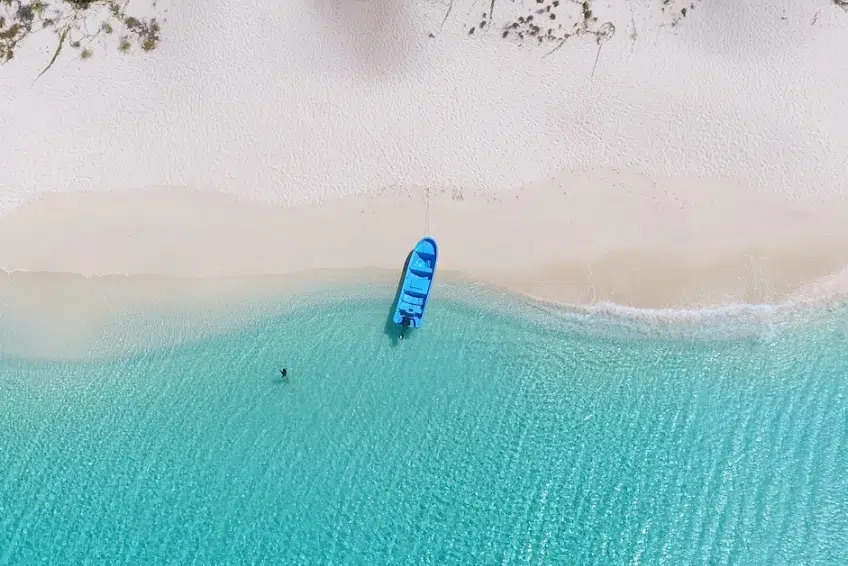
Bahia de las Aguilas is the Dominican Republic's most beautiful beach, and one of its hardest to reach. This guide covers everything you need to plan your visit: how to get there from Cabo Rojo cruise port or Pedernales, boat logistics, costs, what to pack, where to eat, and honest advice on what to expect.
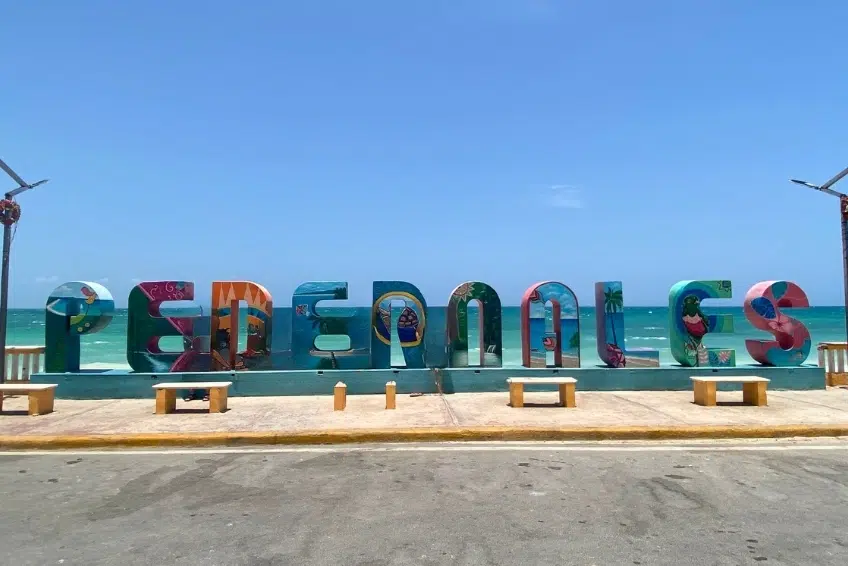
Pedernales is the gateway to the Dominican Republic's wild southwest: Bahia de las Aguilas, Hoyo de Pelempito, Jaragua National Park, and the new Cabo Rojo cruise port. This guide covers how to get there, where to stay and eat, what to do, and everything you need to plan your trip.
Port Cabo Rojo is one of the Caribbean's newest and most remote cruise stops, and the shore excursion decision looks very different here than at busier ports. This guide covers everything: what your cruise line offers, how to visit Bahia de las Aguilas independently, and how to make the most of your port day.
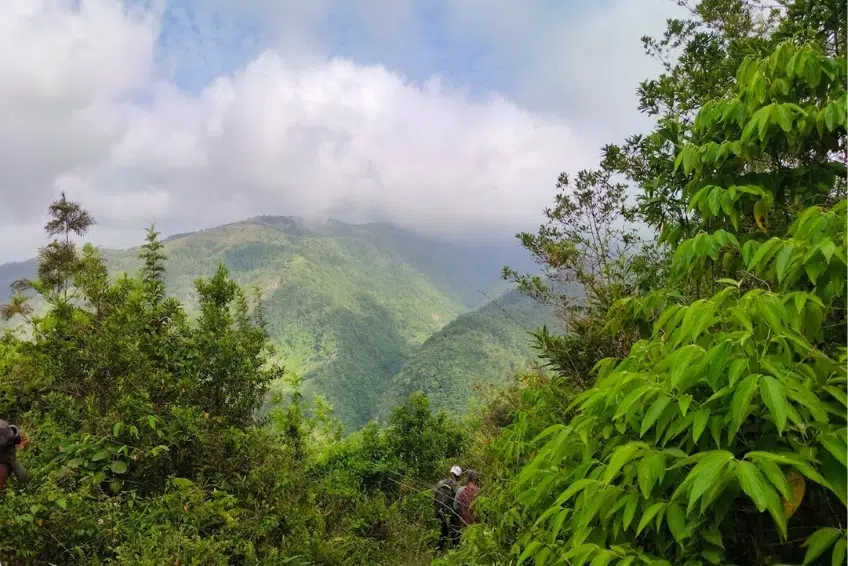
The Caribbean's most biodiverse mountain range, Sierra de Bahoruco National Park shelters 30 of Hispaniola's endemic bird species, ancient cloud forests, and wildlife found nowhere else on Earth. This complete guide covers how to get there, what to do, where to stay, and everything else you need to plan your visit.
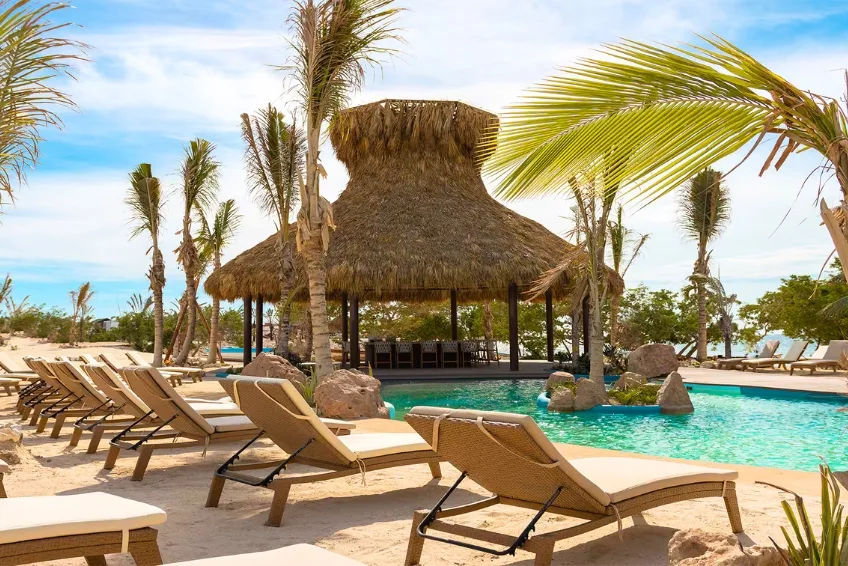
Baby Beach at Port Cabo Rojo is a capacity-controlled beach club with an unlimited open bar, sandy Caribbean swimming, kayaks, and a freshwater pool. But is it worth the price? This guide covers exactly what's included, what it costs, who should book it, and how to get the most out of your day.
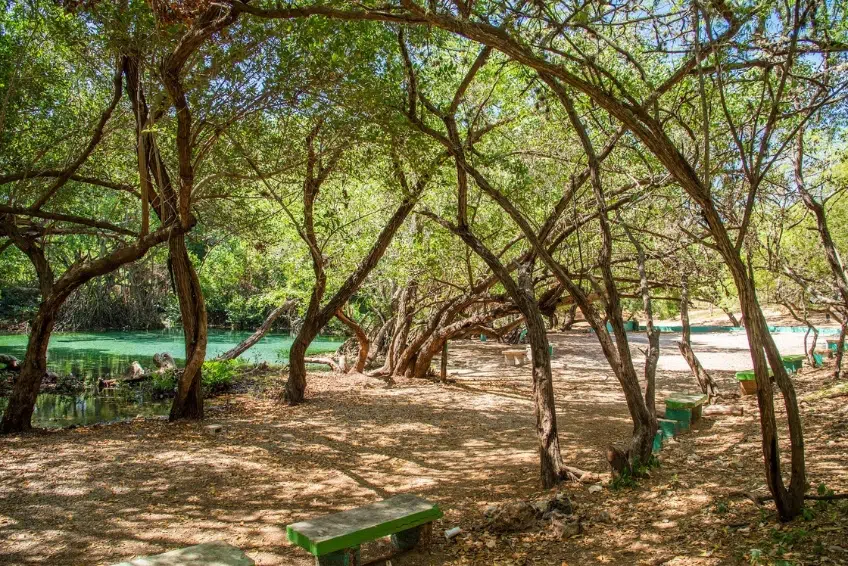
Jaragua National Park is the largest protected area in the Caribbean, home to Bahia de las Aguilas, thousands of flamingos at Laguna de Oviedo, and wildlife found nowhere else on Earth. This guide covers how to get there, 10 things to do, tour options and pricing, where to eat and stay in Pedernales, what to pack, and the best time to visit.
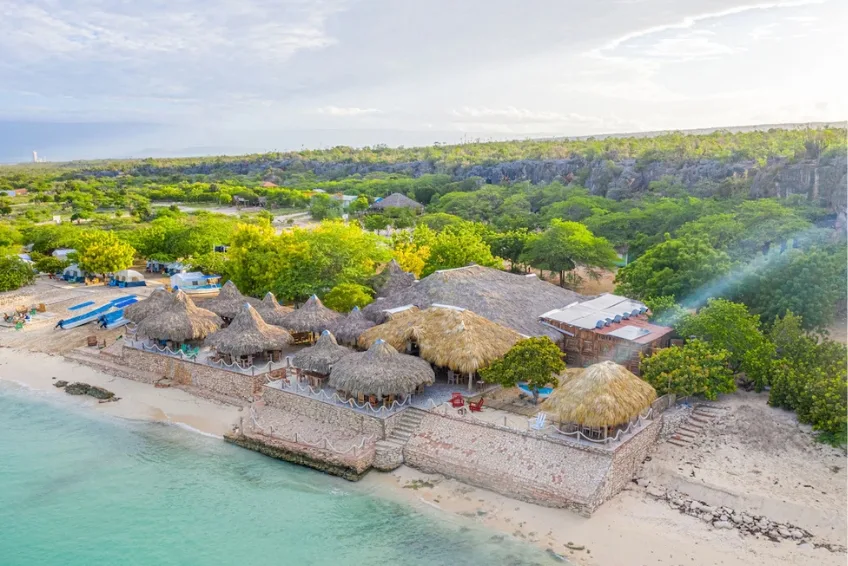
Pedernales has no chain hotels, no resort buffets, and no swim-up bars. What it does have is the best beach in the Caribbean, a handful of genuinely great family-run guesthouses, and a $2.2 billion resort development that's about to change everything. Here's where to stay right now.
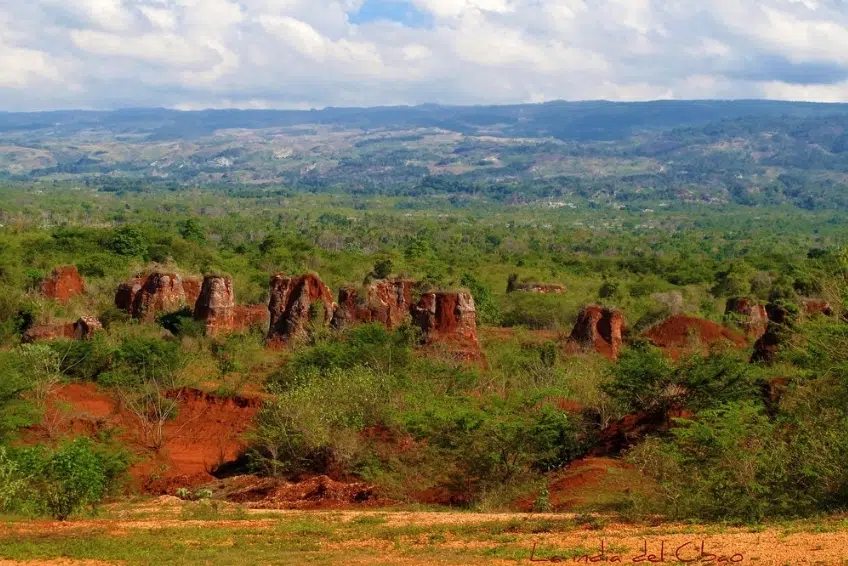
Deep in the mountains of southwest Dominican Republic, Hoyo de Pelempito is a geological depression so vast that clouds gather inside it. Over 700 meters deep, ringed by walls that rise to 1,800 meters, and sheltering 13 endemic bird species: this is the Caribbean's most dramatic natural wonder.
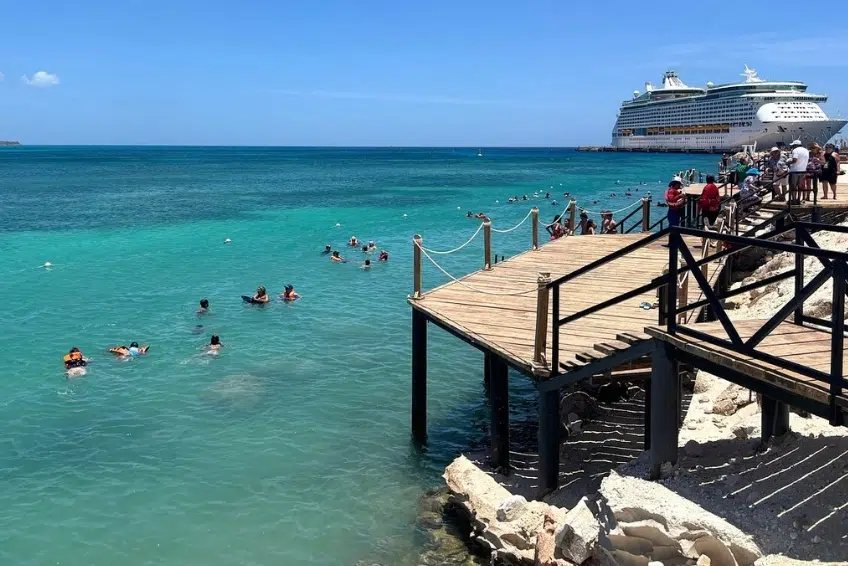
Port Cabo Rojo opened in 2024 on the remote southwest coast of the Dominican Republic, and what surrounds it is extraordinary. Bahia de las Aguilas, one of the world's great beaches, is a short boat ride away. This guide covers everything you need for your port day.