
What Is Larimar?
 Daniel Mode
Daniel Mode
Daniel Mode Laura Schulthies
Laura Schulthies
Laura SchulthiesYou’ve probably seen it by now. Blue pendants in the market stalls. Sky-colored rings in the shop windows along the waterfront. Vendors holding up stones that somehow look exactly like sunlight hitting a Caribbean wave. That’s Larimar. And there’s a reason it keeps showing up here in the Dominican Republic’s southwest more than anywhere else on the planet.
Larimar is a rare blue gemstone that exists in exactly one place on Earth. A single mountainside in the Dominican Republic, a short drive from Cabo Rojo. Nowhere else in the world has this volcanic sea-blue stone ever been found. That geographic exclusivity, combined with its impossibly tropical color, has turned Larimar into the Dominican Republic’s national stone and one of the most distinctive souvenirs a visitor to the southwest coast can take home.
For travelers exploring Cabo Rojo, Pedernales, and Bahia de las Aguilas, Larimar is not just a pretty pendant in a shop window. It is a local story written in 35 million years of Caribbean geology, and it belongs to this exact stretch of coastline. Let’s get into it.
This article contains affiliate links. If you click on our links, we may earn a small commission at no extra cost to you. This helps us continue to offer free travel guides, but does not influence our recommendations in any way. Thanks for supporting independent travel content.
Contents
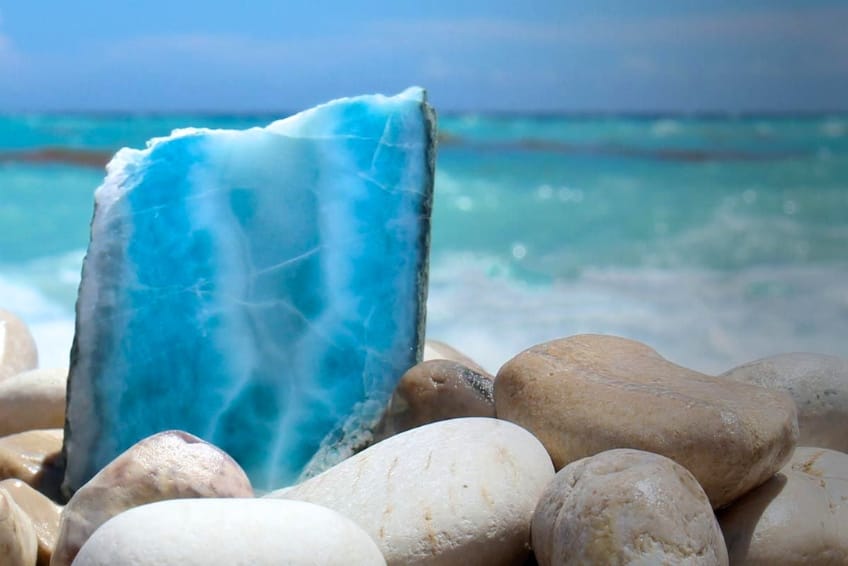
A Gemstone From Caribbean Volcanoes
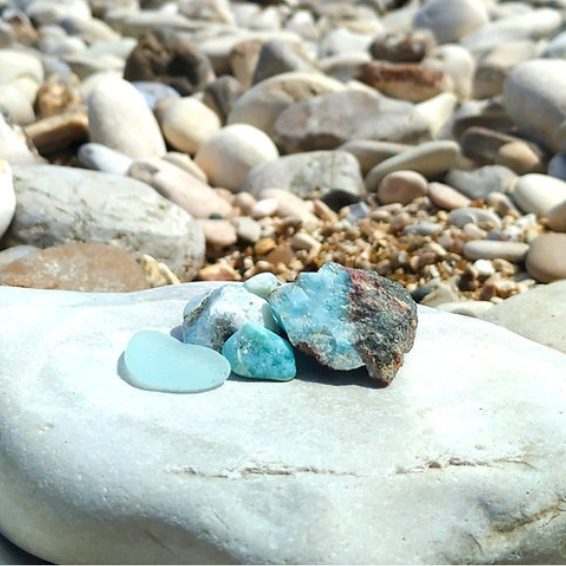
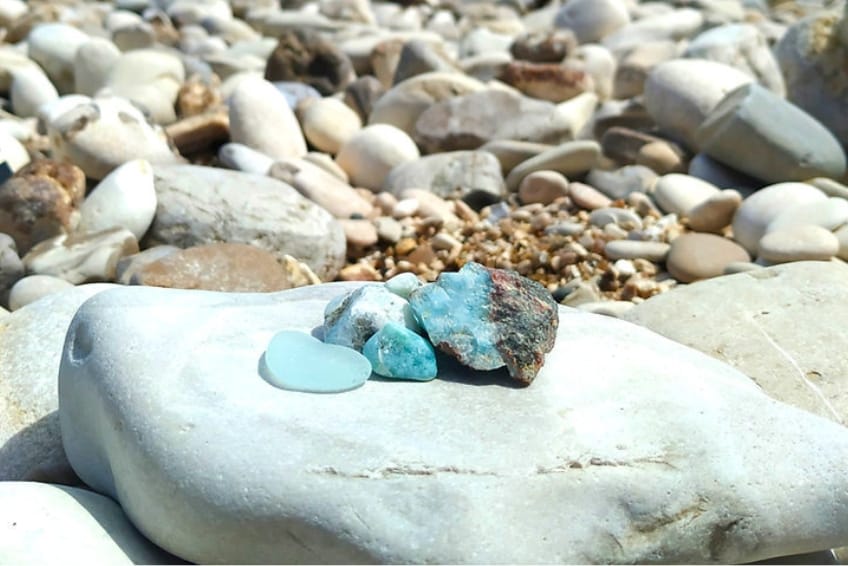
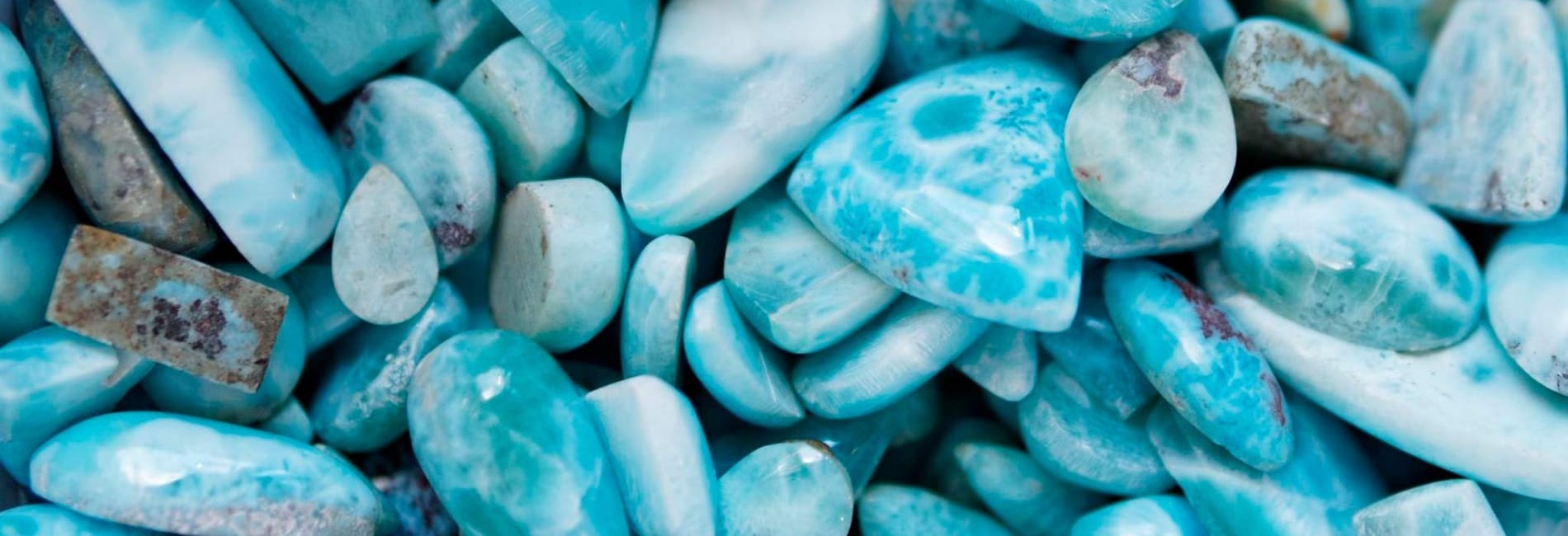
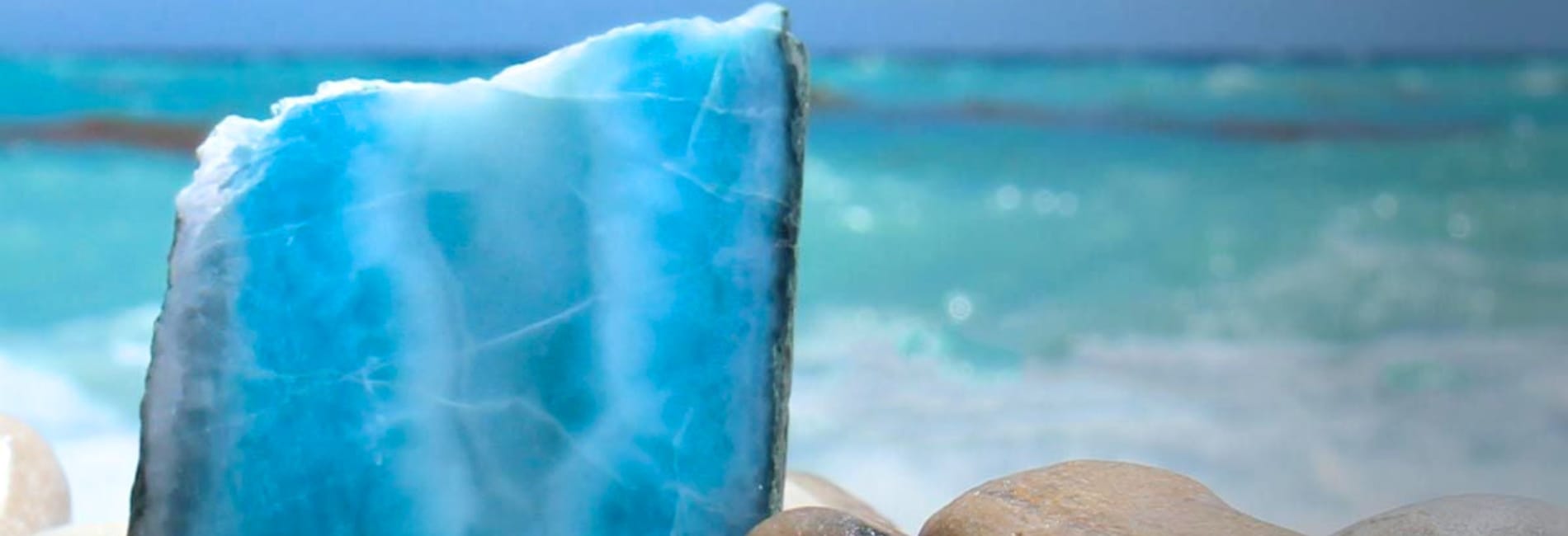
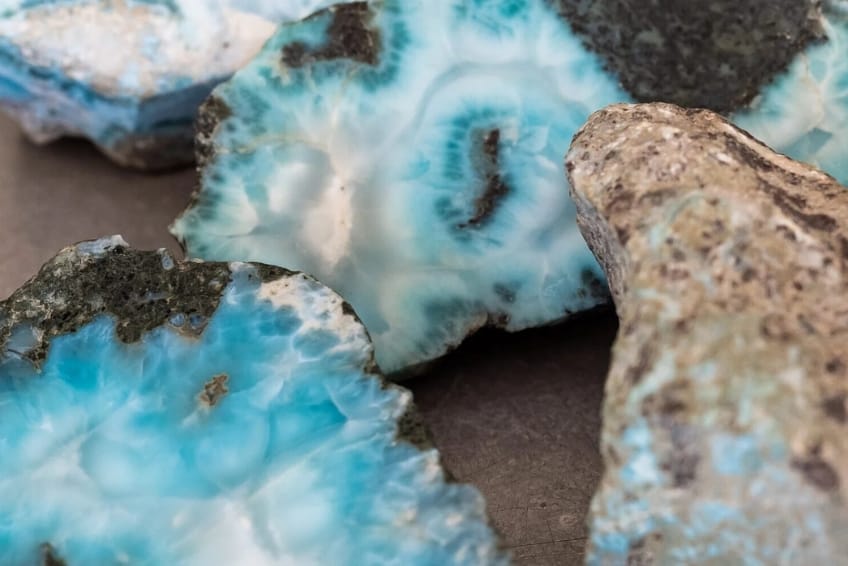
Larimar is the trade name for a blue variety of pectolite, a sodium calcium silicate that also occurs in colorless or gray forms in places like Quebec, Alaska, and New Jersey. What makes the Dominican version different is copper. Trace amounts of copper are added into the crystal structure during formation, turning the stone every shade from milky sky blue to deep turquoise to an intense “volcanic blue.” This copper origin was confirmed in a 1989 paper by Woodruff and Fritsch in the Gemological Institute of America’s journal Gems & Gemology.
The geology is pure Caribbean drama. During the Miocene epoch, volcanic eruptions pushed andesite and basalt up through the limestone of southern Hispaniola. Gas bubbles and cavities in those lava flows were later filled by hot mineral-rich fluids moving through the rock over millions of years. Blue pectolite crystallized inside those pockets. When the host rock eroded, pieces washed down the Bahoruco River and tumbled out to sea, where they turned up as smooth blue pebbles on the beach!
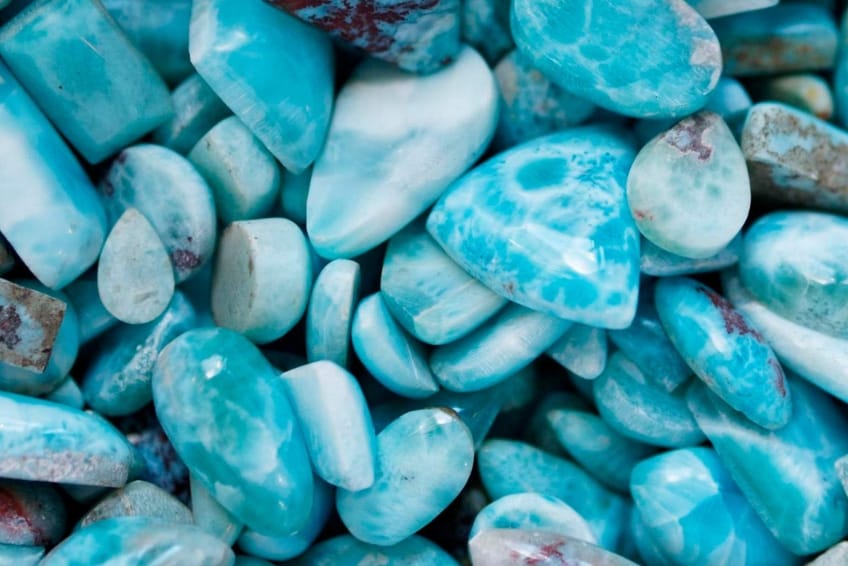
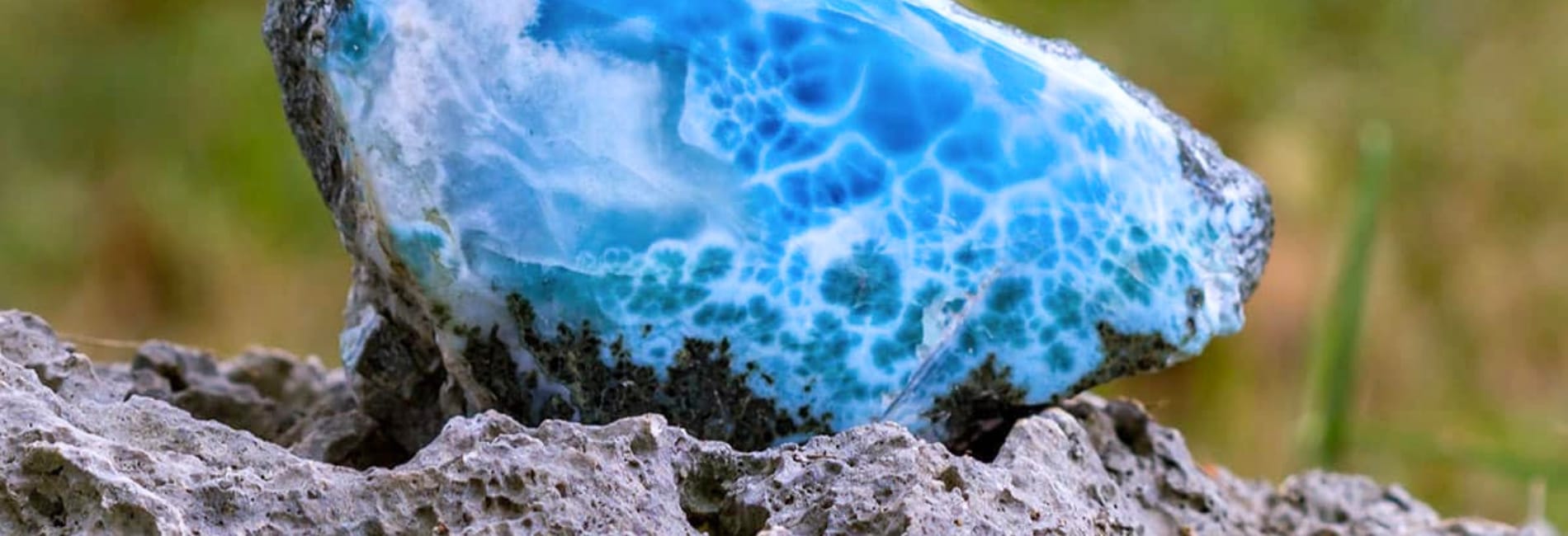
Larimar ranks 4.5 to 5 on the Mohs hardness scale, softer than quartz but tough enough for pendants and earrings. Under magnification, genuine stones reveal tiny spherical patterns with blue centers and white edges, a signature no imitation reproduces well. No two pieces are identical, which is why collectors often compare Larimar patterns to fingerprints or to the shifting surface of the sea itself.
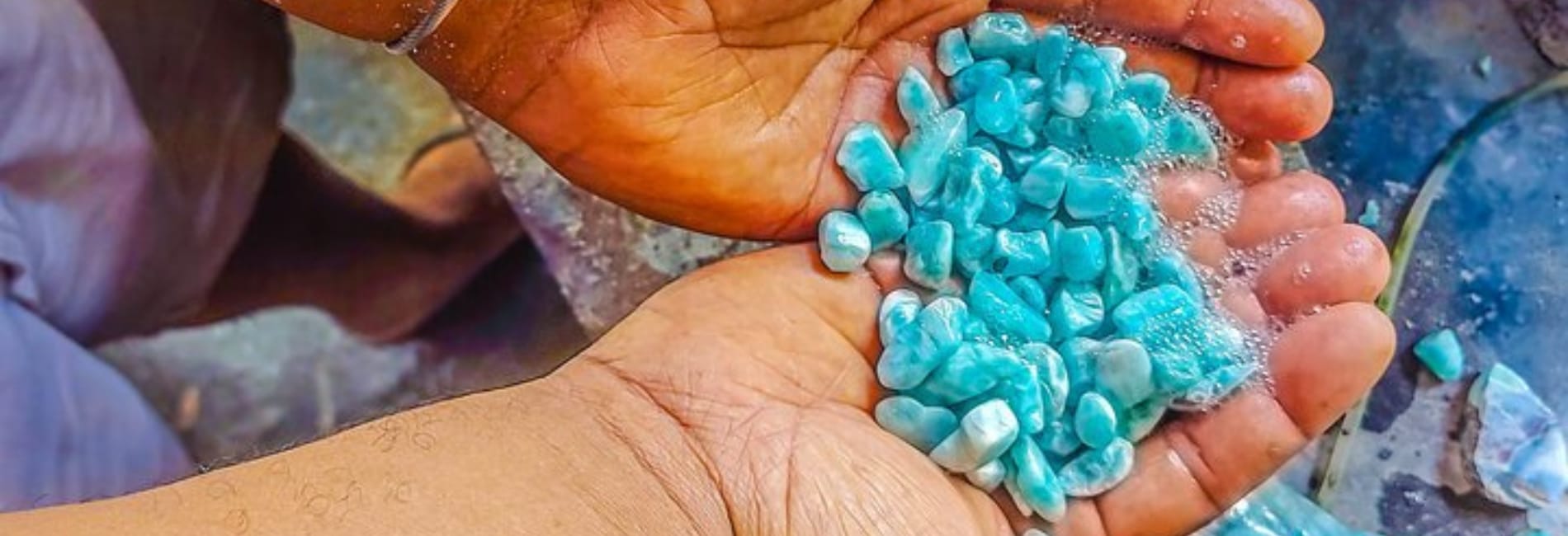
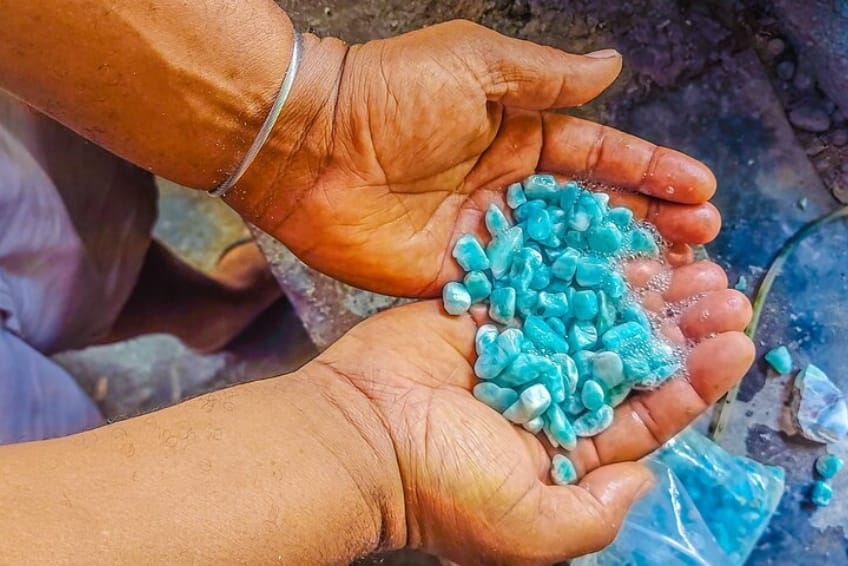
The Only Mine in the World
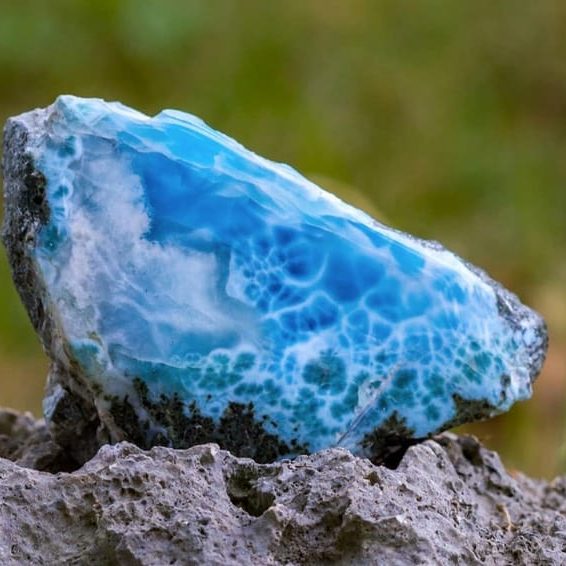
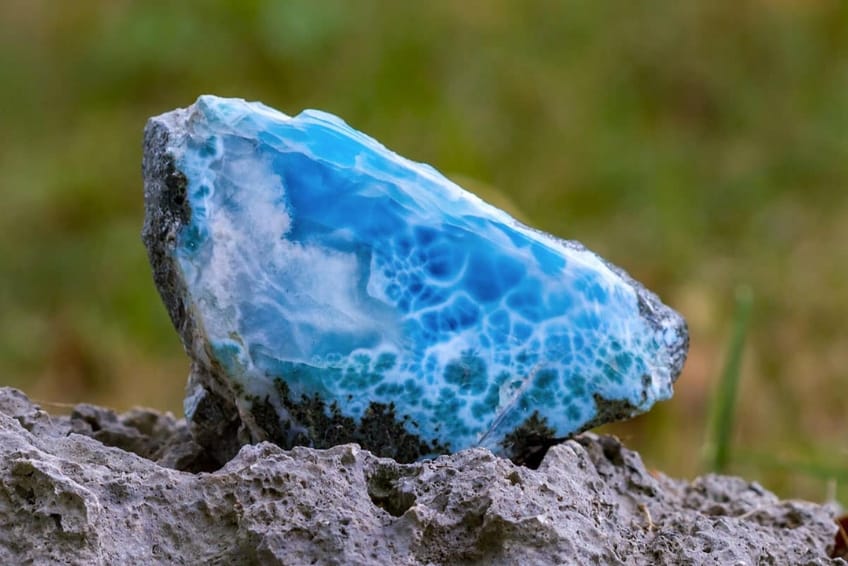
The single commercial deposit on Earth is the Los Chupaderos / Las Filipinas mine, tucked into the Sierra de Bahoruco Mountains at about 750 meters of elevation. It sits in Paraiso municipality inside the Monumento Natural Miguel Domingo Fuertes, a protected area named for the priest who first tried to claim the stone more than a century ago. The mountainside has an estimated 2,000 vertical hand-dug shafts, some plunging 200 feet or more, lined with timber and concrete and supplied with pumped oxygen. It is an artisanal operation, not an industrial one, and the landscape around it is stained with the bright blue of Larimar tailings piles.
For visitors based on the southwest coast, that mountain is within reach. Pedernales to Barahona is about 124 kilometers (roughly two hours by car), and the mine sits another 30 minutes inland from Barahona via a rough mountain road best tackled in a 4×4. From Cabo Rojo itself, plan on 2.5 to 3 hours one way. Several local operators run day trips that combine the mine with the coastal beaches, and the standard itinerary includes watching miners work, handling raw stone, and stopping at the Escuela Taller y Museo del Larimar in Bahoruco on the way back.
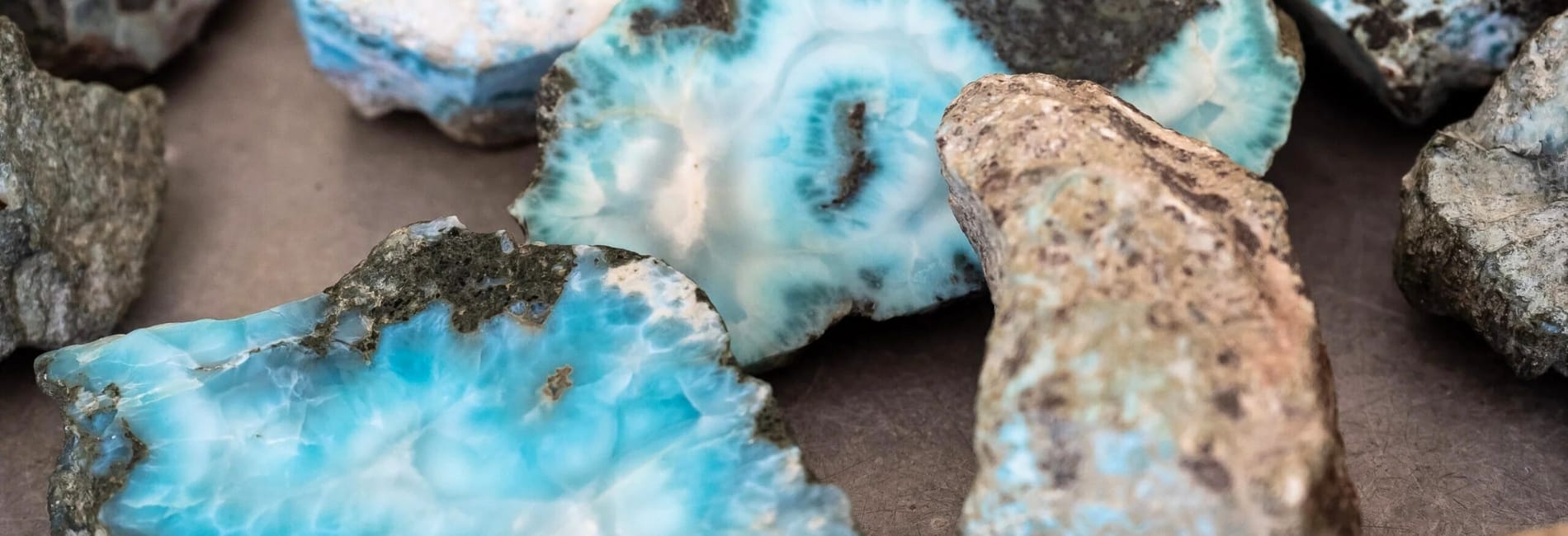
How a Priest, an Artist, and a Peace Corps Volunteer Named a Stone
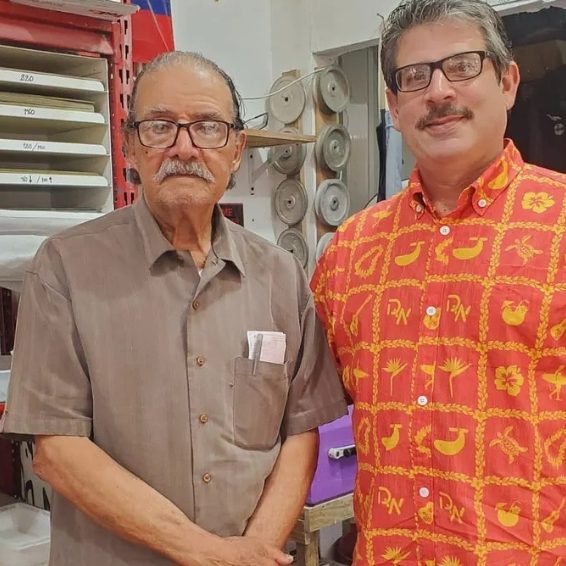
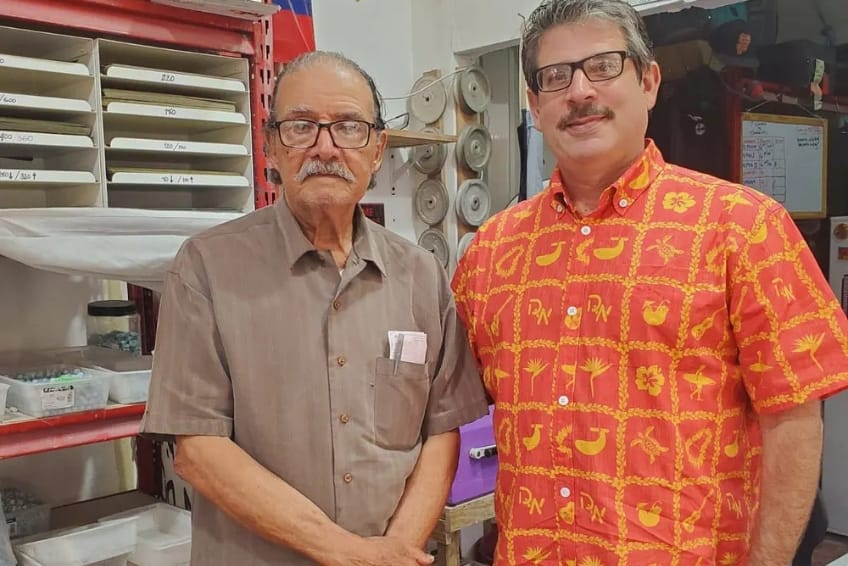
Miguel Méndez
Larimar’s modern story begins in November 1916, when Father Miguel Domingo Fuertes Loren of the Barahona parish petitioned Dominican authorities for permission to mine “a certain blue rock.” Officials had no idea what he was describing, denied the permit, and the stone slipped back into obscurity. Locals kept finding blue pebbles on the beach and simply called them piedra azul, the blue stone, believing they came from the sea.
The modern rediscovery happened in 1974, when Dominican artisan Miguel Méndez and American Peace Corps volunteer Norman Rilling picked up blue stones on a beach at the foot of the Bahoruco mountains. They followed the trail upstream along the Bahoruco River until they located the source outcrops in the hills above. Méndez coined the now-famous name by combining his young daughter Larissa’s name with the Spanish word mar, meaning sea. Larissa plus mar became Larimar, a word that had never existed before.
The Dominican government classified Larimar as a semi-precious stone in 1979 and declared it the national stone under Law 296-11 in 2011. Then, in 2018, National Larimar Day was established on November 22nd, the anniversary of Father Fuertes’s original 1916 petition! Since 2016, exporting rough, unprocessed Larimar has been illegal, so only polished pieces may leave the country.
The Atlantis Stone and the Dolphin Stone
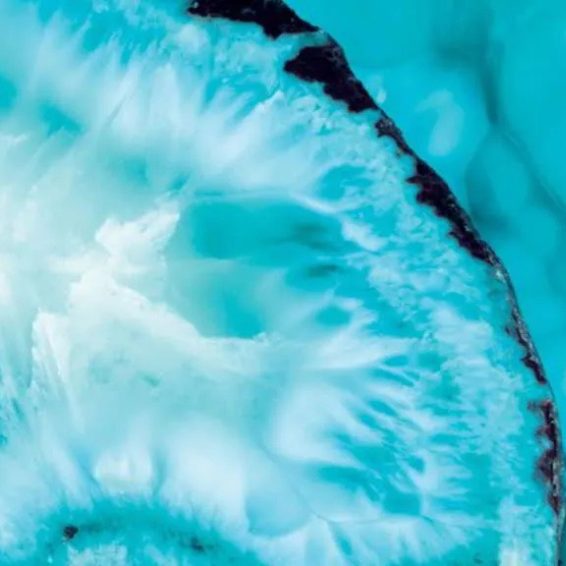
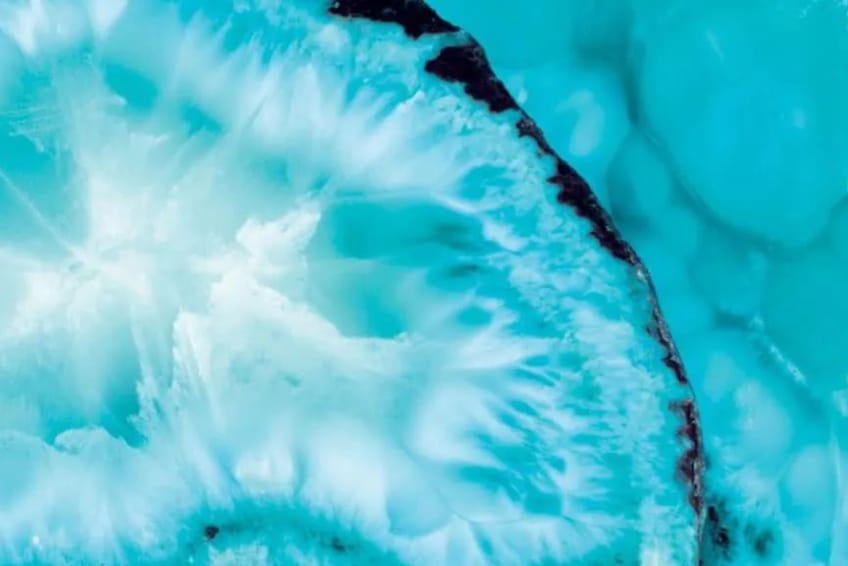
Part of Larimar’s mystique comes from a story that attached itself to the gem after its rediscovery. The folklore goes that American psychic Edgar Cayce, who died in 1945, reportedly predicted that a blue stone with healing powers would be found on a Caribbean landmass once connected to Atlantis. When a blue stone appeared on exactly such an island in the 1970s, believers connected the dots. In European markets in the 1980s, Larimar began circulating as the “Atlantis Stone”!
For the record, Cayce’s own foundation has stated that he never spoke of Larimar by name, so the link is more modern folklore than documented prophecy.
The “Dolphin Stone” nickname is more straightforward. The cloud-and-wave patterns in polished Larimar look like sunlight rippling over Caribbean water.
Metaphysical traditions associate Larimar with the throat chakra, calm communication, and feminine energy. You do not have to subscribe to any of that to feel why people love this particular gemstone. Larimar genuinely looks like the Caribbean.
Buying Real Larimar Near Cabo Rojo
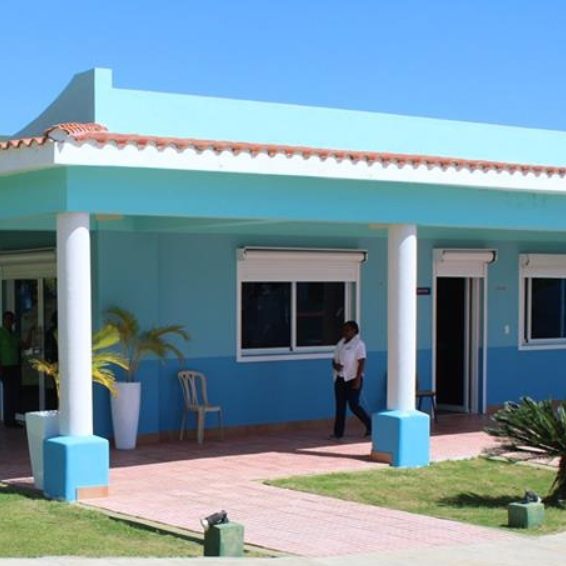
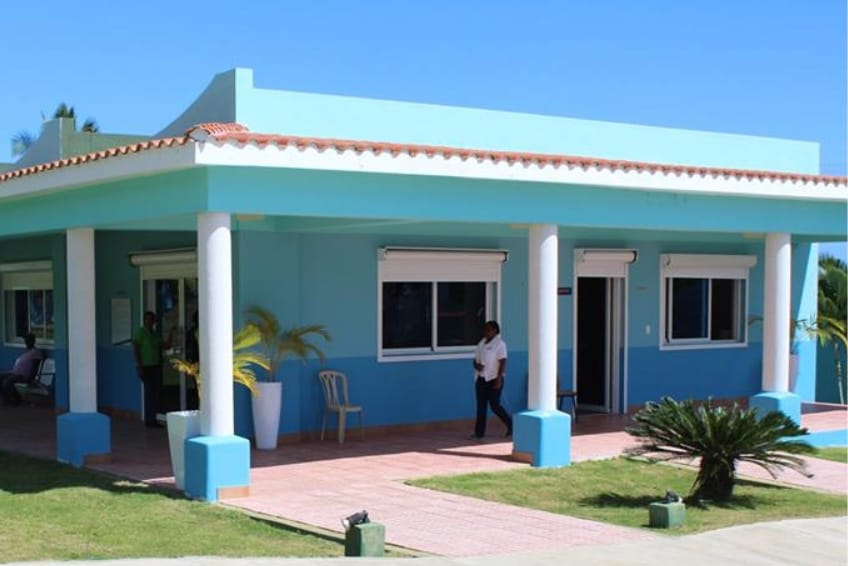
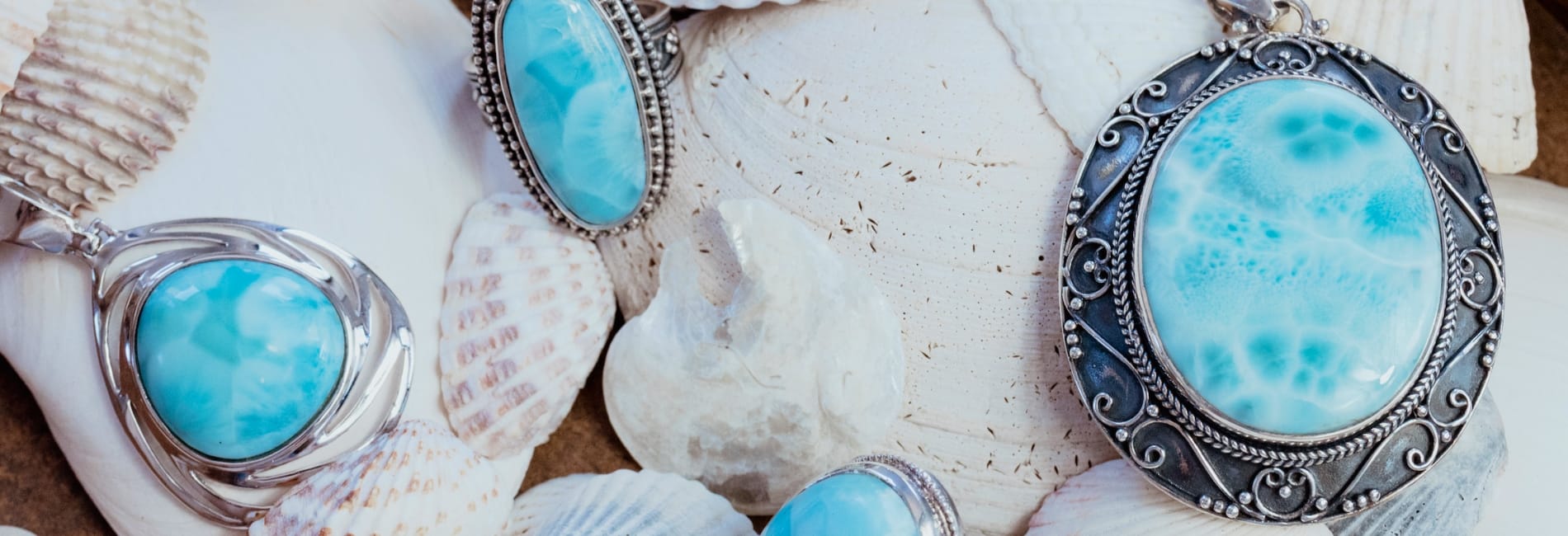
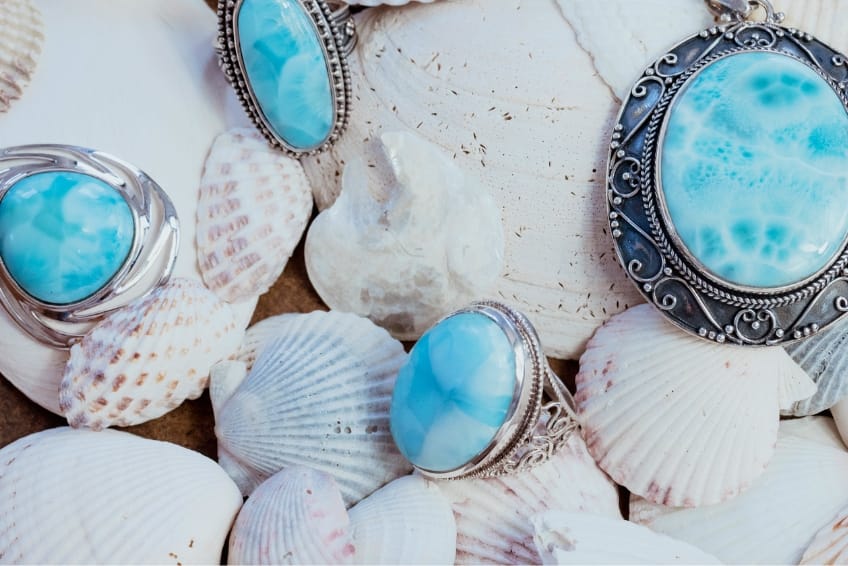
Because the mine is local, the southwest coast is the best place on the planet to buy Larimar at fair prices. Tourist markets in Punta Cana and cruise ports routinely mark up prices 200 to 400 percent, and industry estimates suggest that a significant percentage of Larimar sold outside of the Dominican Republic is fake (dyed howlite, blue glass, resin, or Caribbean calcite from Pakistan).
The single most trusted destination in the region is the Workshop School and Larimar Museum (Escuela Taller y Museo del Larimar) in Bahoruco, run by the Dominican training institute INFOTEP. Fixed prices, trained artisans, and work sourced directly from the Las Filipinas mine. In Pedernales town, artisans display work at the municipal park, especially on cruise-arrival days, and the new Port Cabo Rojo shopping village includes Larimar boutiques.
A few authentication tips worth remembering:
- Real Larimar feels cool, slightly heavy, and shows organic, cloud-like patterns rather than uniform color.
- Grades run from pale Grade A (roughly $1 to $8 per gram) up through AAA sky blue ($15 to $25) to rare AAA Volcano Blue ($35 to $100+). Grading, however, is not standardized.
- Reputable shops provide a certificate of authenticity and set stones in sterling silver stamped 925.
Making Larimar Part of Your Cabo Rojo Trip
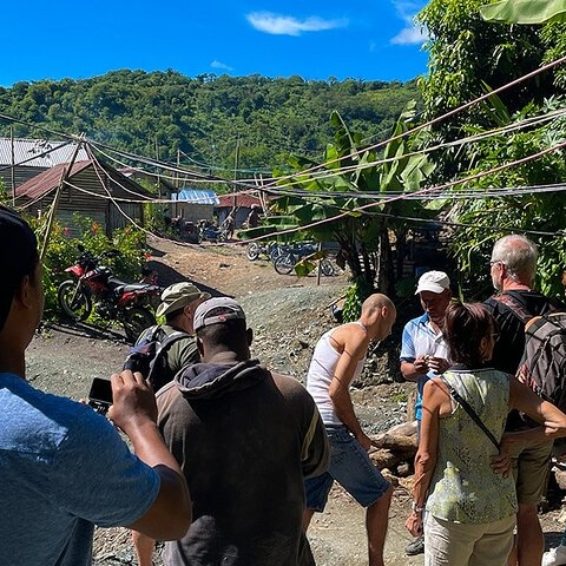
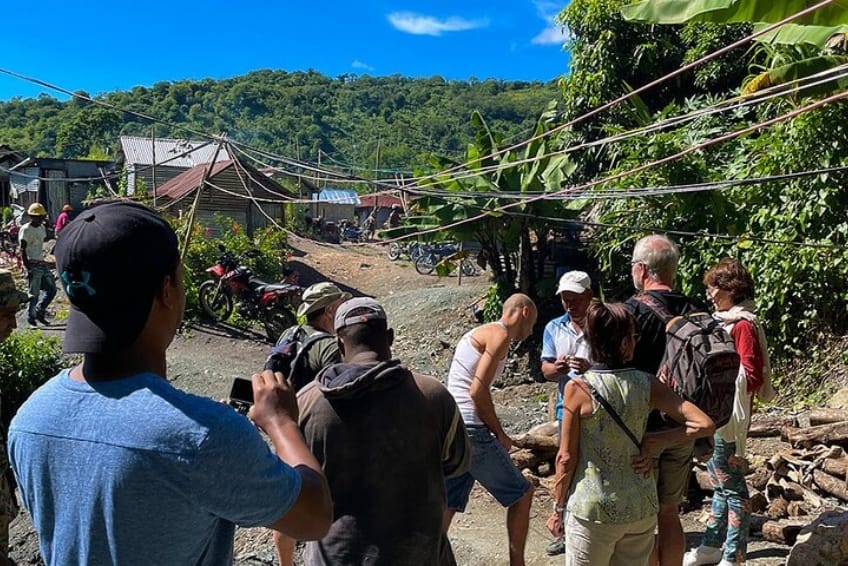
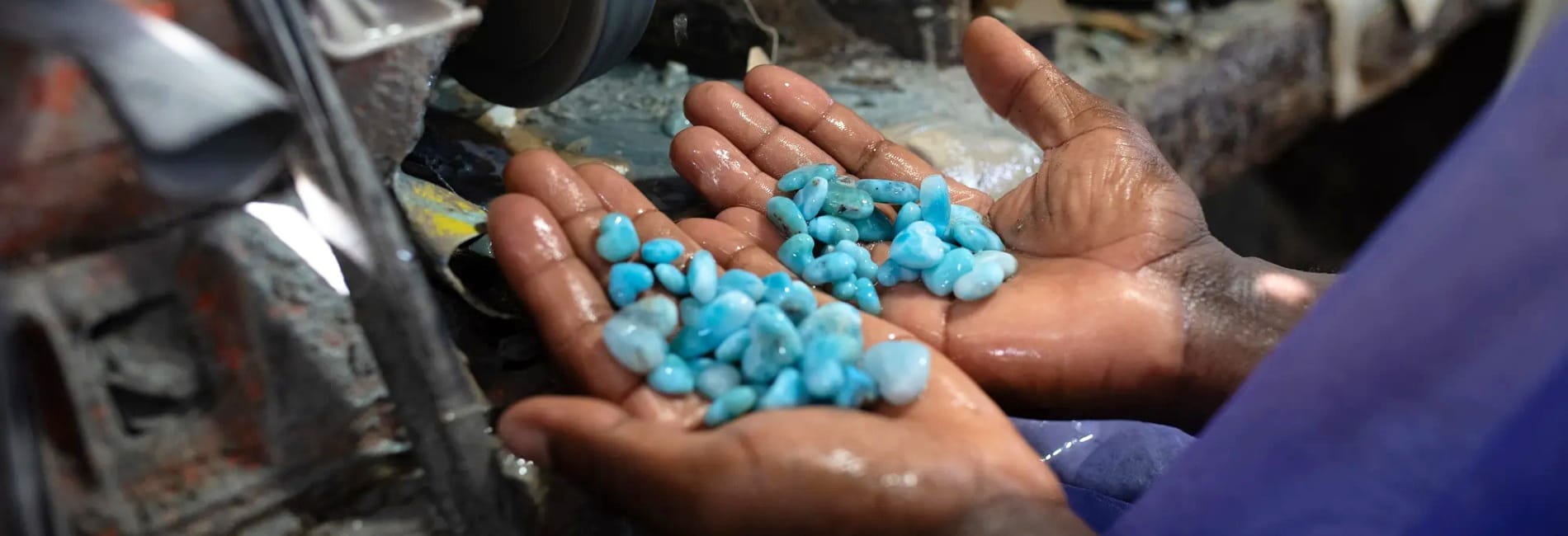
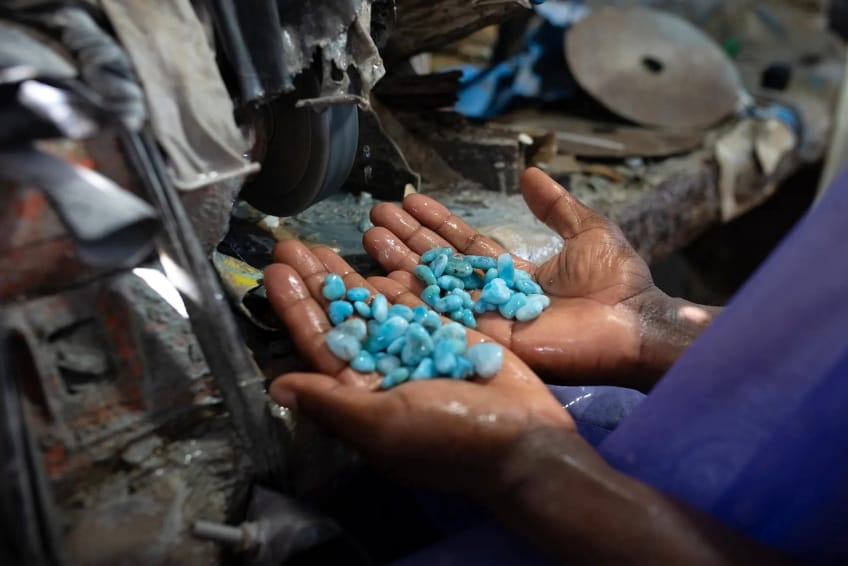
Several Viator and GetYourGuide operators build Larimar into southwest itineraries. Larimar EcoTour, based in Pedernales, runs an eight-hour Bahia de las Aguilas all-inclusive that uniquely combines the mine, San Rafael Beach, and the bay in one day. Ecotour Barahona offers a dedicated six-hour Larimar Mine Tour out of Barahona, pairing the mine visit with the Escuela Taller museum. Other options connect the mine with Playa Paraiso, Laguna de Oviedo, or the botanical trails of La Ciénaga.
Amber comes from the north coast. Merengue comes from Santiago. But, Larimar belongs to the southwest, to the mountains that rise behind the beaches you came to see. Walking Bahia de las Aguilas in the morning and handling a raw blue stone pulled from the Sierra de Bahoruco in the afternoon is a uniquely Cabo Rojo experience. The gem you take home will not exist anywhere else on Earth, and now you know why!
Larimar FAQ
Frequently Asked Questions
Where is Larimar found in the world?
Larimar exists in exactly one place on Earth. A single mountainside in the Sierra de Bahoruco of the Dominican Republic. No other deposit has ever been found anywhere in the world. What makes this stretch of the country’s southwest so geologically unique is a story worth knowing before you shop for a piece, and it starts millions of years before the first miner ever picked up a shovel.
Is Larimar only found in the Dominican Republic?
Yes, and not just in the Dominican Republic. It only exists in a single province, on a single mountainside, at a specific elevation. The Dominican government took that exclusivity seriously enough to declare Larimar the national stone under Law 296-11 in 2011. Understanding exactly why this stone cannot exist anywhere else changes how you see it when you’re holding one in a market stall near Cabo Rojo.
How can you tell if Larimar is real or fake?
The short answer is to look for organic, watercolor-like blue-to-white patterns, a cool-to-the-touch feel, and a 925-stamped silver setting. The longer answer matters a lot more if you’re about to spend serious money. Fakes made from dyed howlite, resin, and even Pakistani Caribbean calcite are common in tourist markets, and some are convincing enough to fool first-time buyers. Our full guide covers the five tests you can do on the spot before handing over a peso.
What color is the best Larimar?
The most prized grade is called Volcano Blue (or AAA1). A deep, saturated blue that accounts for less than 1% of everything mined. Below that sits AAA Sky Blue, the sweet spot for most buyers. Striking enough to be impressive, available enough to be affordable. The grading system has a catch, though. It is not standardized by any official gemological body, so knowing what the terms actually mean before you buy is the difference between a great deal and an expensive mistake.
How much does real Larimar cost per gram?
Grade A pale material starts around $1 to $8 per gram. AAA Sky Blue runs $15 to $25. Top-tier Volcano Blue can hit $35 to over $100 per gram, comparable to gold. What those numbers don’t tell you is that where you buy matters as much as what you buy. Prices in tourist-heavy areas can run 200 to 400 percent above what the same stone costs closer to the source. The southwest coast, where Larimar actually comes from, is a different story entirely.
Can tourists visit the Larimar mine in the Dominican Republic?
You can, and it is one of the more surreal things you can do in the southwest Dominican Republic. The Las Filipinas mine in the Sierra de Bahoruco is a mountainside covered in roughly 2,000 hand-dug vertical shafts, some dropping dozens of meters straight down. Getting there requires a 4WD and either a guide or a good tolerance for unpaved mountain roads. The full logistics, such as how to go, when to go, what to expect, and how to combine it with a day on Bahia de las Aguilas, are all in the above article.
How do I get to the Larimar mine from Pedernales or Cabo Rojo?
From Cabo Rojo or Pedernales, you’re looking at roughly 2 hours northeast on Carretera 44 to Barahona, then another 45 minutes to an hour inland by 4WD. The total round trip from the southwest coast is a full day, which is why most visitors build it into a larger itinerary. The article above breaks down the exact route, the best time of year to go, and which tour operators combine the mine with Bahia de las Aguilas in a single day.
What is the Escuela Taller y Museo del Larimar?
It is the single most trustworthy place to buy Larimar in the region. A government-backed artisan school and museum-shop on Carretera Barahona-Paraiso, run by INFOTEP, the Dominican national vocational training institute. Prices are fixed, stones are certified, and the work comes directly from local artisans trained on site. If you only have time for one Larimar stop on your southwest DR trip, this is the one.
Why is Larimar called the Atlantis Stone?
The nickname traces back to a 1980s New Age marketing push, not a documented prophecy. American mystic Edgar Cayce, who died in 1945, never mentioned Larimar by name in any of his readings. The association was made by metaphysical writers after the stone went commercial. The Edgar Cayce Foundation does not include Larimar in its official gemstone literature. The full and genuinely interesting story of how this folklore attached itself to a Caribbean gemstone is in the above article.
Is it legal to take Larimar out of the Dominican Republic?
Finished, polished Larimar jewelry is perfectly legal to take home. Raw, unpolished stone is not. Exporting rough Larimar has been banned since Resolution R-MEM-REG-047-2016 took effect in October 2016, and violations can result in confiscation at customs. If a vendor is selling you unpolished chunks and calling it a deal, that’s your cue to walk. The article above explains what to look for and what documentation a legitimate seller should provide.
When is National Larimar Day in the Dominican Republic?
November 22, every year, is established by Law 17-18 in 2018. The date marks the anniversary of Father Miguel Domingo Fuertes Loren’s 1916 petition to Dominican authorities, the first recorded attempt to mine the blue stone he had found near Barahona, more than 50 years before Miguel Mendez gave it the name we use today. The full history of that name, and the surprisingly romantic story behind it, is one of the better parts of our Larimar guide.
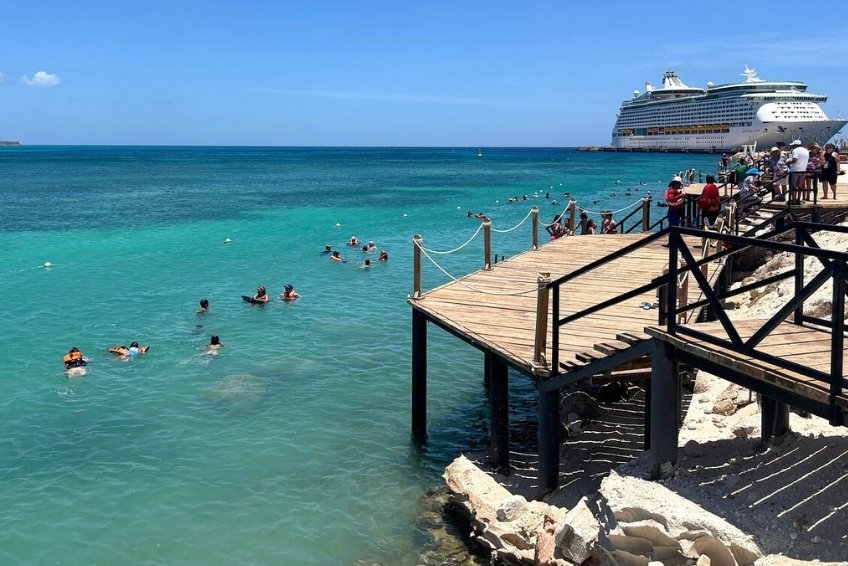
Port Cabo Rojo opened in 2024 on the remote southwest coast of the Dominican Republic, and what surrounds it is extraordinary. Bahia de las Aguilas, one of the world's great beaches, is a short boat ride away. This guide covers everything you need for your port day.
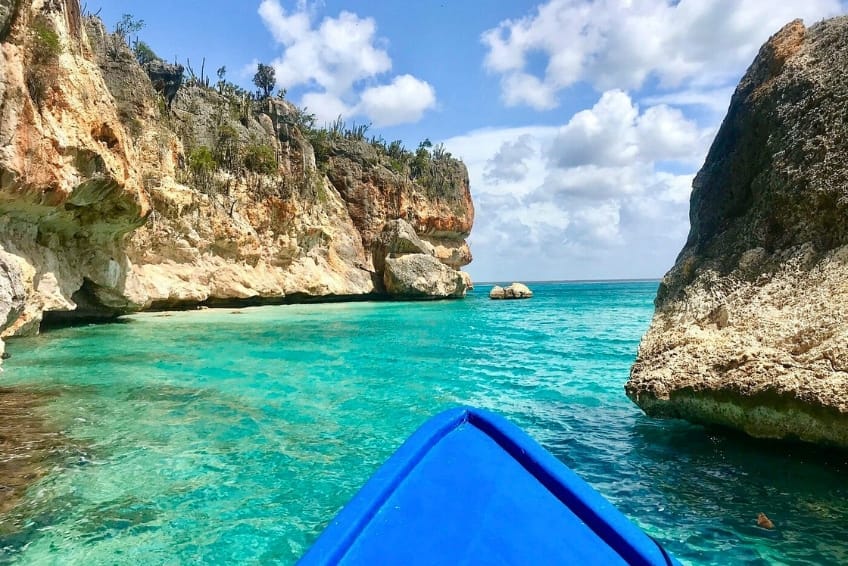
Cabo Rojo sits on the remote southwest coast of the Dominican Republic, home to Bahia de las Aguilas, an 8-kilometer pristine beach routinely ranked among the Caribbean's most beautiful. A $2.2 billion development is transforming the region, but right now you can still experience something rare. A world-class destination before the crowds arrive.
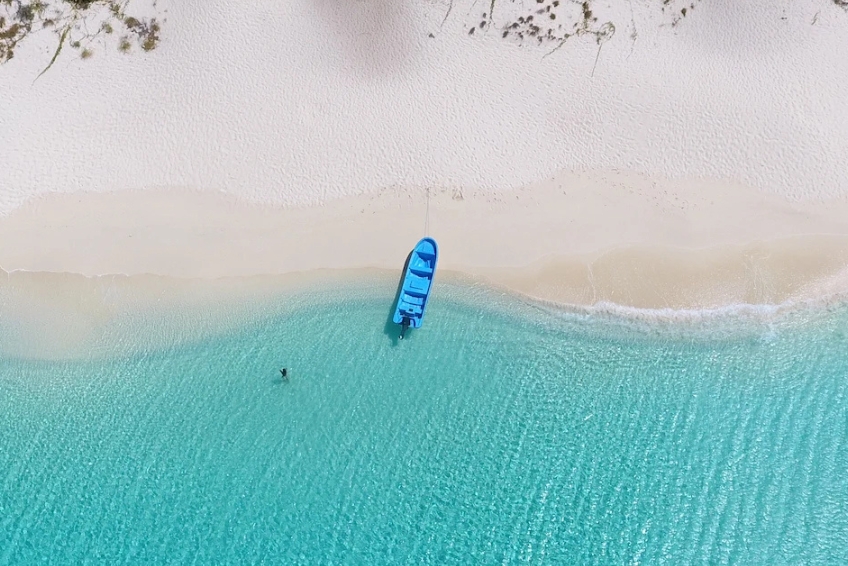
Bahia de las Aguilas is the Dominican Republic's most beautiful beach, and one of its hardest to reach. This guide covers everything you need to plan your visit: how to get there from Cabo Rojo cruise port or Pedernales, boat logistics, costs, what to pack, where to eat, and honest advice on what to expect.
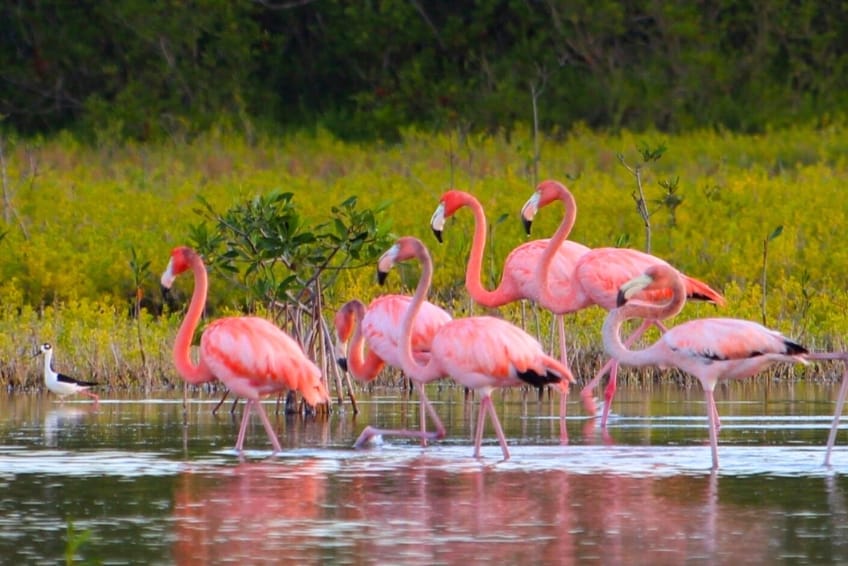
Port Cabo Rojo is one of the Caribbean's newest and most remote cruise stops, and the shore excursion decision looks very different here than at busier ports. This guide covers everything: what your cruise line offers, how to visit Bahia de las Aguilas independently, and how to make the most of your port day.
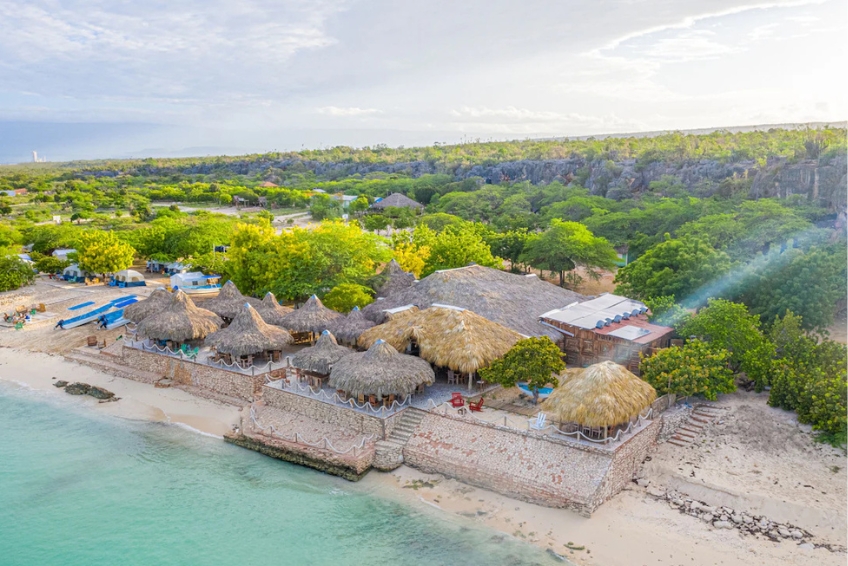
Pedernales has no chain hotels, no resort buffets, and no swim-up bars. What it does have is the best beach in the Caribbean, a handful of genuinely great family-run guesthouses, and a $2.2 billion resort development that's about to change everything. Here's where to stay right now.
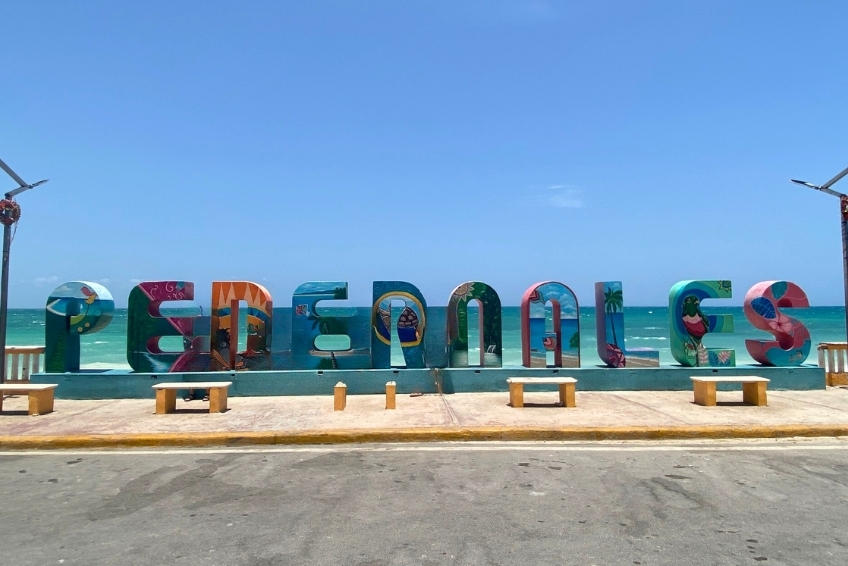
Pedernales is the gateway to the Dominican Republic's wild southwest: Bahia de las Aguilas, Hoyo de Pelempito, Jaragua National Park, and the new Cabo Rojo cruise port. This guide covers how to get there, where to stay and eat, what to do, and everything you need to plan your trip.
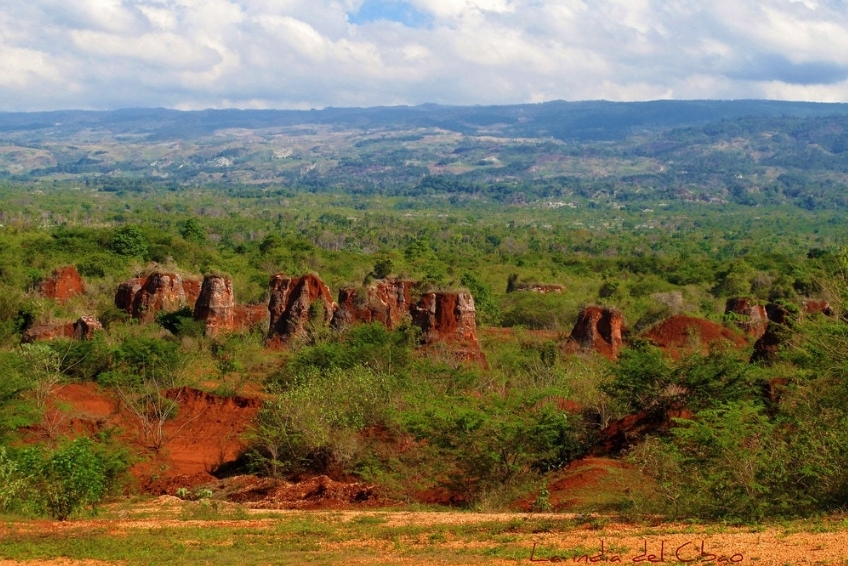
Deep in the mountains of southwest Dominican Republic, Hoyo de Pelempito is a geological depression so vast that clouds gather inside it. Over 700 meters deep, ringed by walls that rise to 1,800 meters, and sheltering 13 endemic bird species: this is the Caribbean's most dramatic natural wonder.
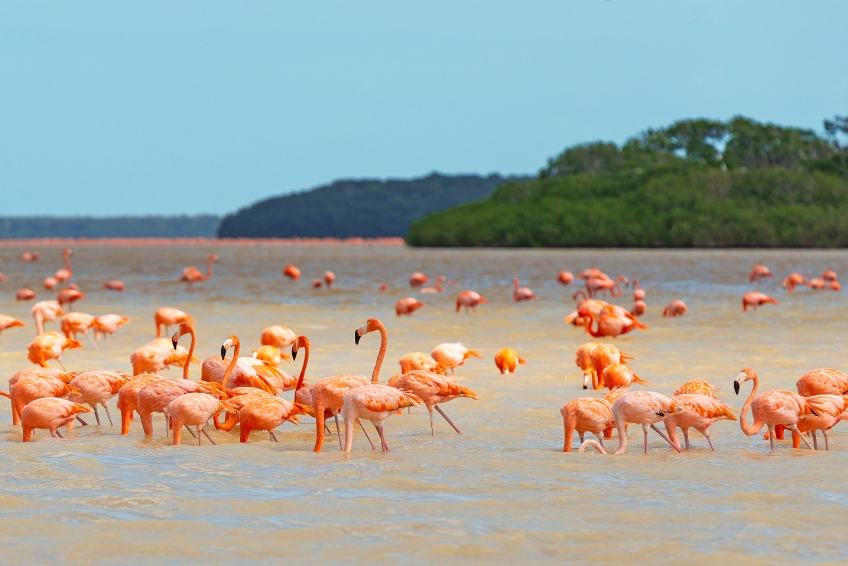
Laguna de Oviedo is the Dominican Republic's largest saltwater lagoon, home to American flamingos, rhinoceros iguanas, and an endemic fish found nowhere else on Earth. This guide covers tour options and pricing, wildlife, how to get there, where to stay, and what to pack for your visit.
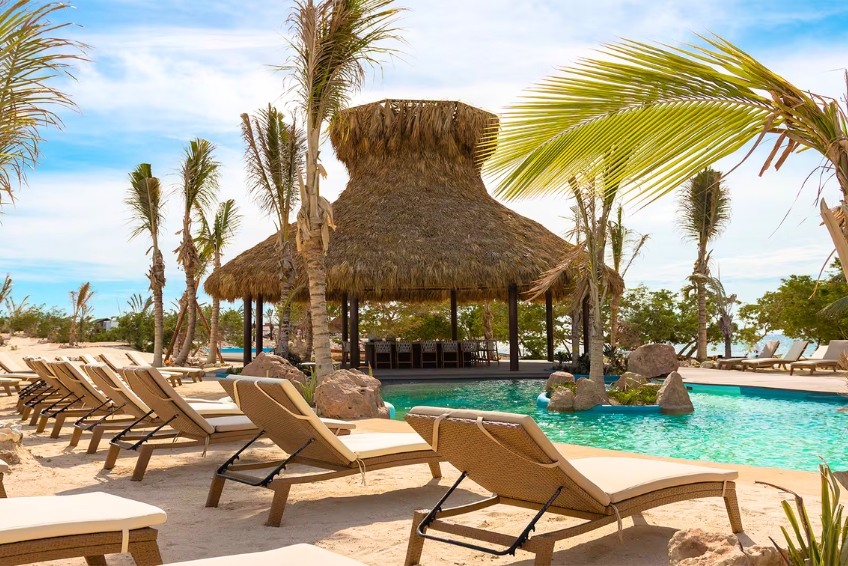
Baby Beach at Port Cabo Rojo is a capacity-controlled beach club with an unlimited open bar, sandy Caribbean swimming, kayaks, and a freshwater pool. But is it worth the price? This guide covers exactly what's included, what it costs, who should book it, and how to get the most out of your day.