
Cabo Rojo Cruise Port Guide
 Daniel Mode
Daniel Mode
Daniel Mode Laura Schulthies
Laura Schulthies
Laura SchulthiesCabo Rojo opened to its first cruise ships in January 2024 and has grown faster than almost any new port in the Caribbean. By 2027, it is projected to welcome over 200,000 passengers a year. Most of them arrive with no idea what they’ve sailed into. That’s where we come in.
This is not a walk-off-and-shop port. There is no “town” outside the gates, no restaurants nearby, no beach bars or retail shops outside the port. What there is instead is one of the world’s greatest beaches down the coast, a flamingo lagoon an hour away, a 700-meter-deep geological depression in the mountains above, and a UNESCO Biosphere Reserve that has been left untouched precisely because it was too remote for anyone to develop until now. This guide covers everything you need to make the most of a day here!
This article contains affiliate links. If you click on our links, we may earn a small commission at no extra cost to you. This helps us continue to offer free travel guides, but does not influence our recommendations in any way. Thanks for supporting independent travel content.
Contents
Where Is Cabo Rojo Cruise Port?
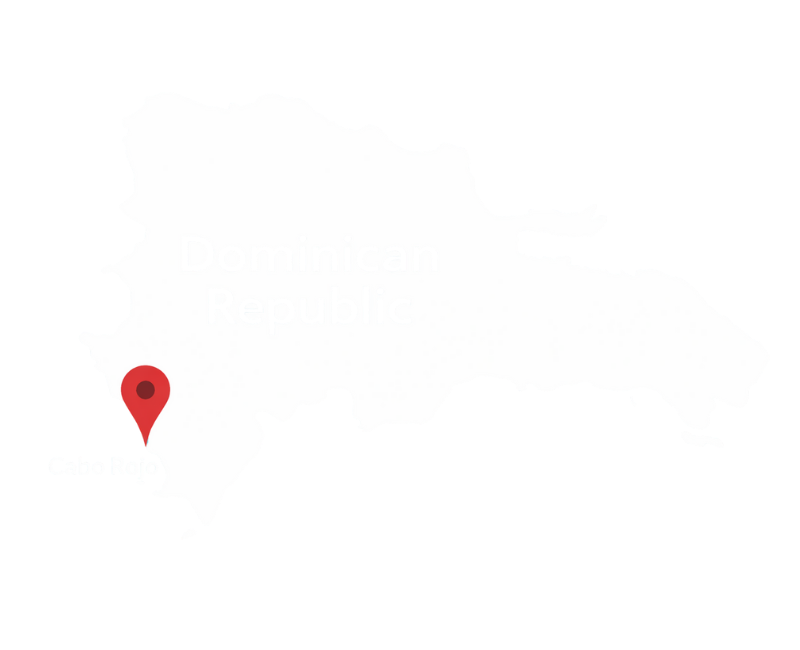
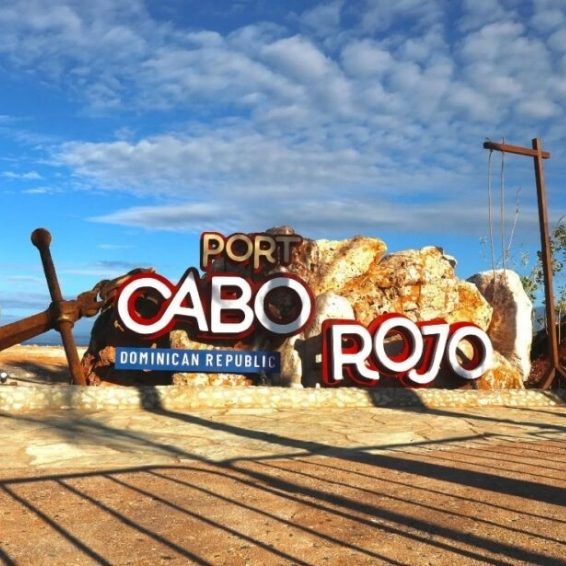
The Port of Cabo Rojo sits on the southwest coast of the Dominican Republic in Pedernales Province, at the far western end of the country’s Caribbean shoreline. It’s as remote as Dominican destinations get, roughly five to six hours from Santo Domingo by road (it will shorten as infrastructure improves), about 2.5 hours from Barahona, and a 20 minute drive from the nearest town, Pedernales Town, which sits on the Haiti border.
The Sierra de Bahoruco mountains rise to the north, the Caribbean coast stretches east toward Bahia de las Aguilas, and Haiti is about 20 kilometers to the west.
About the Cabo Rojo Cruise Port
Cabo Rojo is a young port still finding its feet, but it’s growing faster than anyone anticipated. Understanding what it is, who built it, and what’s actually inside the gates will save you from arriving with the wrong expectations in either direction.
Background
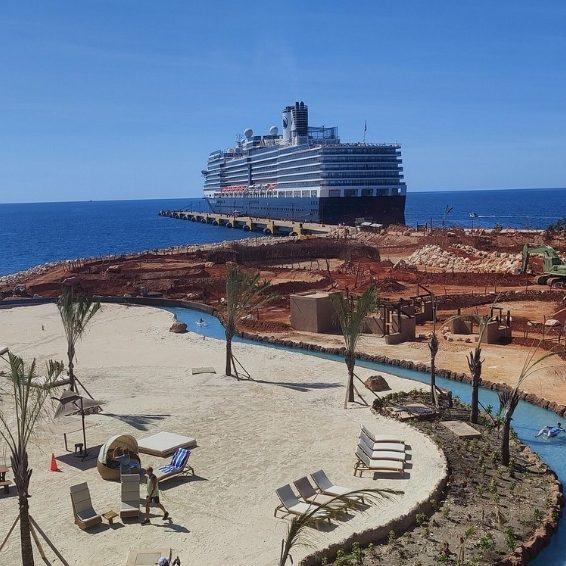
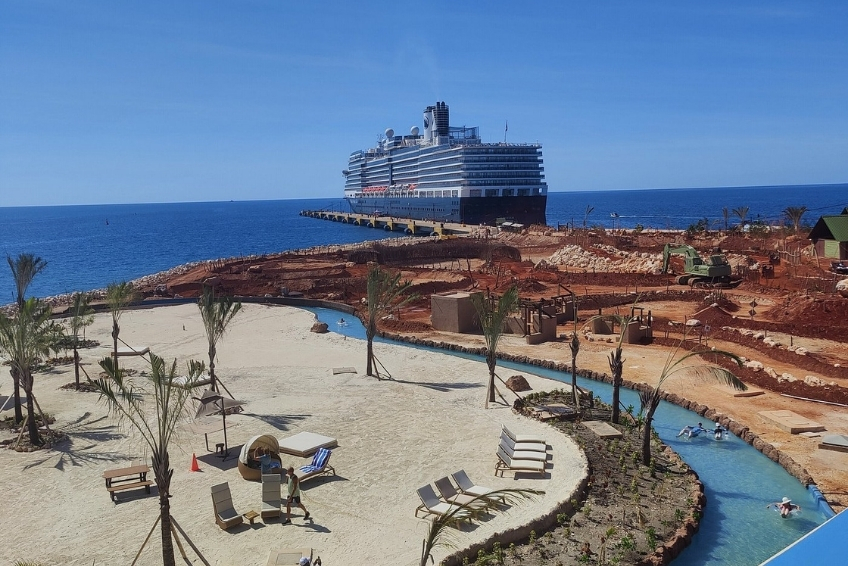
The Port of Cabo Rojo sits on the site of a former Alcoa bauxite shipping terminal in the remote southwest Dominican Republic. The Dominican government and Mexico-based ITM Group (the company behind Costa Maya in Mexico and Taino Bay in Puerto Plata) entered a public-private partnership and converted the old industrial terminal into a cruise destination, opening Phase 1 in January 2024 with Norwegian Pearl as the inaugural ship.
Phase 1 was functional but basic. A dock, a reception area, two pools, a few restaurants, and some souvenir shops.
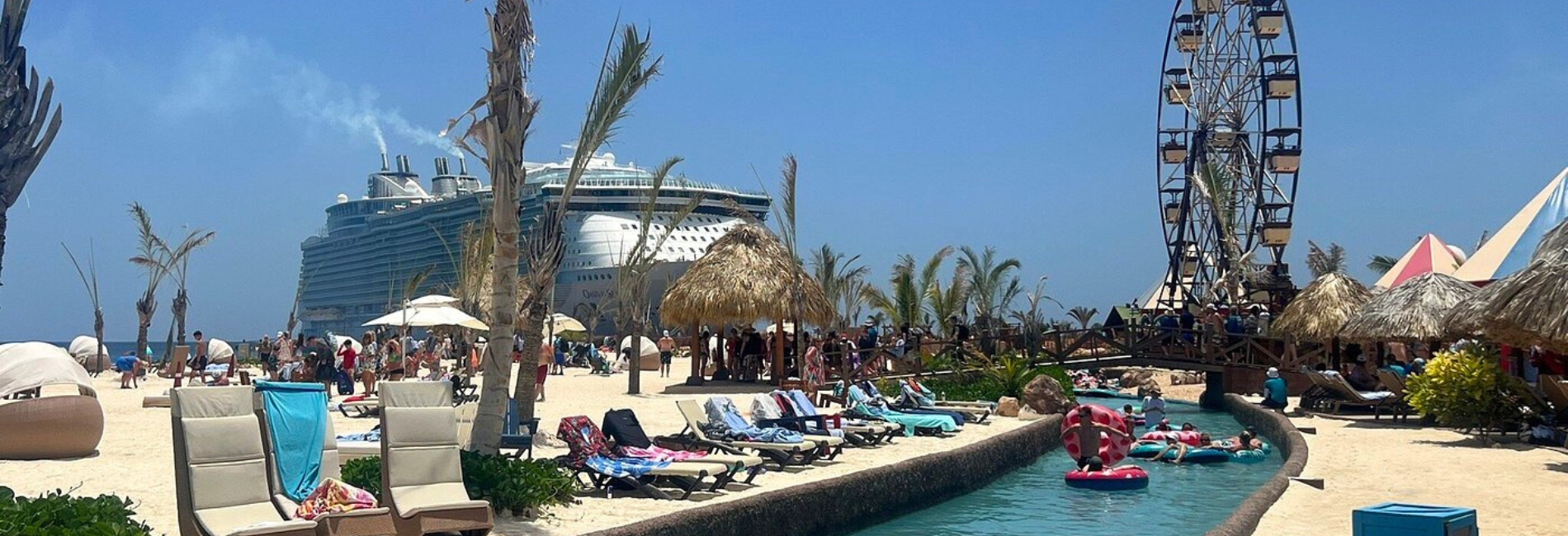
Phase 2, which opened on October 16, 2024, is what turned the port into a destination. The mining-town themed streetscape, the Ferris wheel, the lazy river, the spa, the ATV track, the live entertainment stages… all of that came in the second phase. If you’ve read anything written about Cabo Rojo before Phase 2 opened, set it aside. The port it describes no longer exists.
Cruise Lines and Ships
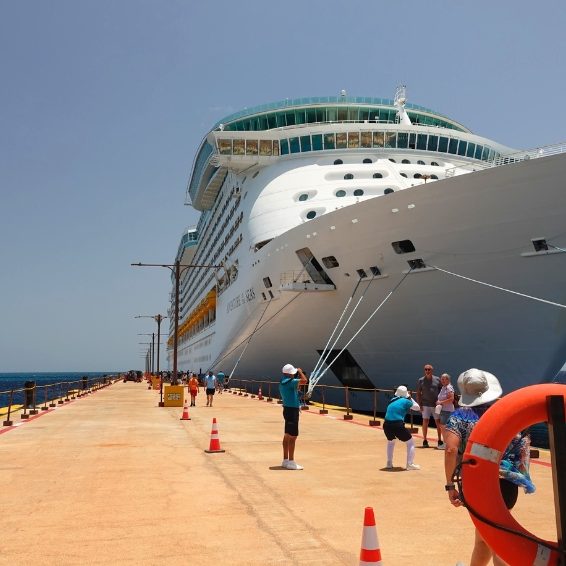
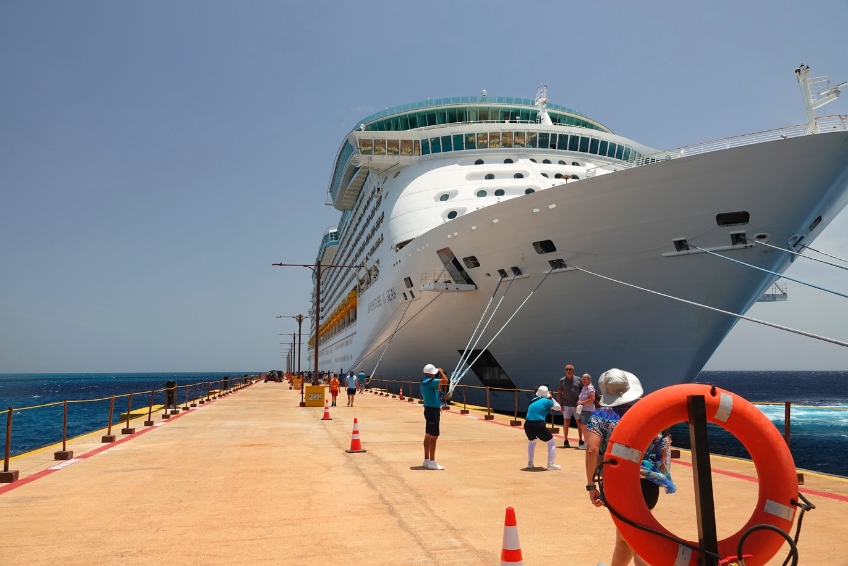
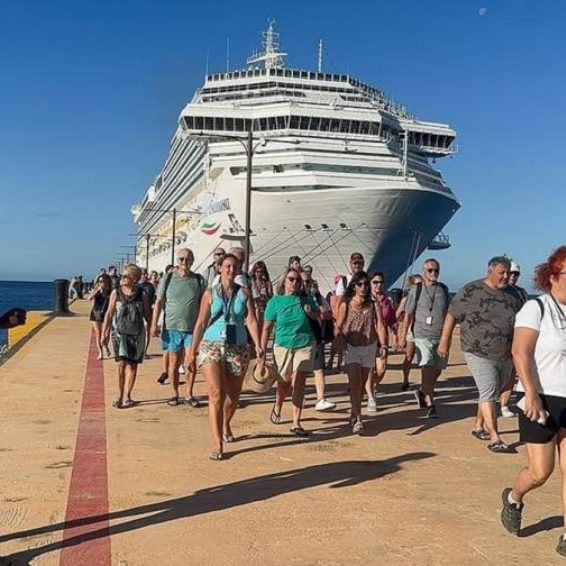
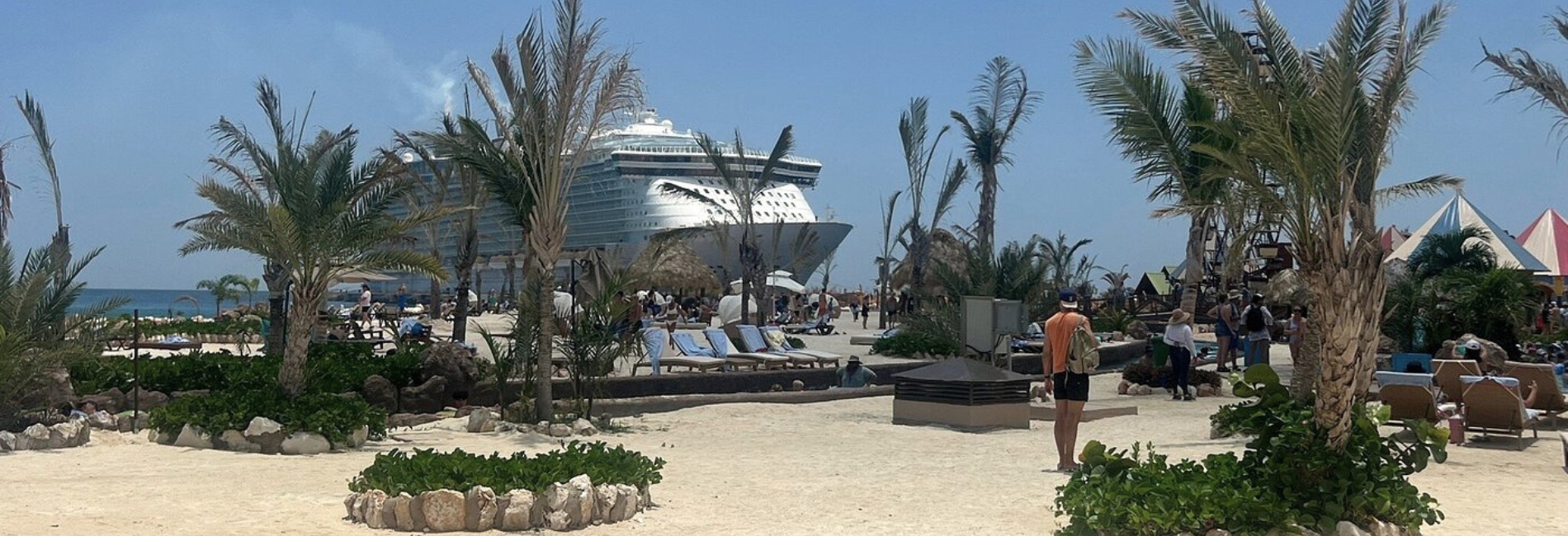
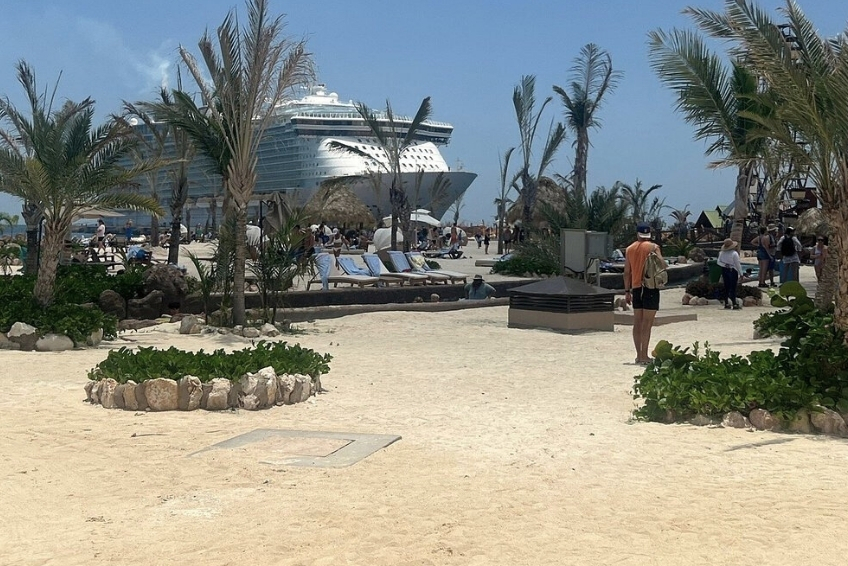
Six cruise lines call at the Cabo Rojo Cruise Port regularly. Norwegian Cruise Line (Pearl, Sky, Jewel, Star, Dawn, and Viva), Royal Caribbean (including Adventure of the Seas and Allure of the Seas; specific ships vary by season), Holland America (Nieuw Amsterdam, Eurodam, Zuiderdam), Costa Cruises, MSC Cruises, and Azamara. The port’s 40-meter water depth handles any vessel afloat, including Oasis-class ships carrying over 6,700 passengers. Ships dock directly at the pier, which means you walk straight off the gangway into the port. No small boat shuttles required, no waiting in line to board a tender ferry boat, no motion sickness before you’ve even started your day.
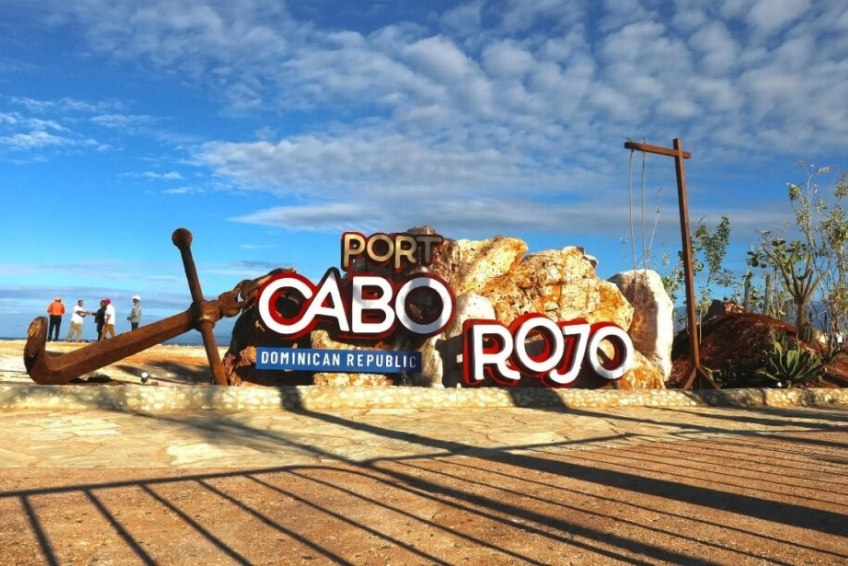
Port at a Glance
- Location: Cabo Rojo, Pedernales Province, southwest Dominican Republic
- Nearest town: Pedernales, 20 km (20–30 min)
- Currency: USD accepted in port. Dominican pesos are needed outside of port
- ATM: One on-site, frequently unreliable. Bring cash just in case
- Languages: Spanish. English is typically only spoken in the port or with tour operators.
- Wi-Fi: Free at the terminal, works well
- Tendering: No. Ships dock directly at the pier, so no need to board a tender ferry
When You Arrive: What to Expect
Cabo Rojo is a well-organized port, but it’s bigger and more spread out than it first appears. Knowing the layout before you step off the gangway means you can move with purpose rather than spending your first twenty minutes figuring out where everything is.
Disembarkation and Layout
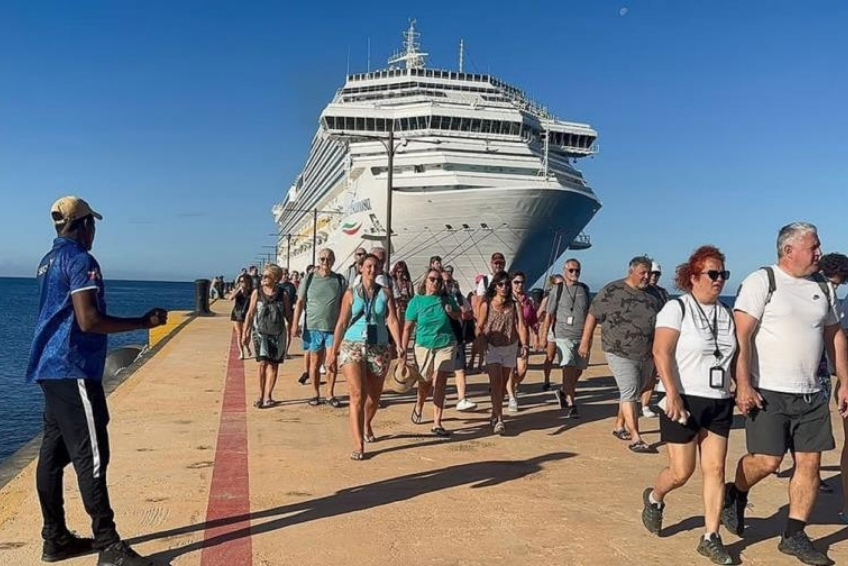
The ship docks at the pier on the western tip of the port peninsula. Visitors walk directly off the gangway into the first zone, called Old Cape Mine, a nod to the bauxite mining history of the area. This is where you’ll find the Last Minute Tours desk, the Pre-Booked Shore Excursion staging area, and the Expedition Bar. If you’ve booked a cruise line excursion, check in here. If you’ve booked an independent operator, look for the port exit at the far end of the port. Guides from Cocotours, Larimar EcoTour, and other operators wait just outside with name signs.
The port is laid out as a long, narrow peninsula. From the pier, you walk through six distinct zones, each with its own character, all the way to Baby Beach at the far eastern end. The whole thing stretches considerably further than it looks from the ship. Allow more time to walk between zones than you’d expect.
Helpful Tip: Free tuk-tuks often run from the ship to the main entrance area, a short ride that saves a few hundred feet of walking in the heat. Worth taking if available, especially on the way back when you’re tired.
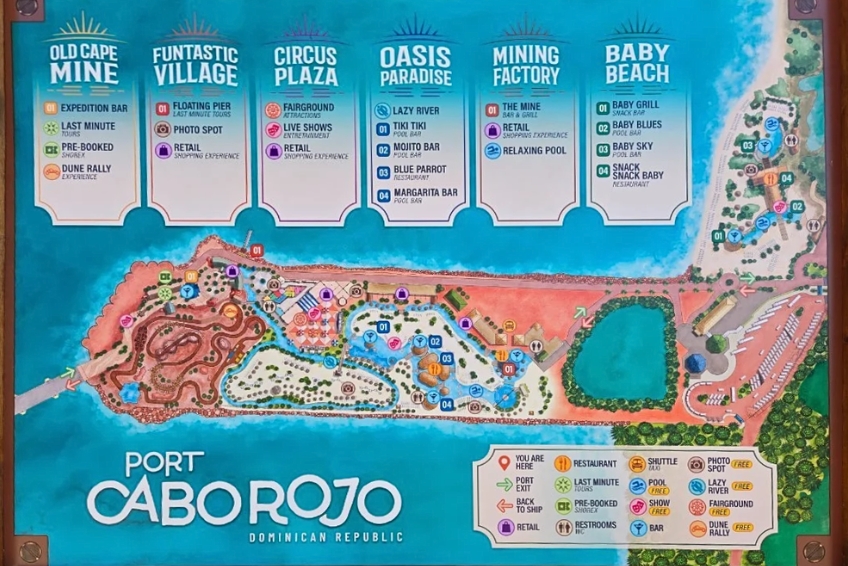
Cabo Rojo Port Map
Getting Your Bearings
The full port map is posted near the entrance and is worth a 60-second look before you set off. Here’s how the zones run from the pier end toward Baby Beach:
- Old Cape Mine (pier end): Last Minute Tours, Pre-Booked Shorex staging, Expedition Bar, Dune Rally experience
- Funtastic Village: Floating Pier, Photo Spot, Retail shops
- Circus Plaza: Fairground attractions, Live Shows, Retail shops
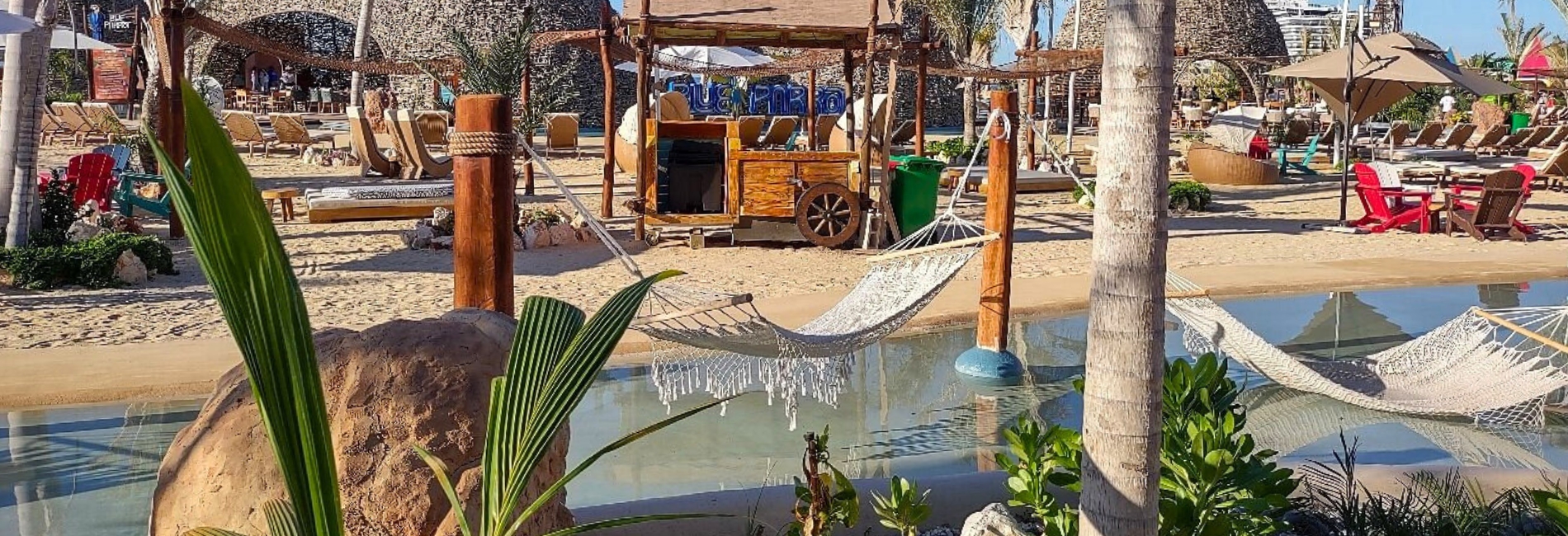
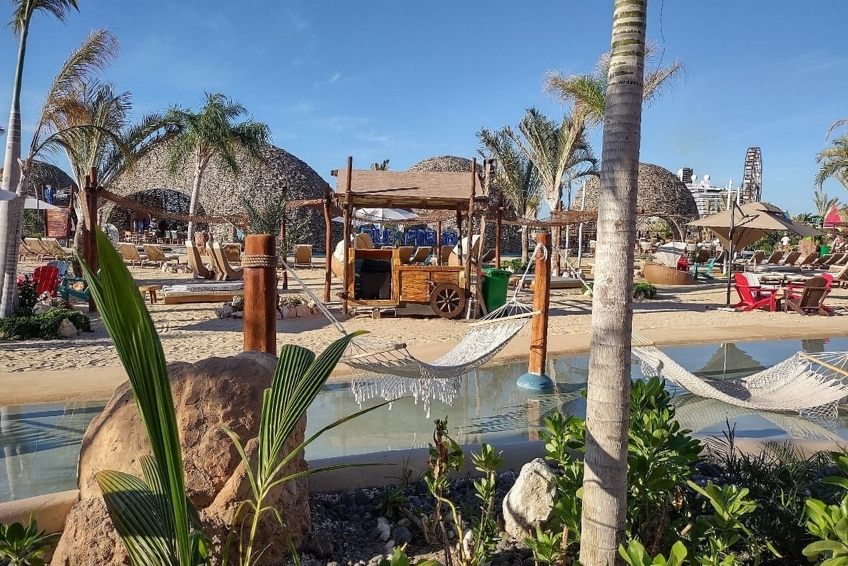
- Oasis Paradise (center): Lazy River, Tiki Tiki Pool Bar, Mojito Bar, Blue Parrot Restaurant, Margarita Bar
- Mining Factory: Relaxing Pool, The Mine Bar and Grill, Ocean Access for Snorkeling & Swimming, Retail shops
- Baby Beach (far end): Pay to enter Beach Club with Baby Grill Snack Bar, Baby Blues Pool Bar, Baby Sky Pool Bar, Snack Baby Restaurant
The Port Exit, where taxis and independent tour operators wait, is clearly marked on the map with an arrow. The shuttle/taxi stand is also marked if you need a ride into Pedernales or to a pre-arranged tour pickup point.
Crowds
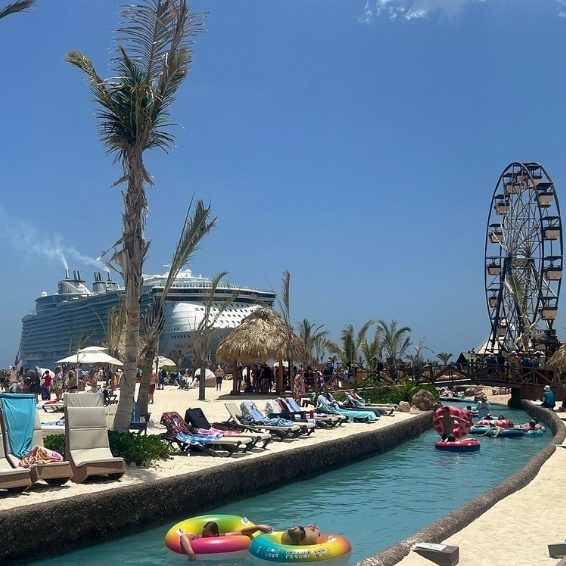
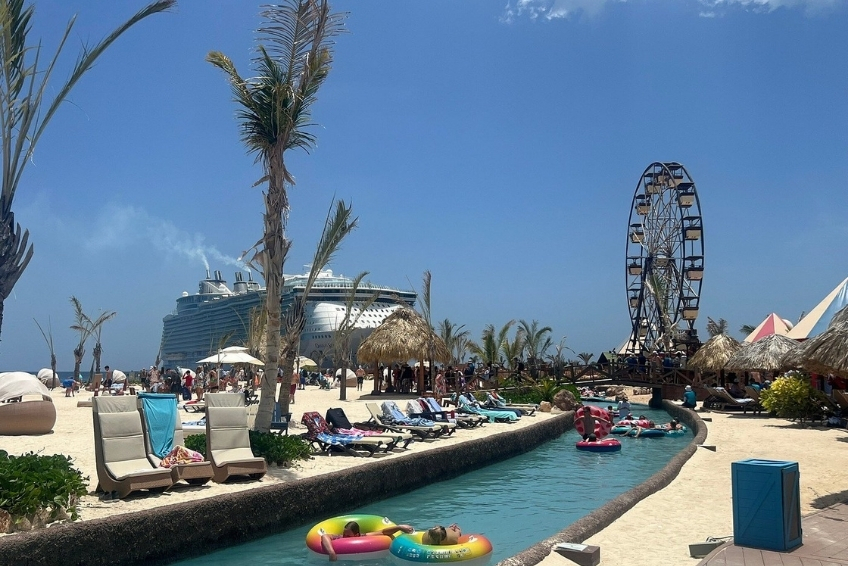
On days when an Oasis-class ship is in, the port absorbs over 5,000 passengers at once. Pool chairs fill within the first hour. If you’re staying at the port and want a lounger by the water, get there early. If you arrive to find the leisure areas already maxed out, take it as your cue to head outside the gates. The beach and national park don’t fill up the same way.
Meeting Your Independent Tour Operator
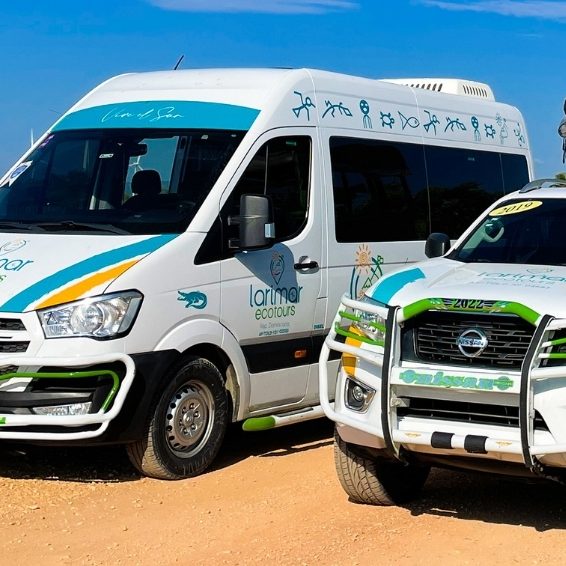
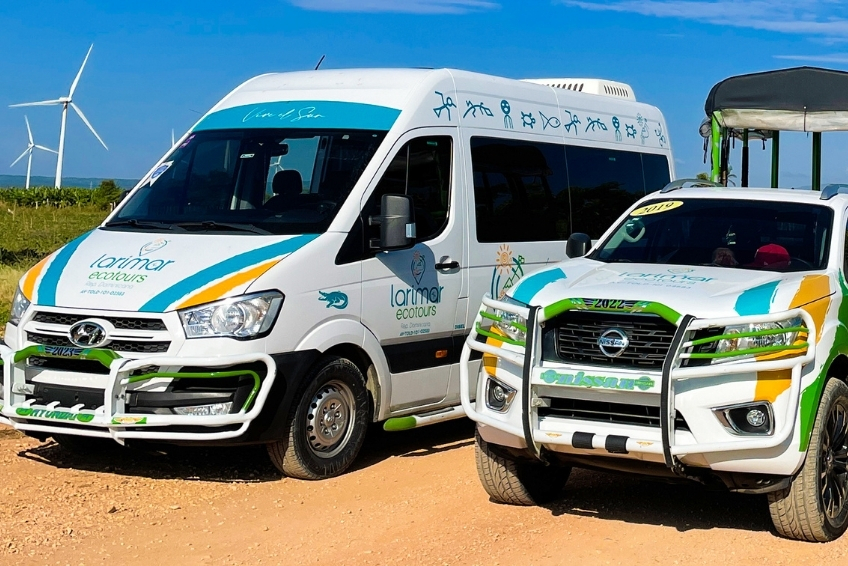
If you’ve booked with Cocotours, Larimar EcoTour, or another independent operator, head to the port exit near the Old Cape Mine zone when you first arrive. Guides wait just outside with signs displaying passenger names. They’ve done this hundreds of times and know exactly where to stand. Have your guide’s WhatsApp number saved before you disembark, and don’t dilly dally in the port if you have an excursion booked. Independent operators typically need you at the exit within the first 30–45 minutes of docking to keep their return schedule on track.
The Port Complex
The Phase 2 expansion turned what was a fairly sparse arrival terminal into a proper themed destination, and it’s more developed than most first-time visitors expect. The port is divided into six named zones running the length of the peninsula, each with a distinct character. Here’s what’s actually here and what it will cost you.
What's Free
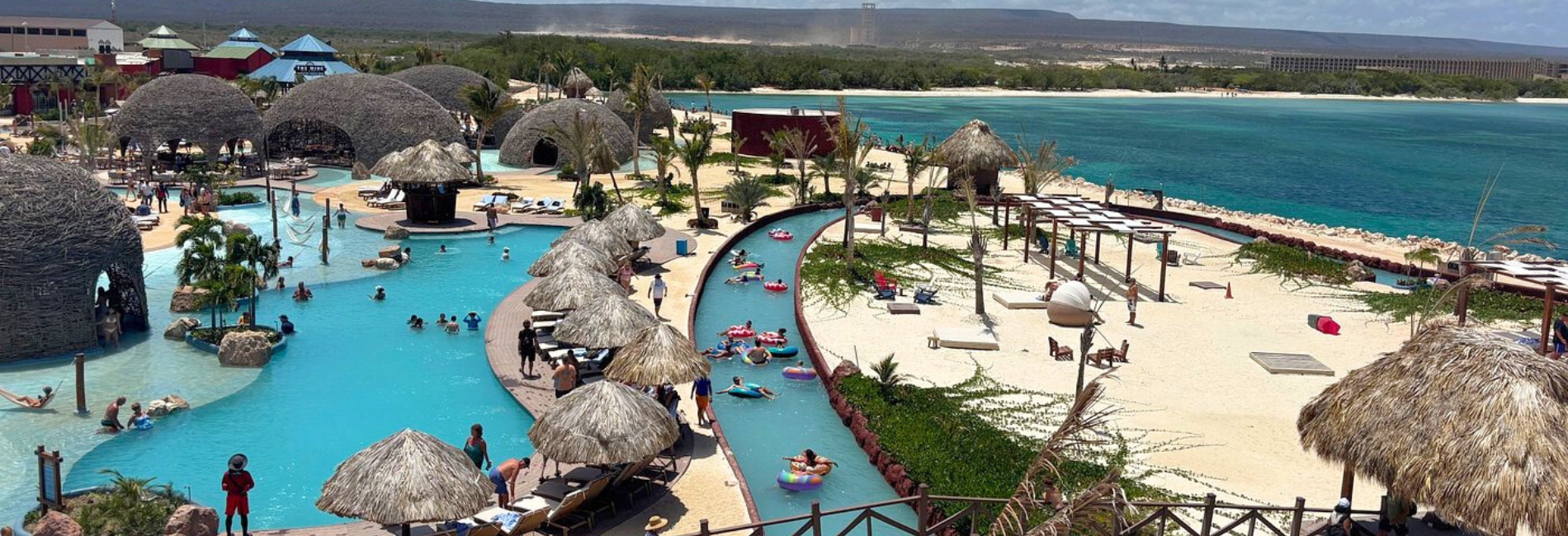
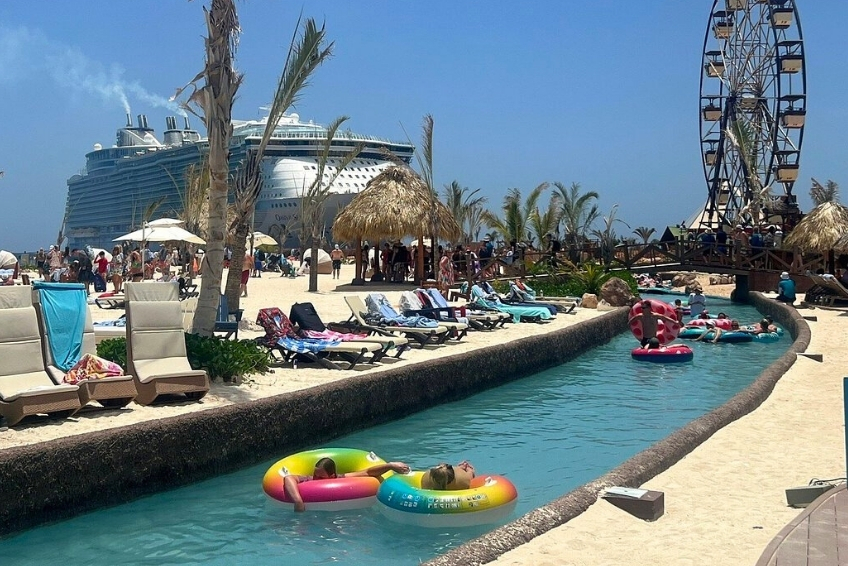
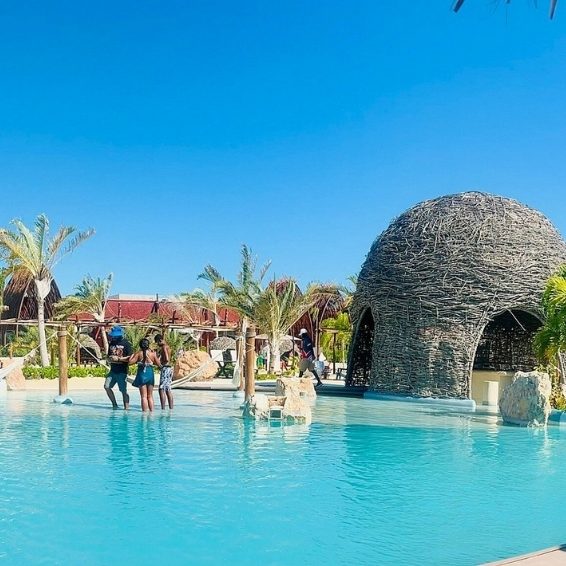
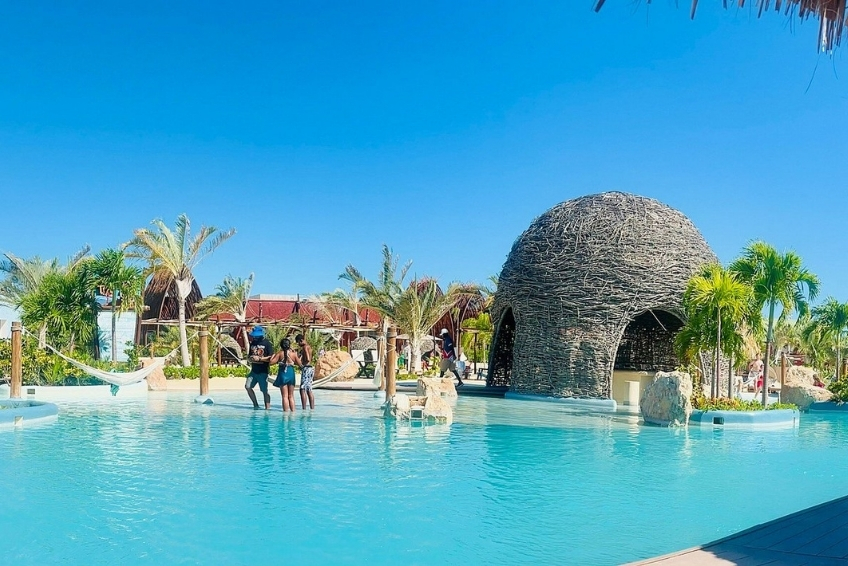
Quite a bit, as it turns out. The pools are free and open to all passengers on a first-come, first-served basis. The Relaxing Pool in the Mining Factory zone and the pools in Oasis Paradise both have loungers and wading sections. Get there in the first hour off the ship if you want a spot. On big-ship days, loungers and umbrellas are gone fast.
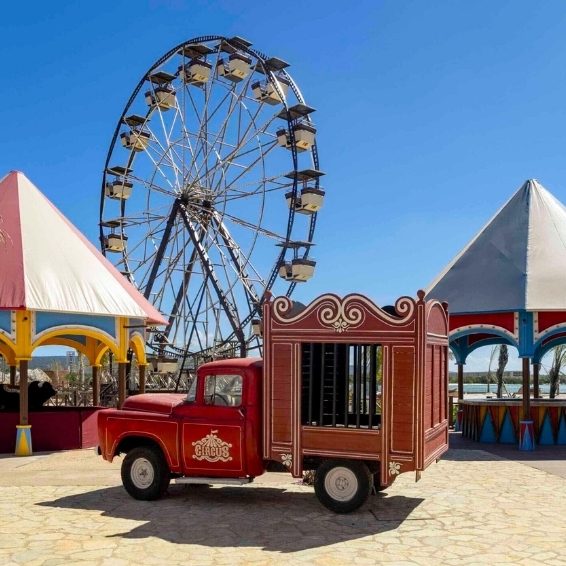
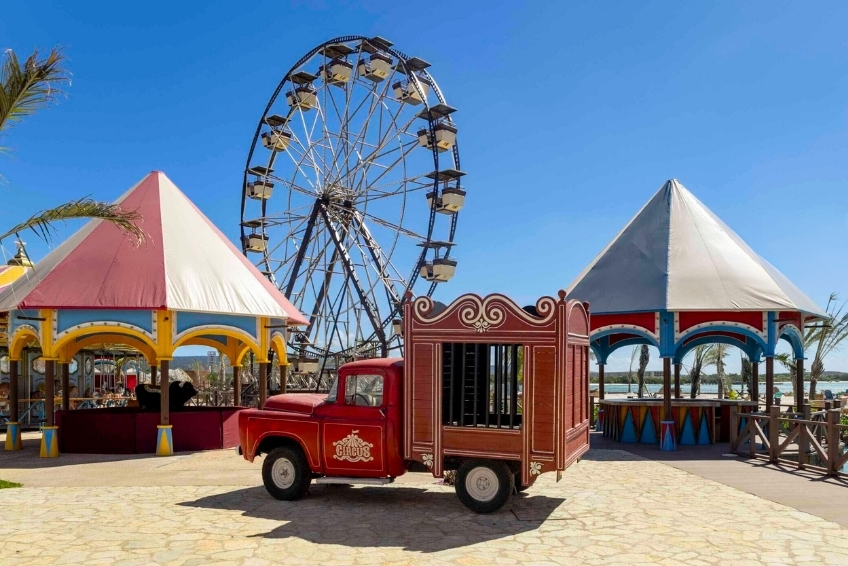
Circus Plaza runs free live shows and fairground attractions throughout the day. The Dune Rally experience near the pier end is free. The entertainment stages run shows all day. Funtastic Village has a photo spot and a floating pier worth a look.
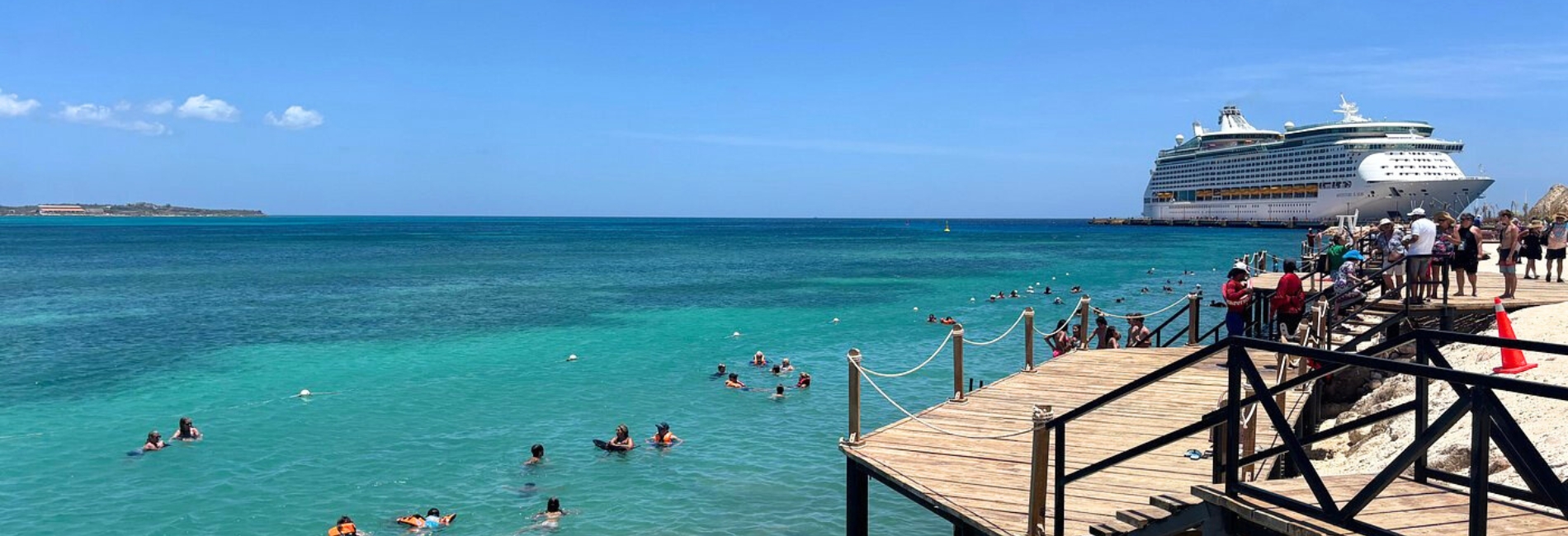
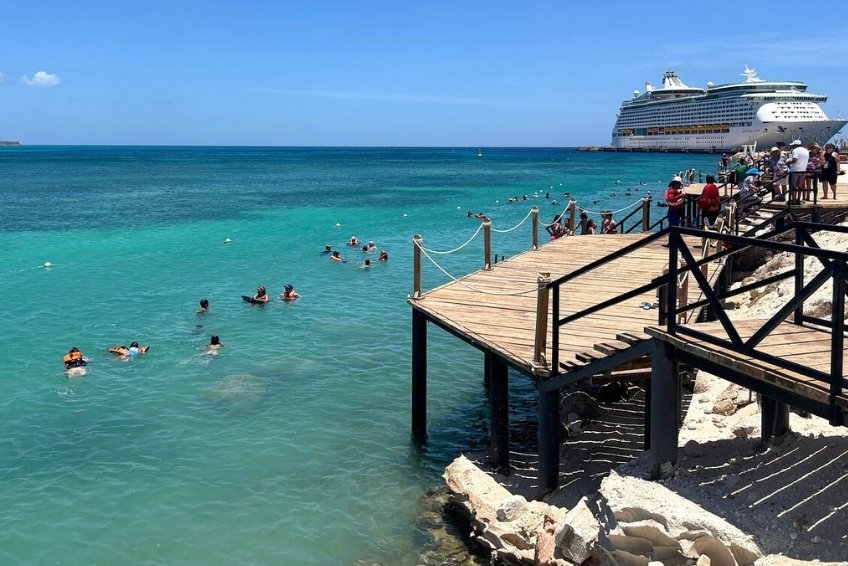
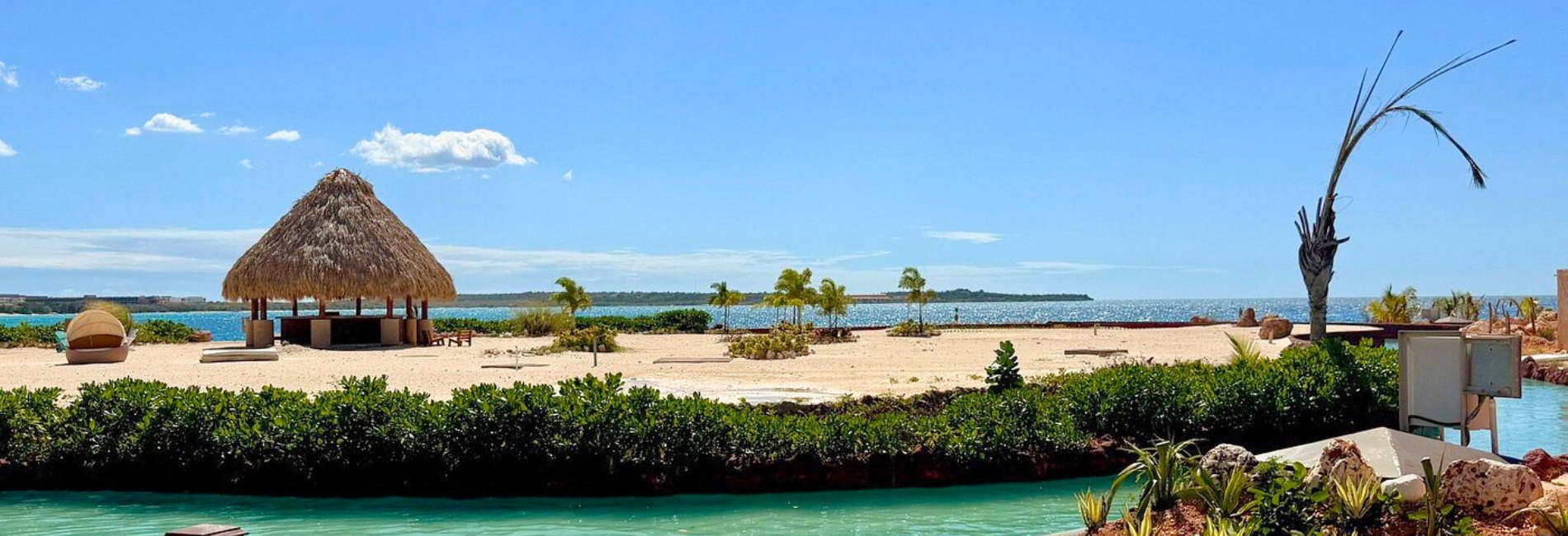
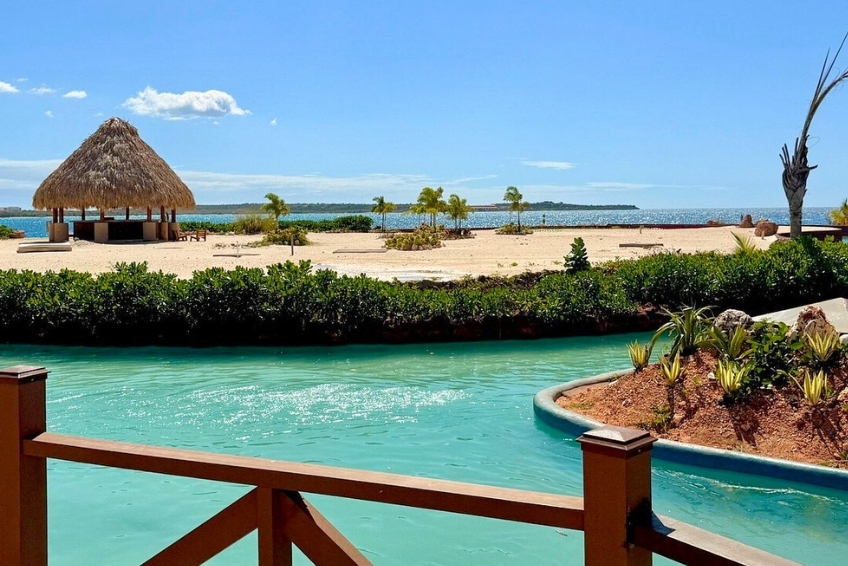
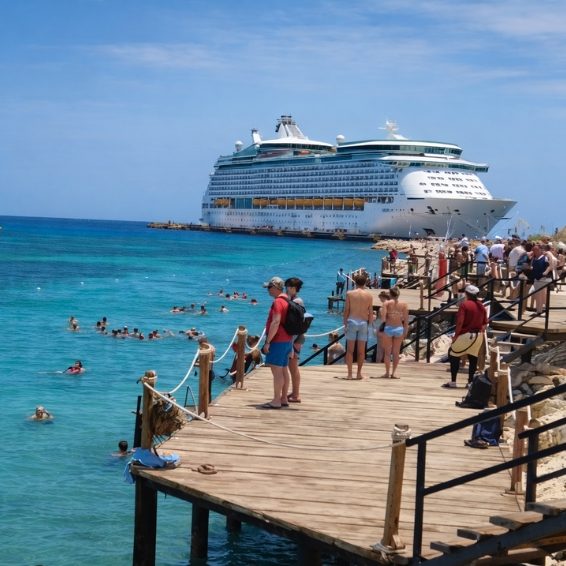
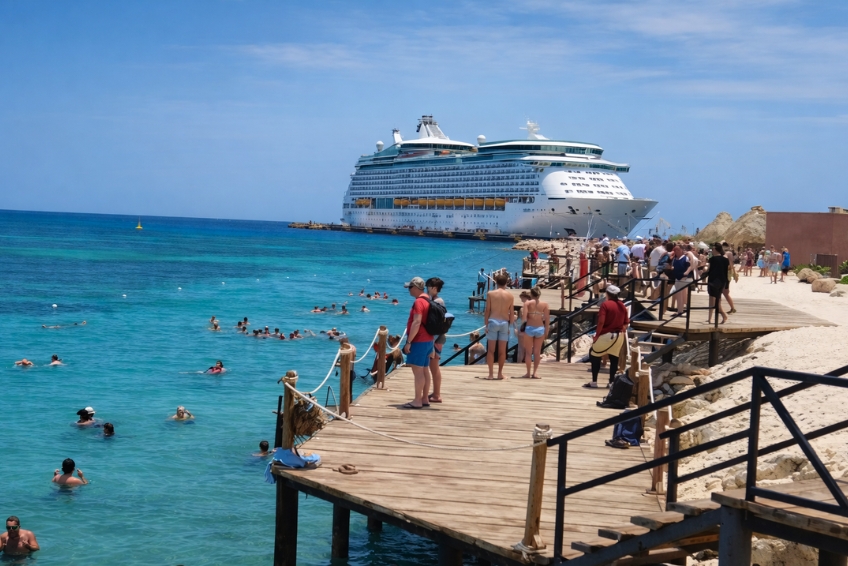
The port has a dedicated swimming and snorkeling area with a wooden dock, steps into the water, and a small sandy beach alongside it. It is near the relaxing pool in the Mining Factory area. The water is clear Caribbean blue right off the pier. This is free and one of the better options in the port for anyone who wants actual ocean water rather than a pool. Bring your own snorkel gear if you have it.
The carnival area in Circus Plaza has free rides, including a merry-go-round and a mechanical bull (both require a signed waiver). Worth noting: closed-toe shoes are required for some activities, so pack accordingly.
What Costs Extra
Food and drinks throughout the port cost extra. The named restaurants are Blue Parrot in Oasis Paradise and The Mine Bar and Grill in Mining Factory. Pool bars (Tiki Tiki, Mojito Bar, Margarita Bar, and the Baby Beach bars) charge for drinks. The quality is generally good, and prices are reasonable by cruise port standards. The spa and spa treatments are extra. Some packaged experiences and organized activities within the complex carry a fee.
Baby Beach, at the far eastern end of the port, is a separate paid experience. Entry runs around $89 per person and includes an open bar. Food is not included and costs extra. It’s capacity-controlled, which keeps it from getting as overcrowded as the pools on busy ship days, but it is a fair walk from the pier end, so factor in the distance before committing.
The Lazy River
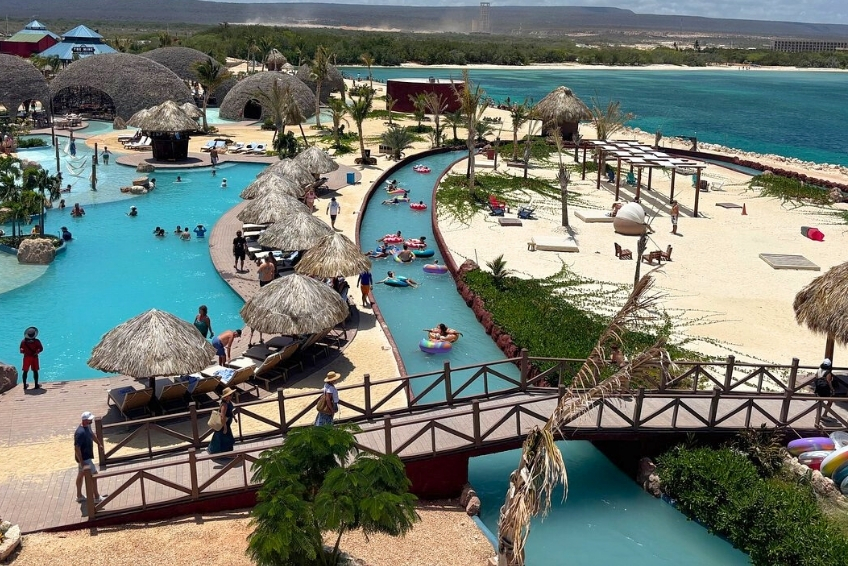
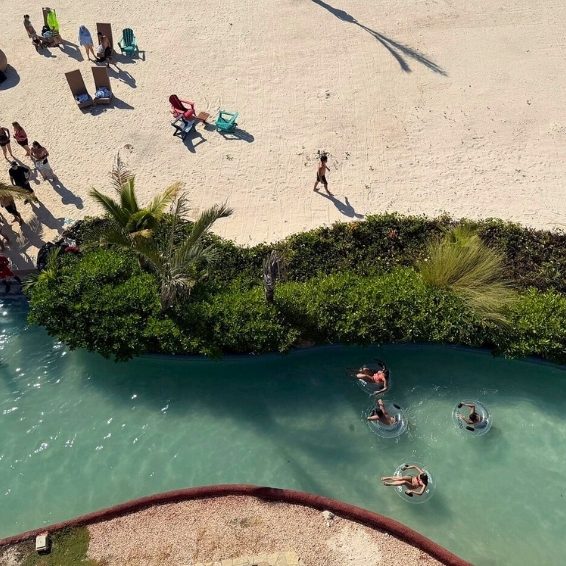
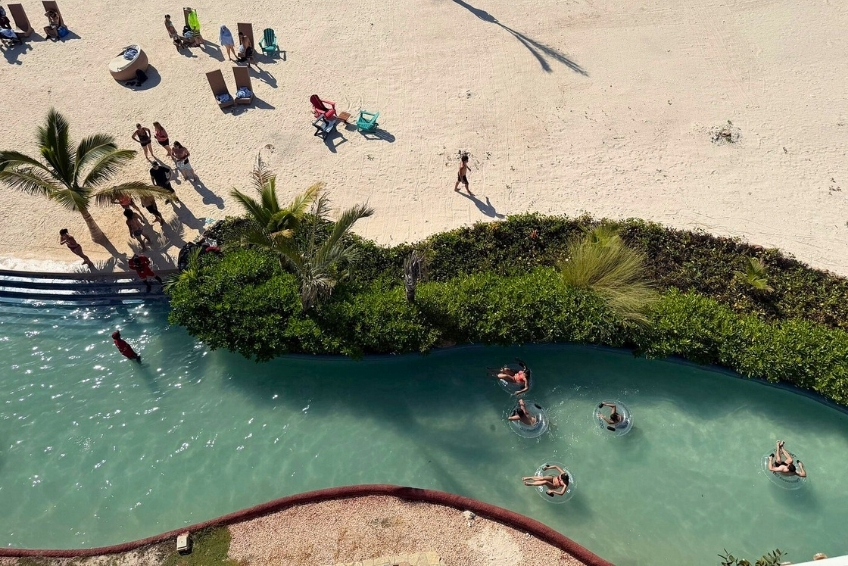
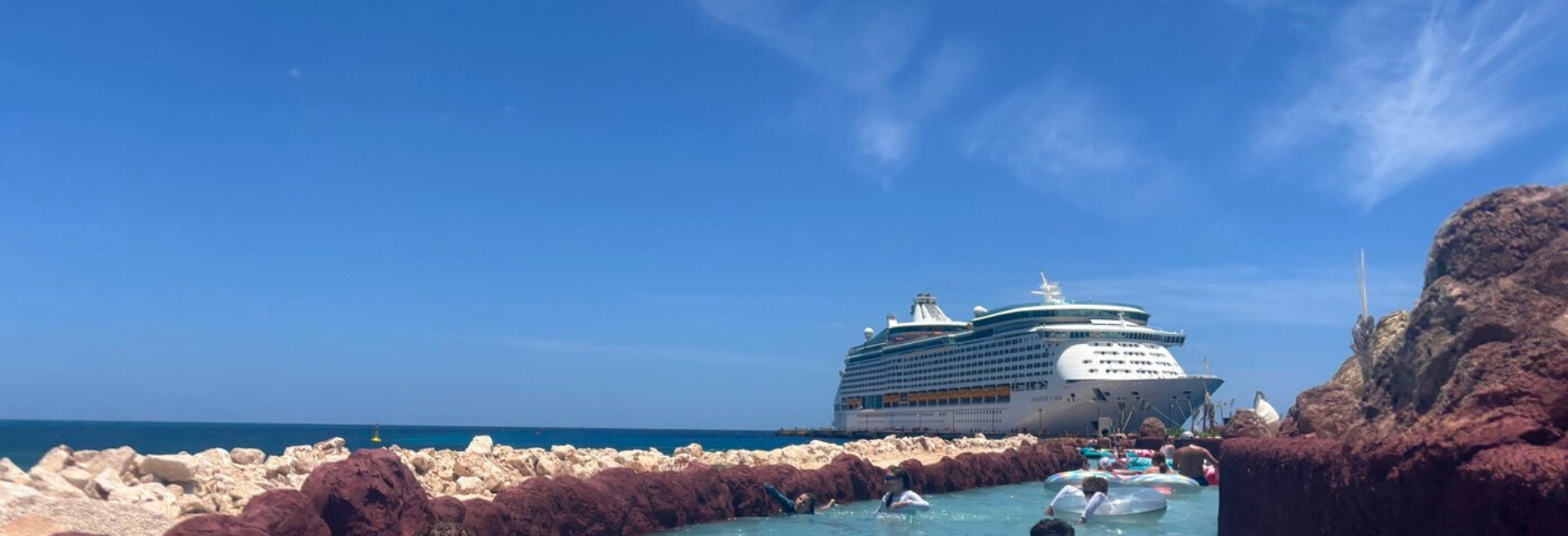
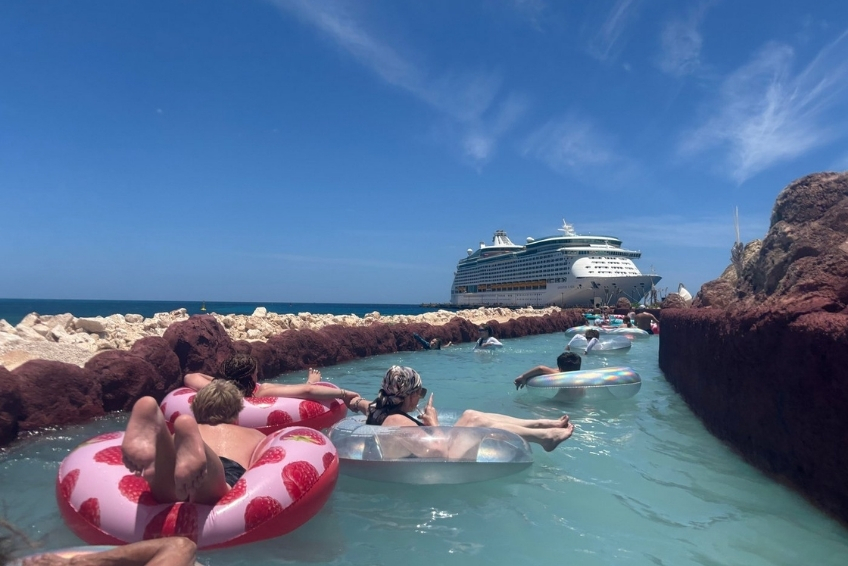
The lazy river sits in the Oasis Paradise zone, roughly in the middle of the port peninsula, across a small bridge. It’s a fair walk from where you disembark, so if this is your main goal for the day, head there early. Inner tubes are provided. It’s genuinely fun and one of the better free activities in the port, but a few practical things to know before you go. The water is open-air and exposed to wind and blowing sand, so the filtration struggles to keep up on busy days. The channel walls are rough concrete in places. If your tube bumps against the sides, it can pop. Avoid rubbing against the edges, and you’ll be fine. Like the pools, it’s free and first-come, so don’t expect to walk up at noon and find it empty!
Kids and Families
The port is well set up for families with children. The carnival area, playground, free rides, pools with shallow wading sections, and interactive street attractions all work well for younger kids. A few things to know. The merry-go-round has no harnesses, so stand alongside young children rather than stepping back for a photo. The mechanical bull is there, and kids will want to try it, but use your judgment. The “photo city” section gets genuinely packed on busy days and is hard to navigate with small children.
Shade and Heat
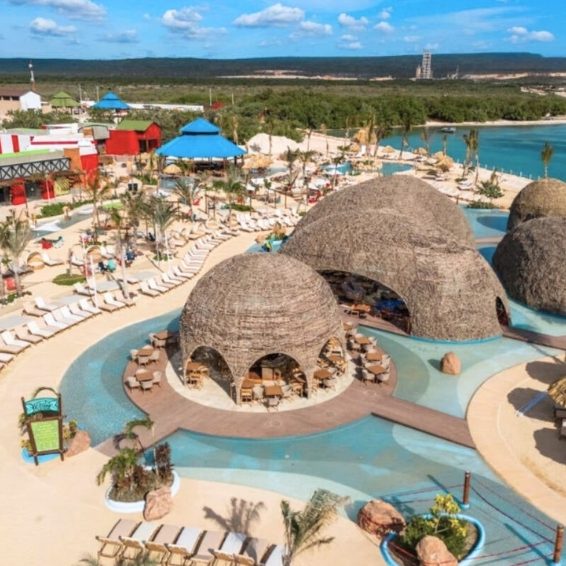
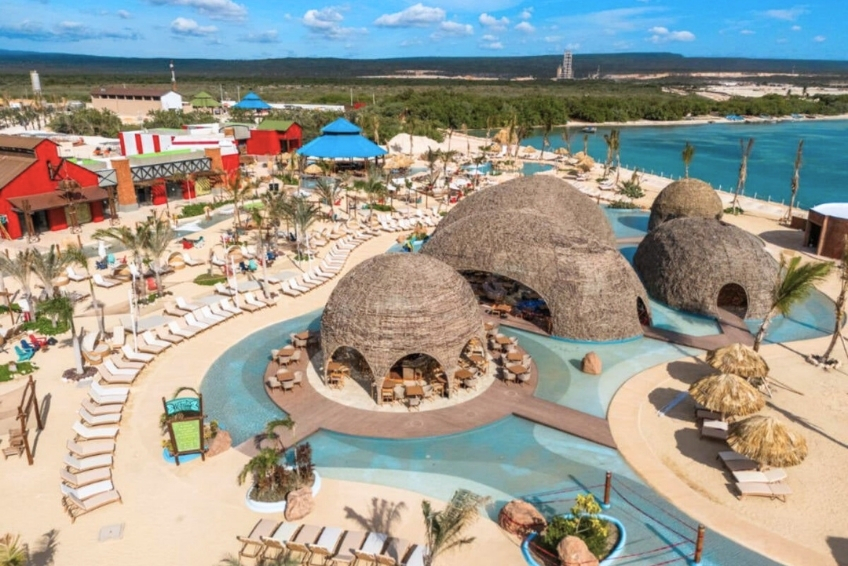
IMPORTANT NOTE: This matters more at Cabo Rojo than at most Caribbean ports. The southwest DR is the hottest, driest part of the island, the port sits on an exposed coastal peninsula, and the sun is genuinely punishing between 10 AM and 3 PM. The open pool areas and walkways between zones have limited natural shade, but shade does exist if you know where to look.
The thatched palapa structures visible throughout the Oasis Paradise and Mining Factory zones are primarily bar areas (Tiki Tiki, Mojito Bar) rather than shade for loungers. Buying a drink at one of these bars gets you into the covered seating around it, which is a reasonable trade in the midday heat. The Blue Parrot and The Mine Bar and Grill are indoor or semi-covered and make for a sensible mid-afternoon escape. The retail shops in Funtastic Village and Circus Plaza offer covered or air-conditioned spaces if you need a break. Baby Beach is the best shade option in the port, with umbrellas included in the $89 entry fee. And the pool water itself (the shallow wading sections and hammocks) keeps you cool without lying in direct sun.
Come prepared regardless! SPF 50+ reef-safe sunscreen, a wide-brimmed hat, UV sunglasses, and a water bottle. The heat here is not the balmy warmth of the Bahamas. It bites.
Accessibility
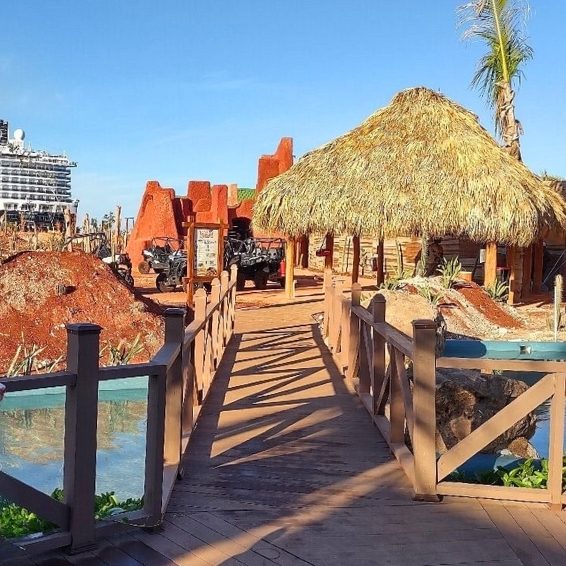
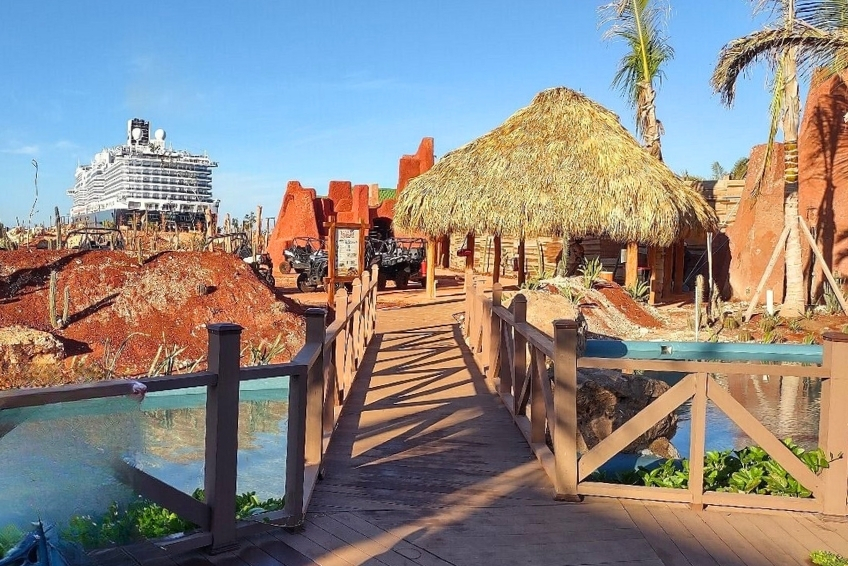
The port is navigable for passengers using walkers and scooters. The walkways are wide and the surfaces are manageable, though the sloping streetscape section is uneven by design. If you have specific mobility needs, the pool and lounger areas are the easiest to access.
Stay at the Port or Go? Your Four Options
This is the most important decision you’ll make at Cabo Rojo, and it’s worth thinking through before you arrive.
Option A: Stay at the port complex. Pools, rides, themed areas, restaurants, and shopping are all here. Reasonable for families with young children or anyone who genuinely wants a low-key day. Worth being honest, though… the port complex is the least interesting thing available to you in this region.
Option B: Walk to Baby Beach (5–10 min). A capacity-controlled beach club adjacent to the port, with an open-bar package at around $89 per person. Note that food is not included and costs extra. Convenient and clean. It is, however, a manufactured beach experience in a region that has one of the world’s great natural beaches nearby at Bahia de Las Aguilas.
Option C: Cruise line shore excursion. Professionally organized, English-speaking guides, air-conditioned transport, guaranteed return times. Typically $79–$149+ per person. The right choice if peace of mind matters more than saving money, or if you’re traveling with people who’d be uncomfortable going independent. Expect large groups with tight schedules and no flexibility.
Option D: Independent local operators. Roughly 30–50% cheaper than ship excursions for comparable experiences, more flexible, and often more personal. The established operators serving Cabo Rojo both offer guaranteed return times for cruise passengers. The one real risk is that if your tour runs late, the ship may not wait. Book with operators who have a specific track record of serving cruise passengers from this port.
Things To Do Outside The Port
The Pedernales region is the real reason Cabo Rojo is worth a stop. The port itself is fine, but the natural attractions surrounding it are genuinely exceptional: one of the world’s great beaches, a flamingo lagoon, cave art, and a mountain ecosystem found nowhere else on Earth. Here’s what’s available, what each involves, and what it will realistically cost you.
click to see more images
1. Bahia de las Aguilas
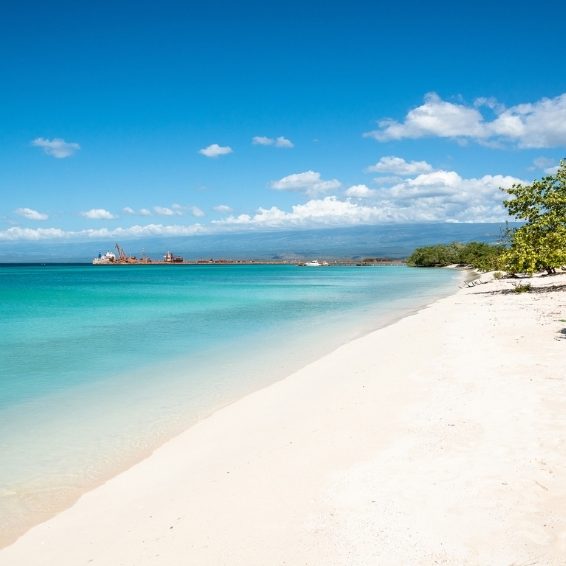
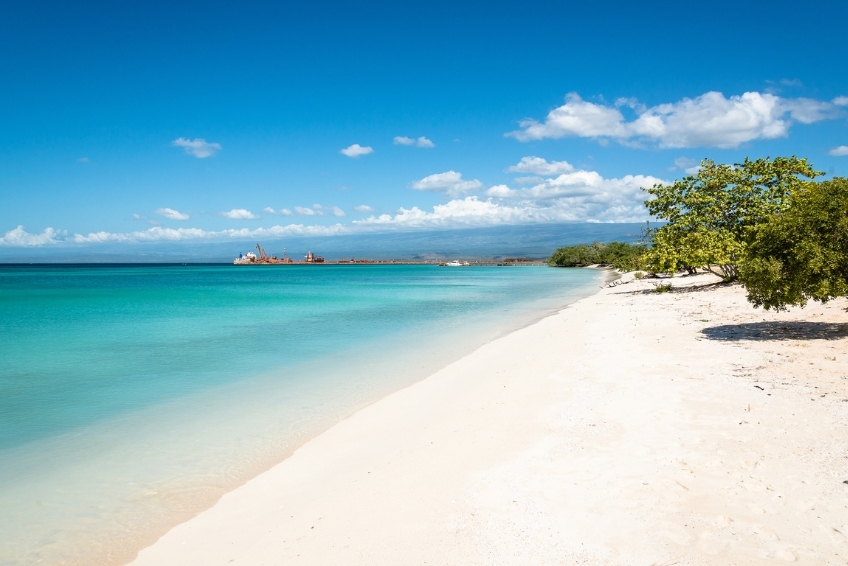
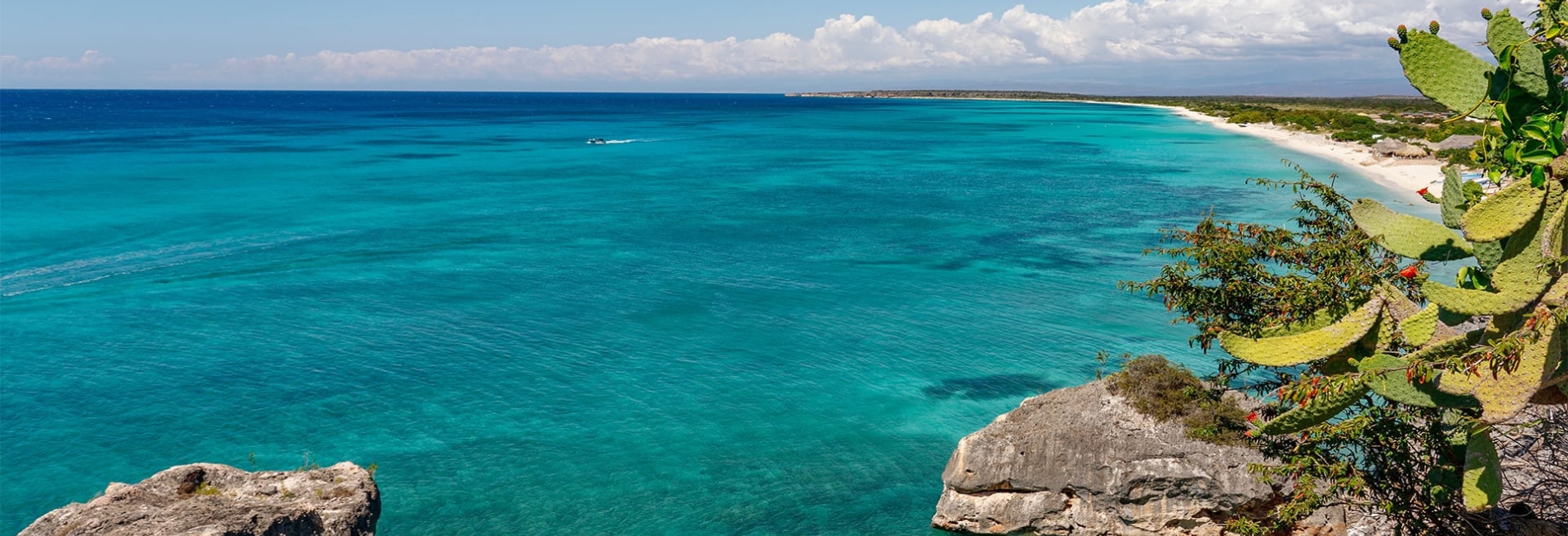
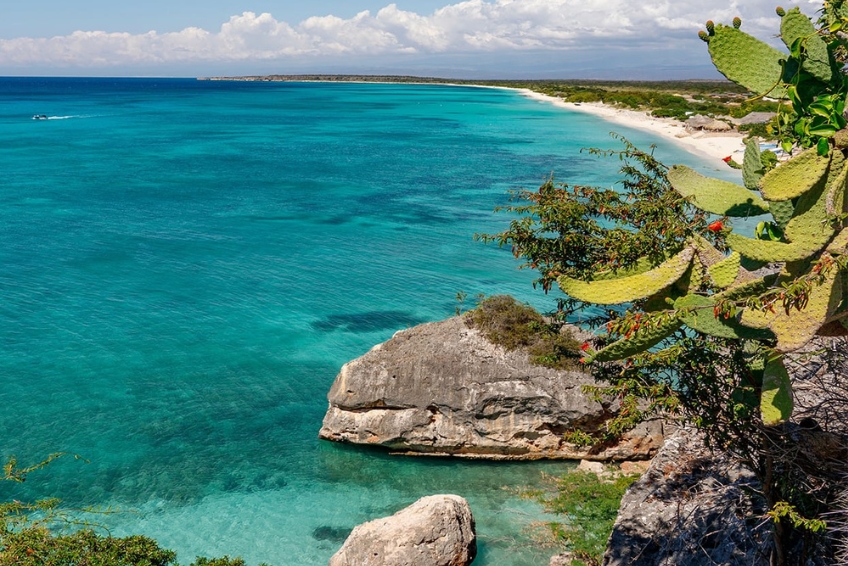
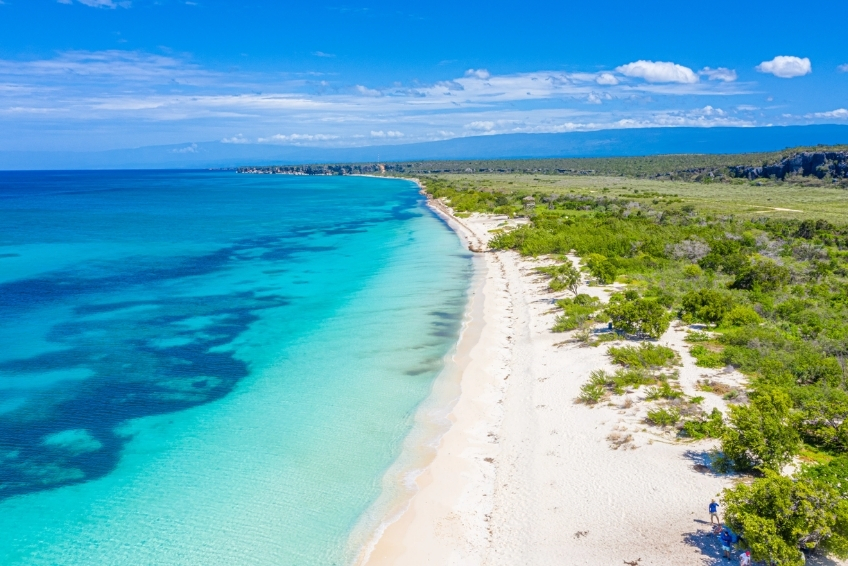
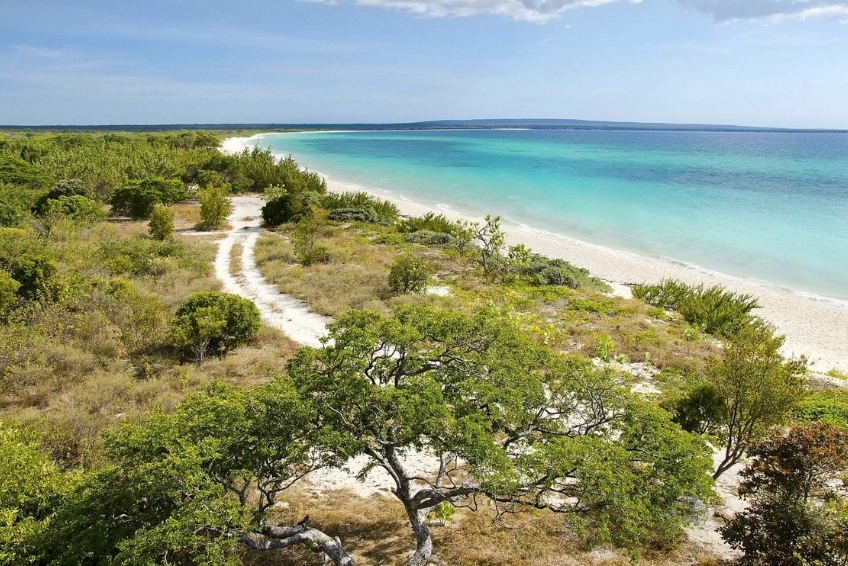
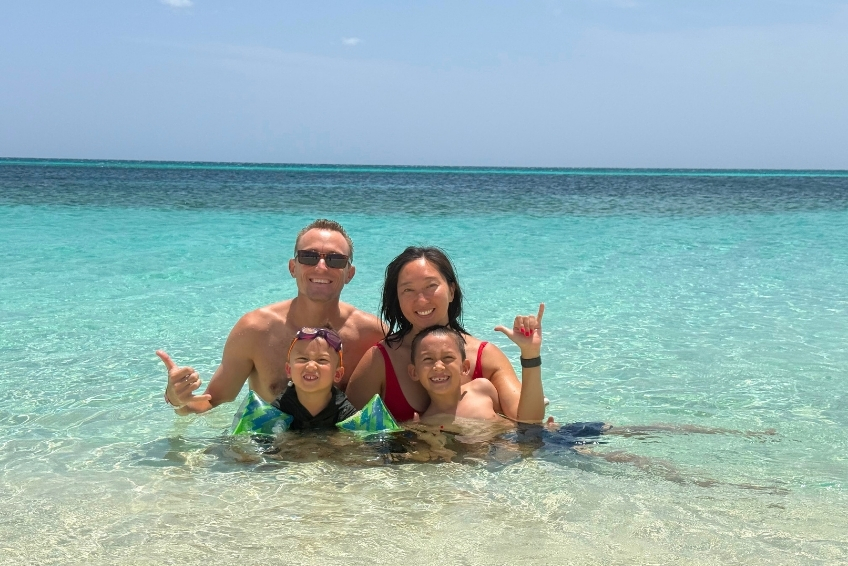
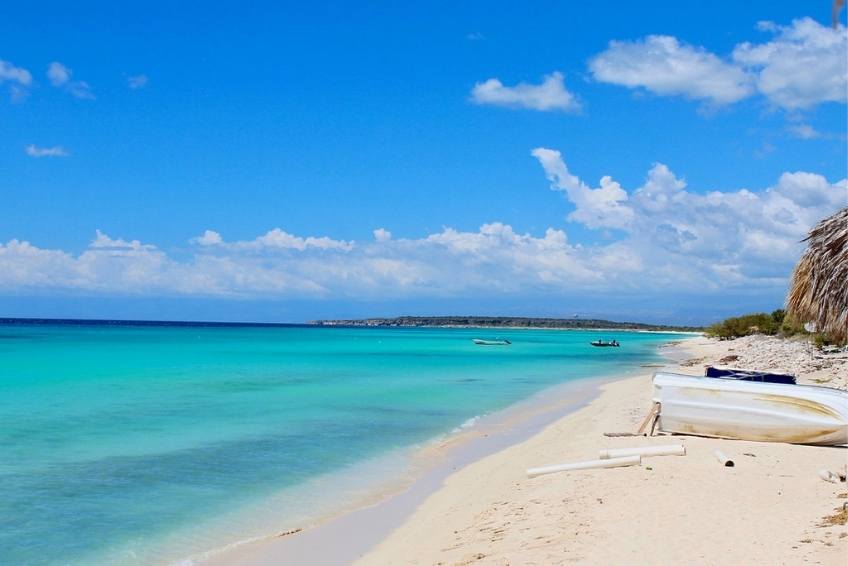
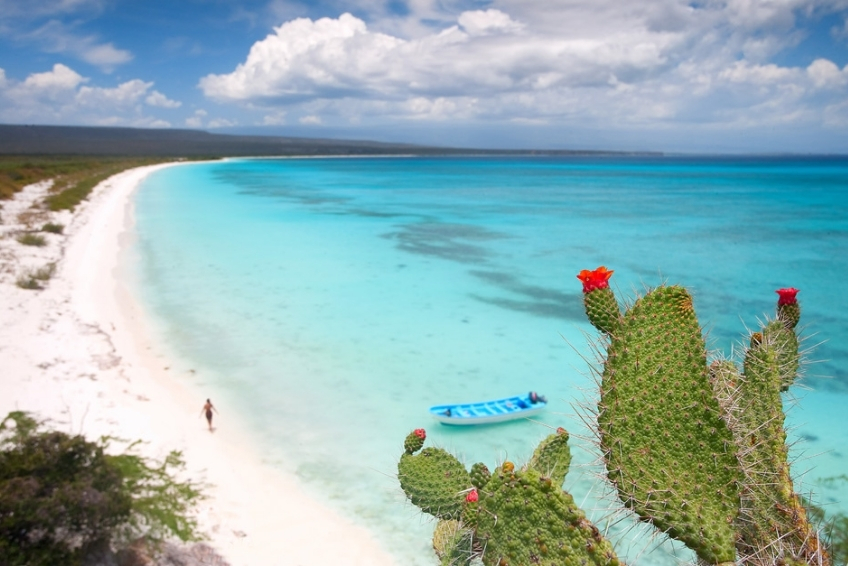
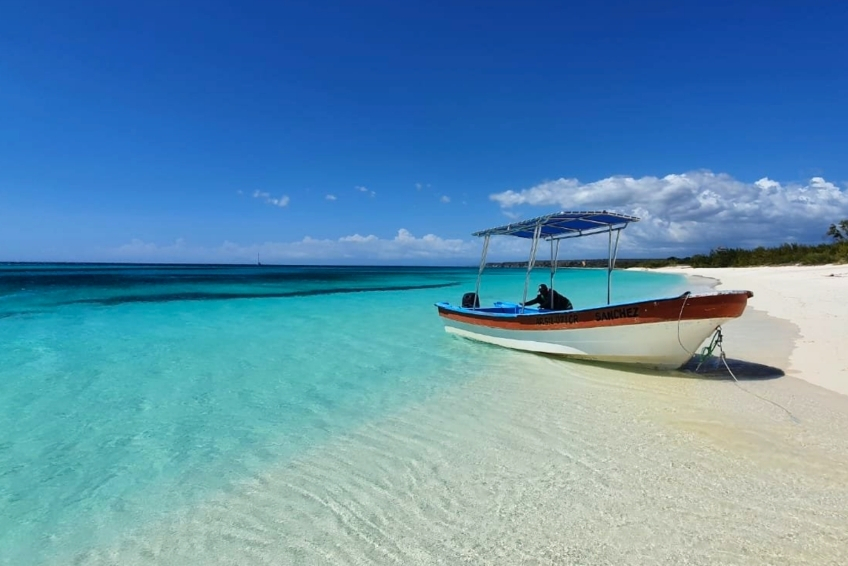
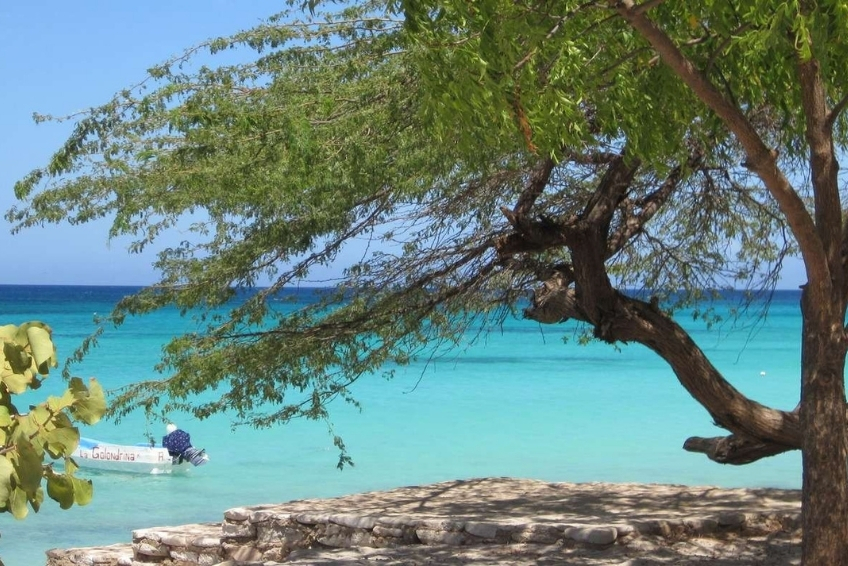
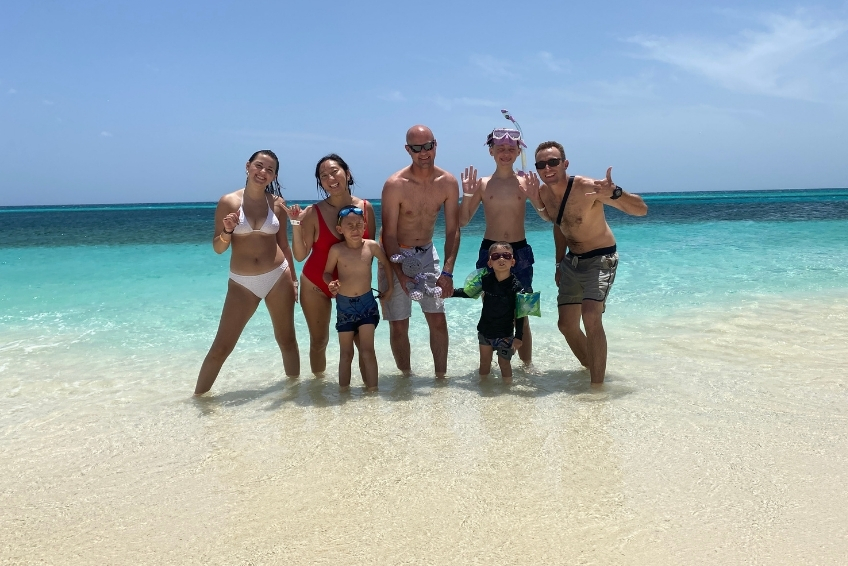
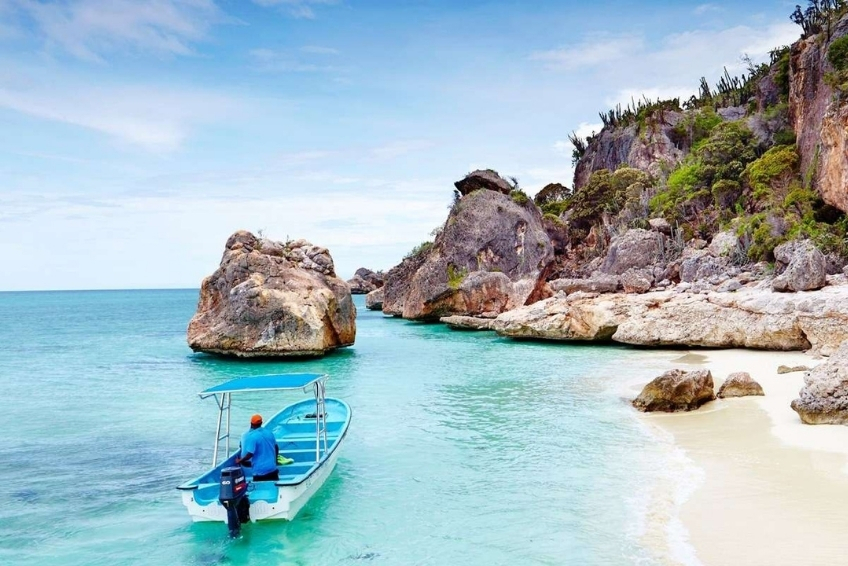
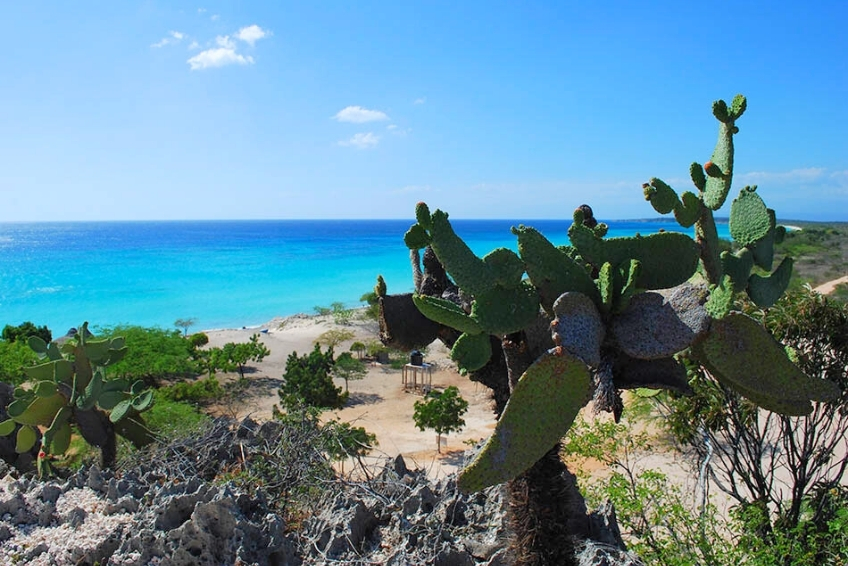
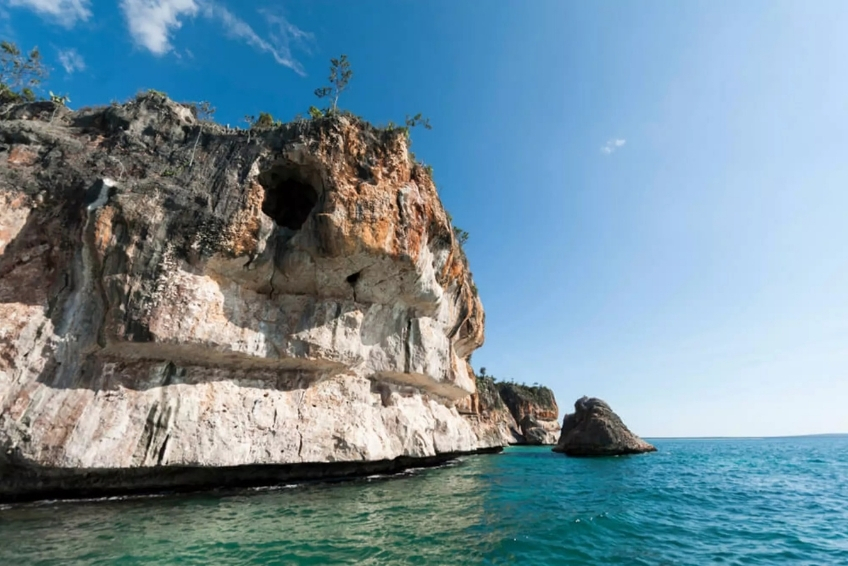
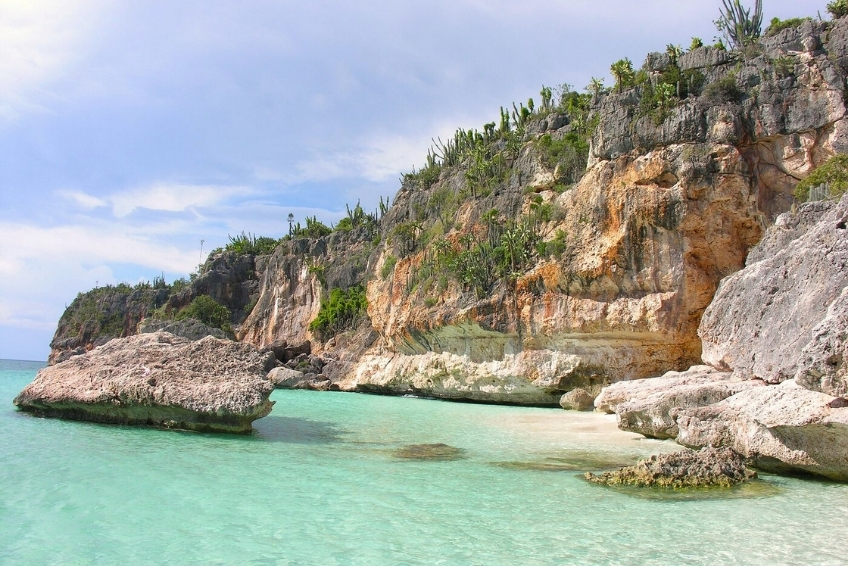
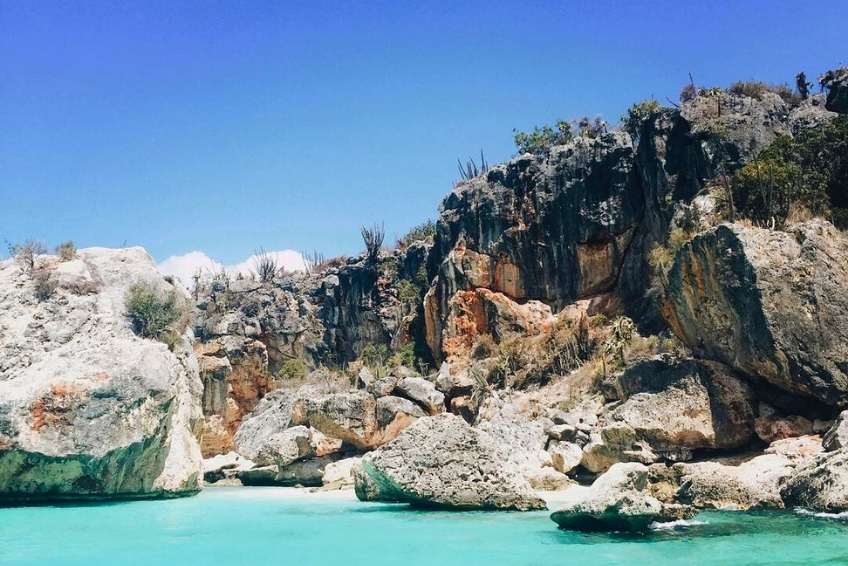
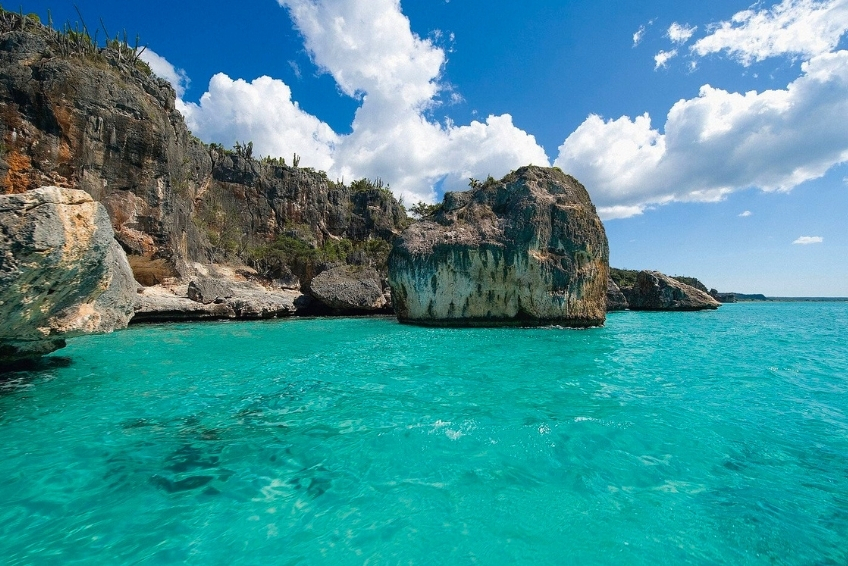
Bahia de las Aguilas is consistently ranked the finest beach in the Dominican Republic, and the ranking is not marketing. Eight kilometers of white sand, water that runs from pale green to deep turquoise, and a backdrop of cactus scrub and limestone cliffs. The landscape is strikingly arid, more desert coastline than tropical Caribbean. The beach has nothing on it. No shade, no bathrooms, no food vendors, no development of any kind. That’s not a failure of infrastructure. It’s the point.
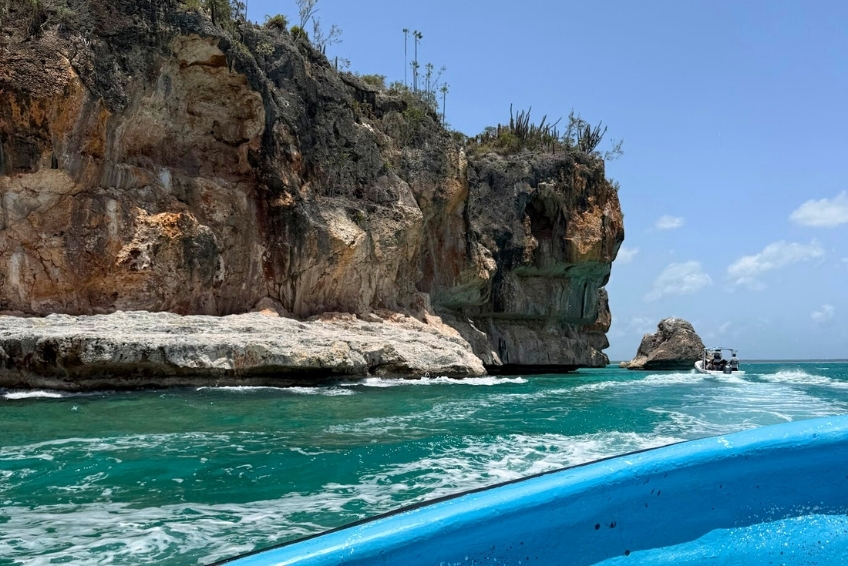
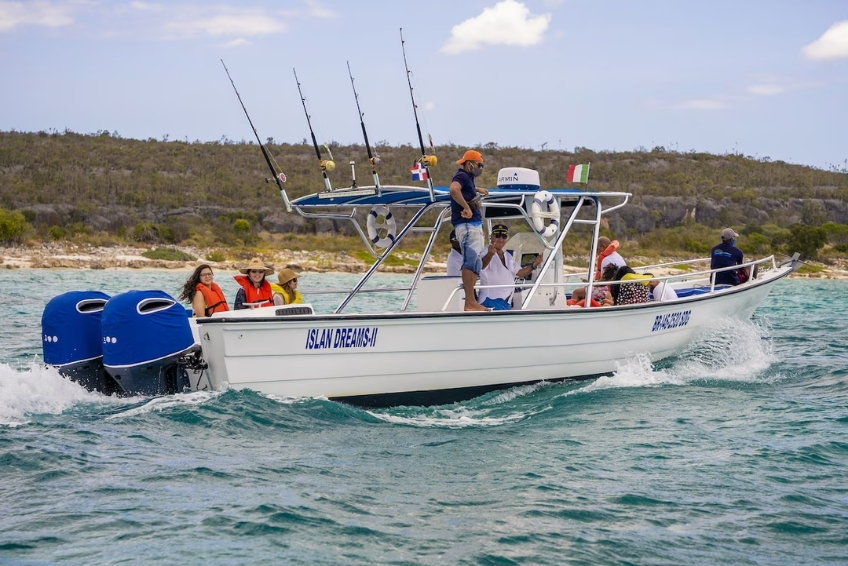
Access is by motorboat from the fishing village of La Cueva, about 25 minutes from the port by road. The boat ride is 15–20 minutes across open water, and is a fun part of the experience in its own right. Shore excursions or prebooked tour operators can arrange everything, while independent visitors can arrange boats at La Cueva for $35–$60 per boat (capacity 6–8, not per person) plus a park entrance fee of around RD$150 per person. After the organized tour groups clear out, the beach goes almost quiet.
Check out our complete Bahia de las Aguilas Visitors Guide for boat details, what to bring, the best spots on the beach, and how to make the most of your time there.
Check out this Bahia de las Aguilas 2 Day All Inclusive Beach Paradise Tour or this Bahia de las Aguilas Full Day Private Tour With Lunch and Open Bar Tour.
click to see more images
2. Laguna de Oviedo
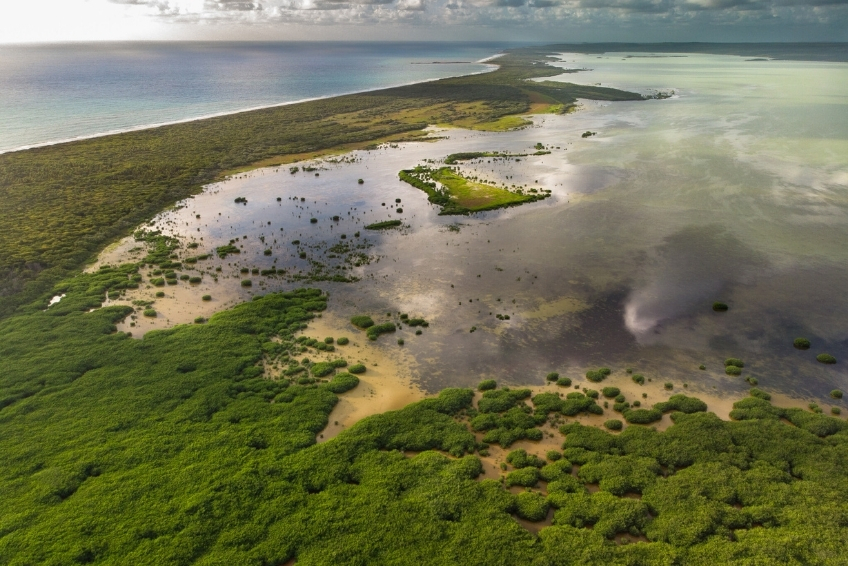
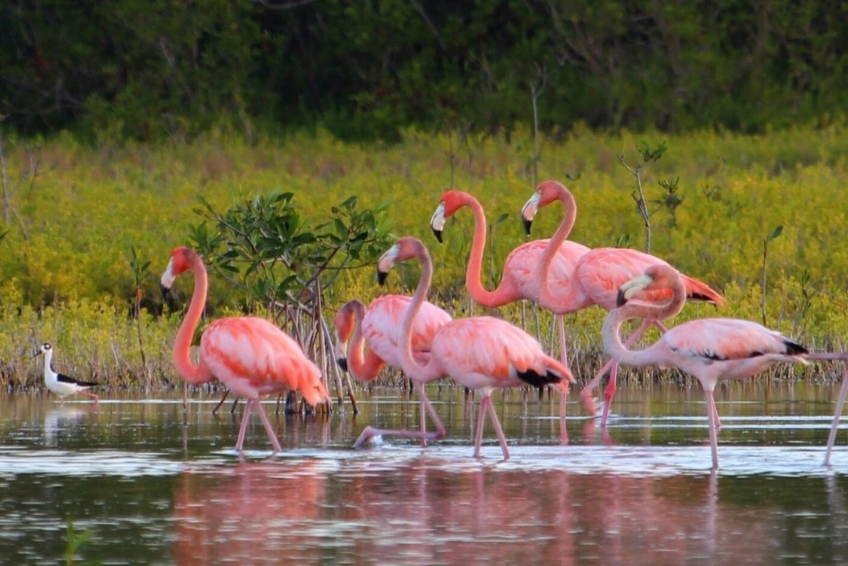
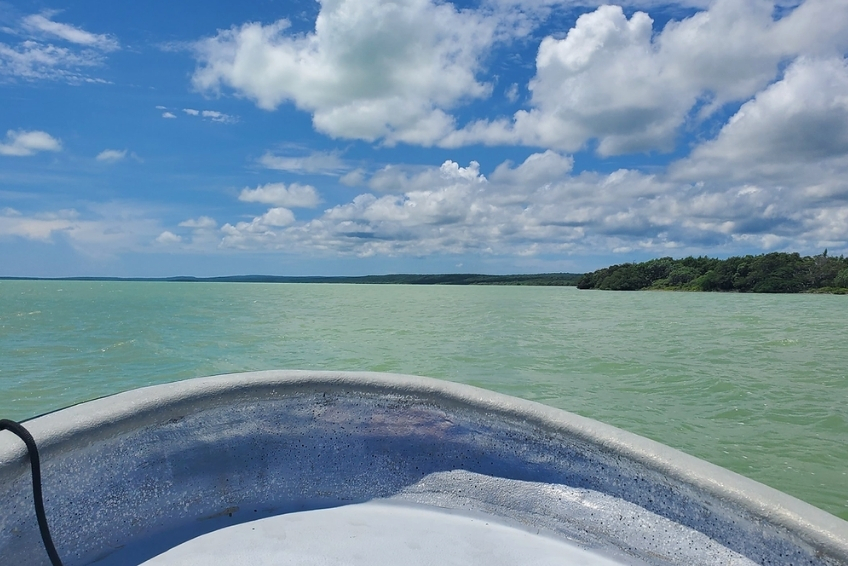
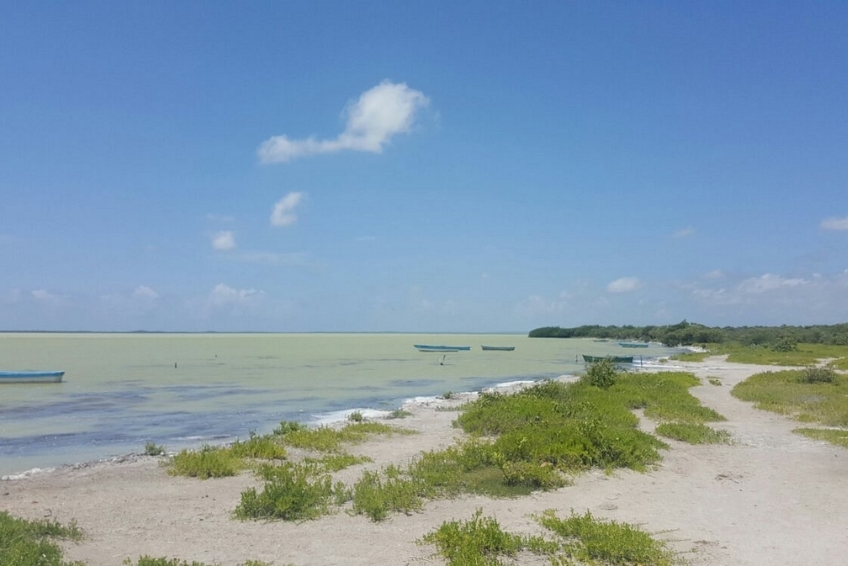
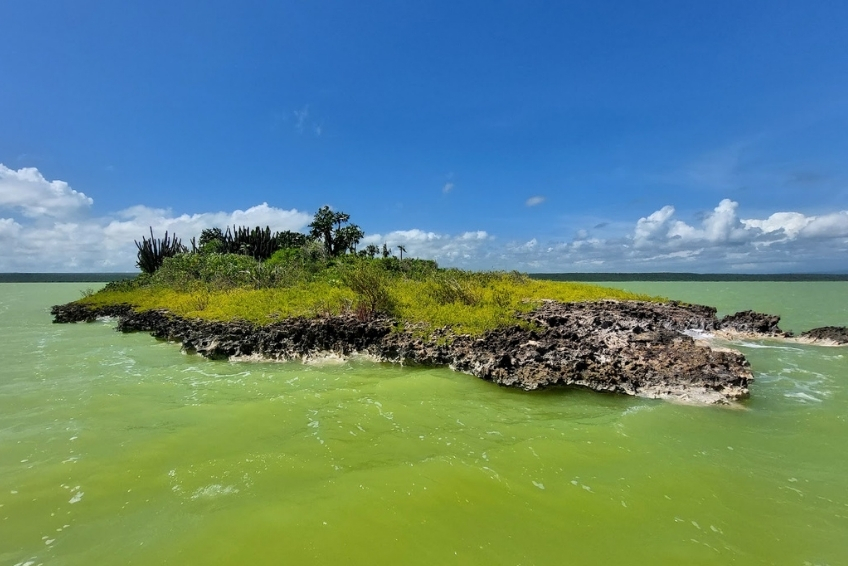
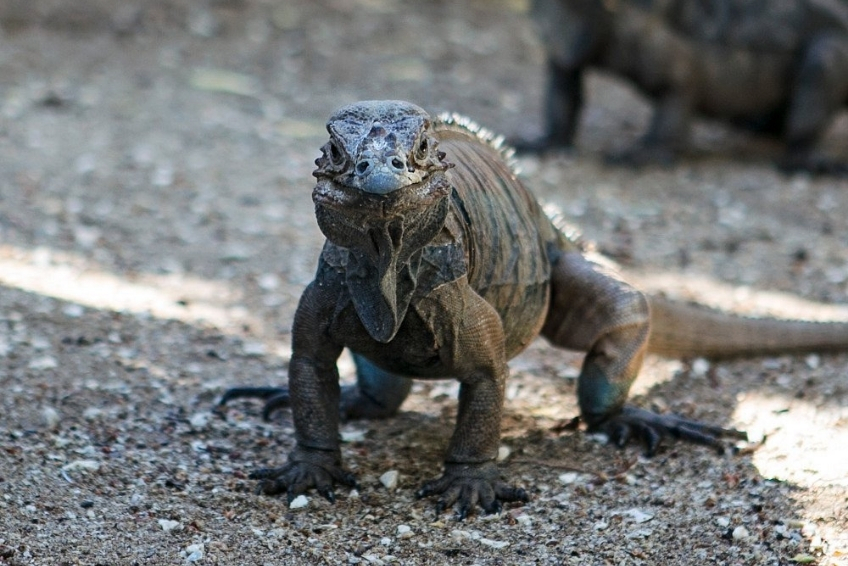
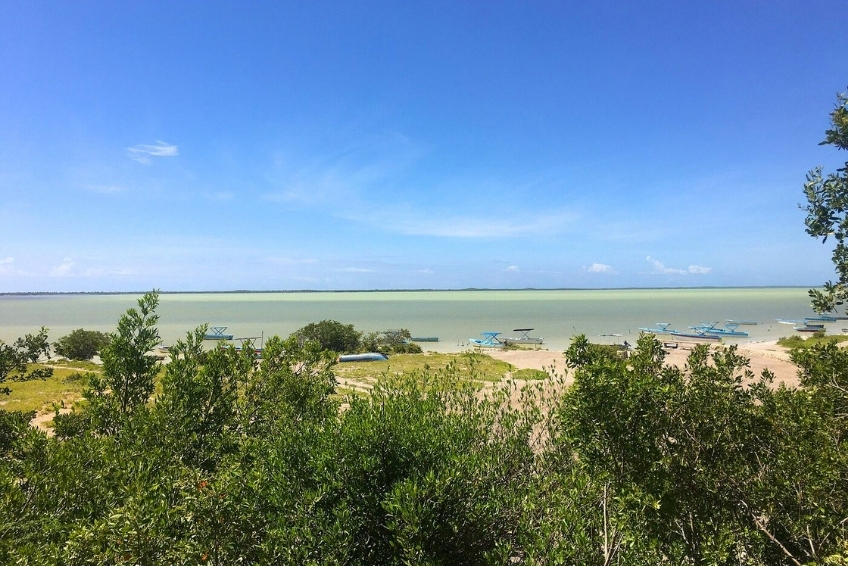
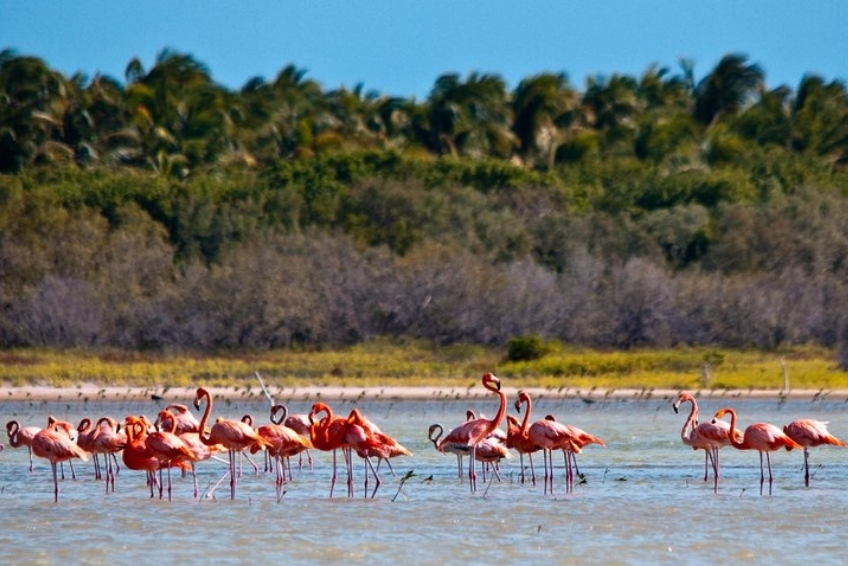
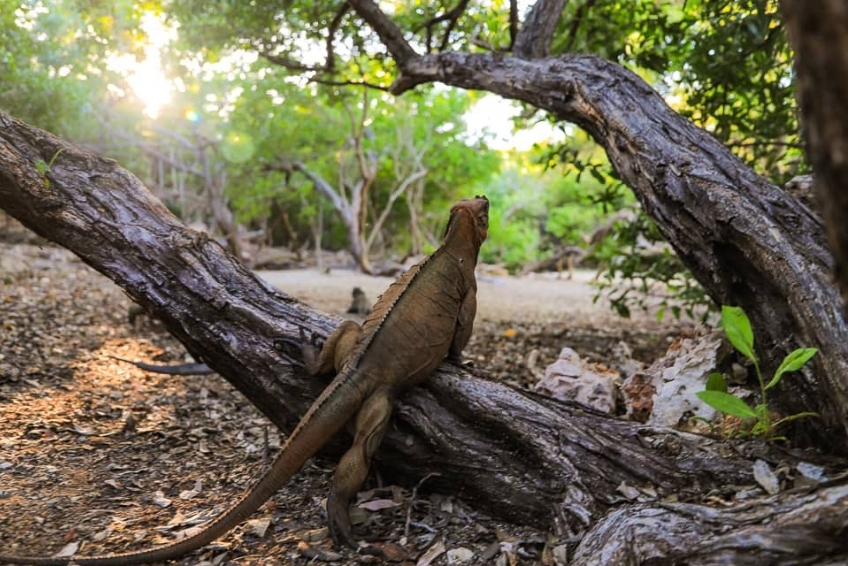
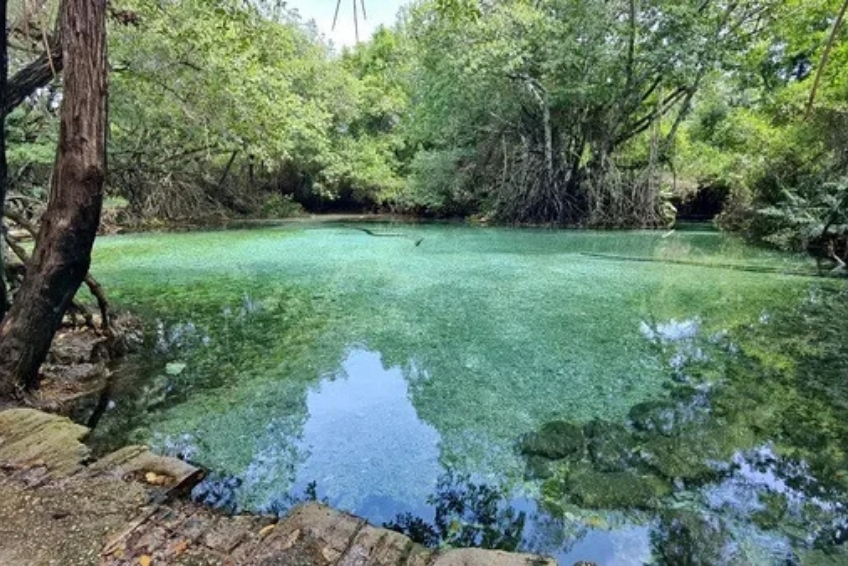
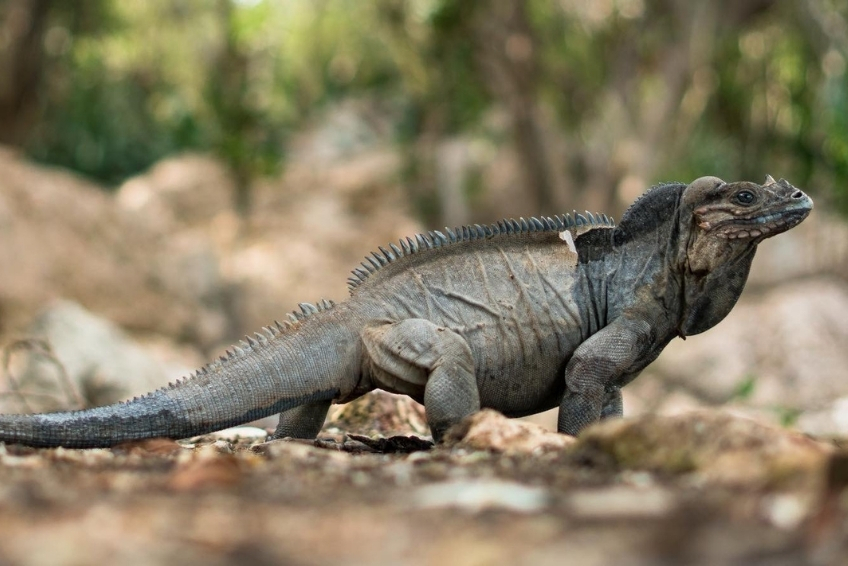
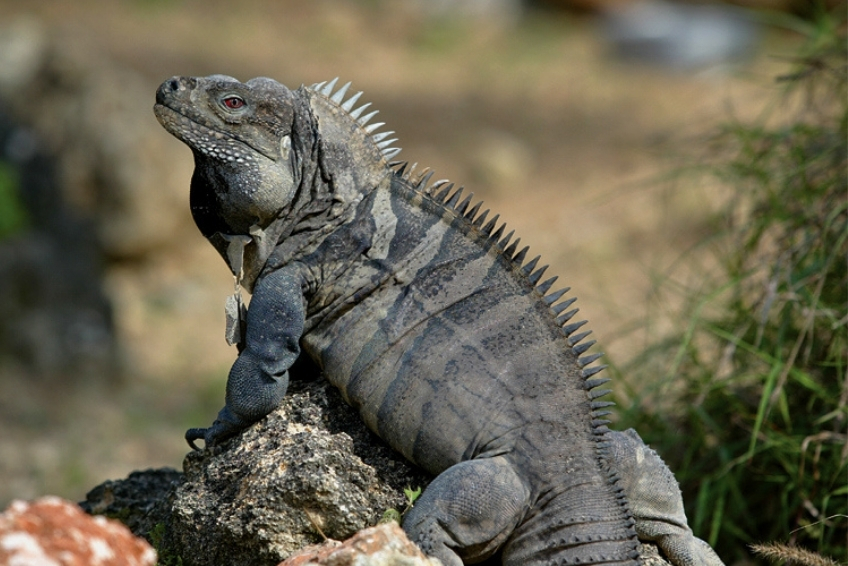
The water in Laguna de Oviedo runs pale green and is three times saltier than the sea. The largest lagoon in the Dominican Republic at 27 square kilometers, it sits inside Jaragua National Park about 45–60 minutes east of the port along Highway 44. American flamingos wade in the shallows, rhinoceros iguanas have colonized the small island of Cayo Iguana in large numbers, and Taíno petroglyph sites carved centuries before European arrival sit on the surrounding cays.
The basic walking tour (Flamingo Stroll) costs RD$1,500 per person and takes 20–30 minutes. The full boat tour (recommended), the Flamingo Express, covers the iguana island, mud baths, and petroglyph sites in about an hour and costs around RD$4,000 per boat for up to five people. Come in the early morning during December through April for peak flamingo numbers.
Check out our complete Laguna de Oviedo Visitors Guide for detailed tour options, pricing tiers, wildlife viewing tips, and logistics.
Check out this highly rated Laguna de Oviedo Tour or discover even more with this Explore Laguna de Oviedo Tour.
click to see more images
3. Jaragua National Park
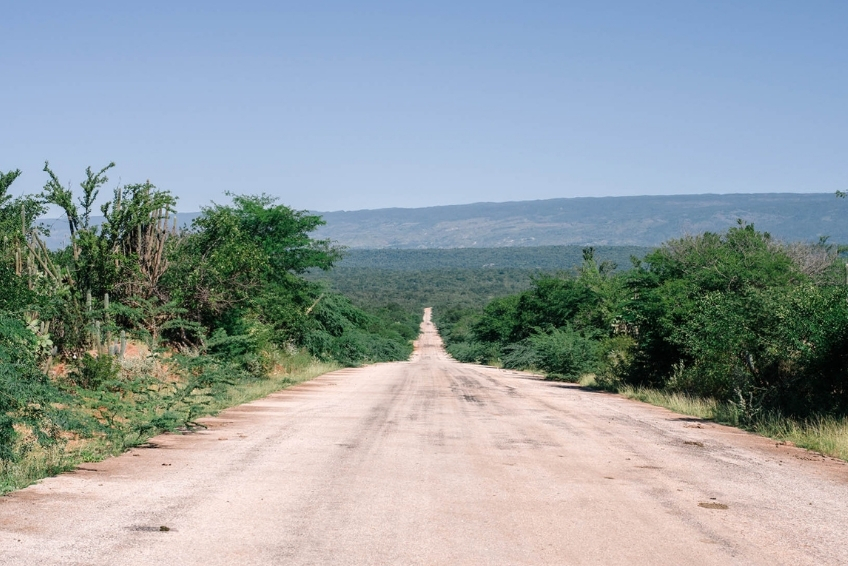
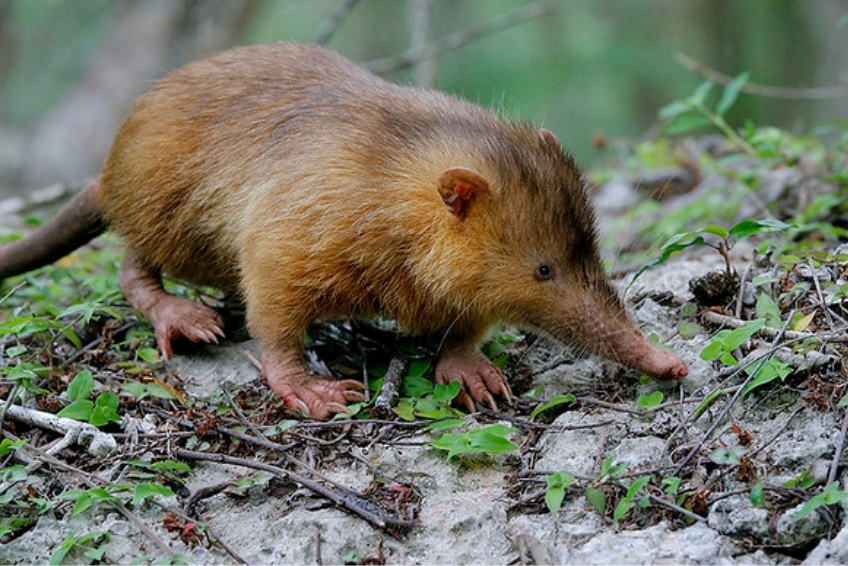
Most visitors to Bahia de las Aguilas and Laguna de Oviedo pass through Jaragua National Park without quite registering that they’re inside the largest protected area in the Caribbean. The park covers 1,374 square kilometers of bone-dry cactus forest, hypersaline lagoons, pristine coral reefs, and sea turtle nesting beaches, all designated a UNESCO Biosphere Reserve in 2002.
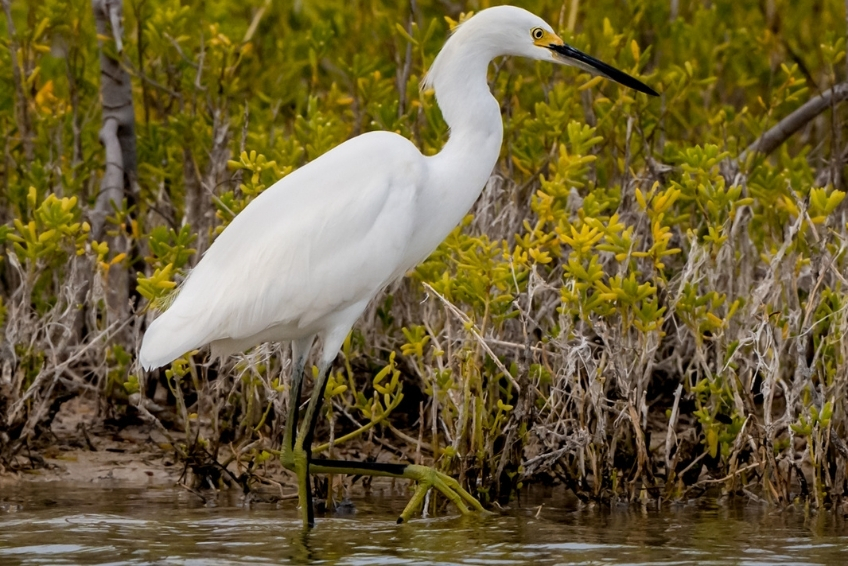
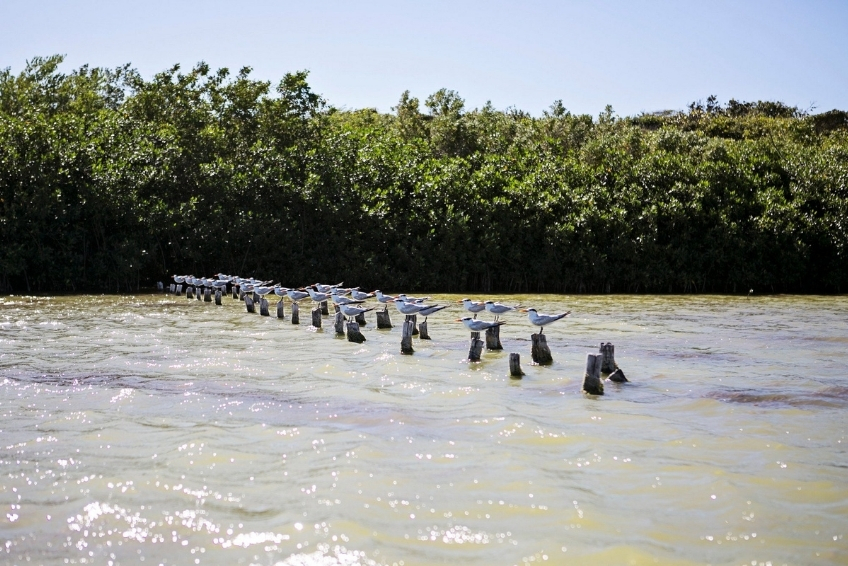
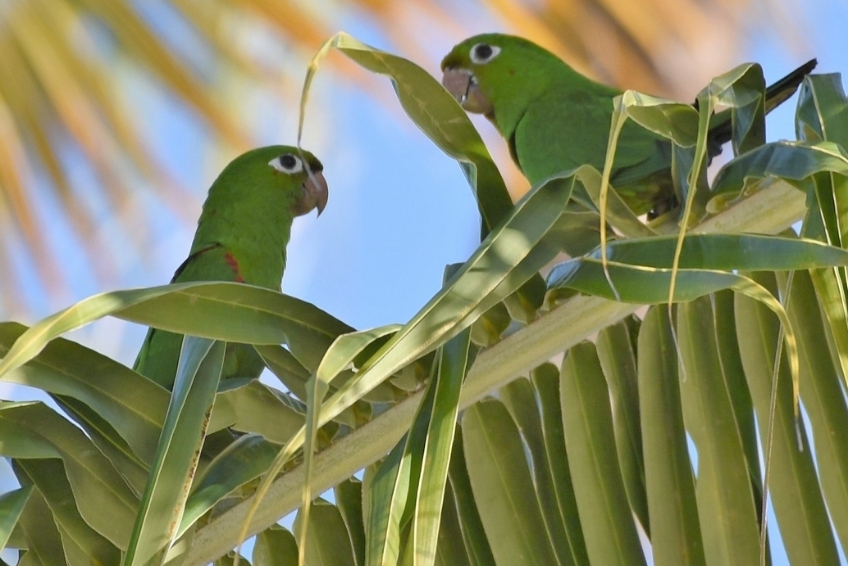
Beyond the headline attractions, the park holds Taino cave art at El Guanal dating back thousands of years, mangrove trail systems, and nearly 180 bird species. The same dry landscape that makes the beaches so visually striking (the limestone cliffs, the cactus scrub, the absence of anything lush or tropical) supports an ecology that scientists are still cataloguing. If you’re traveling with anyone who cares about natural history, ask your tour operator to route through the cave sites. Most are happy to do it.
Check out our complete Jaragua National Park Visitors Guide for everything you need to know about the park’s ecosystems, wildlife, and how to explore it beyond the beach.
Have the experience of a lifetime with this Cenote and Hiking Adventure in Jaragua National Park.
click to see more images
4. Hoyo de Pelempito
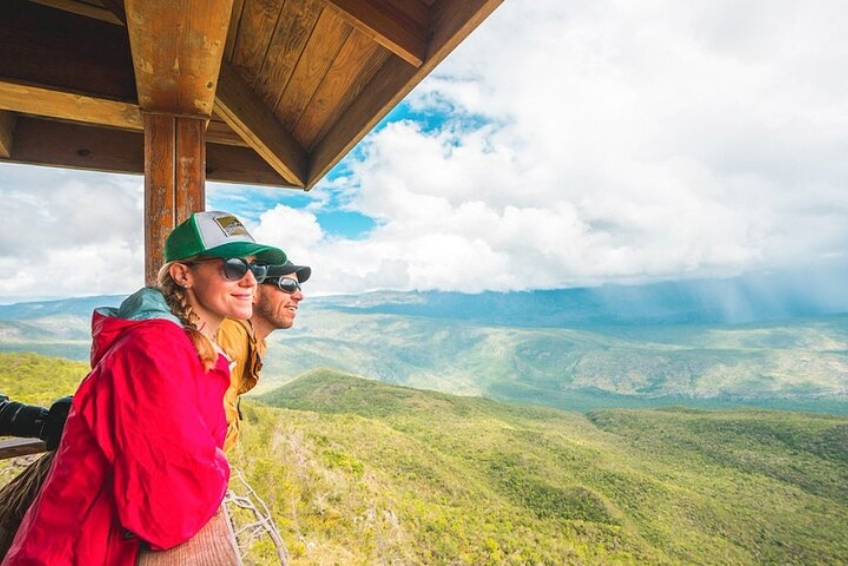
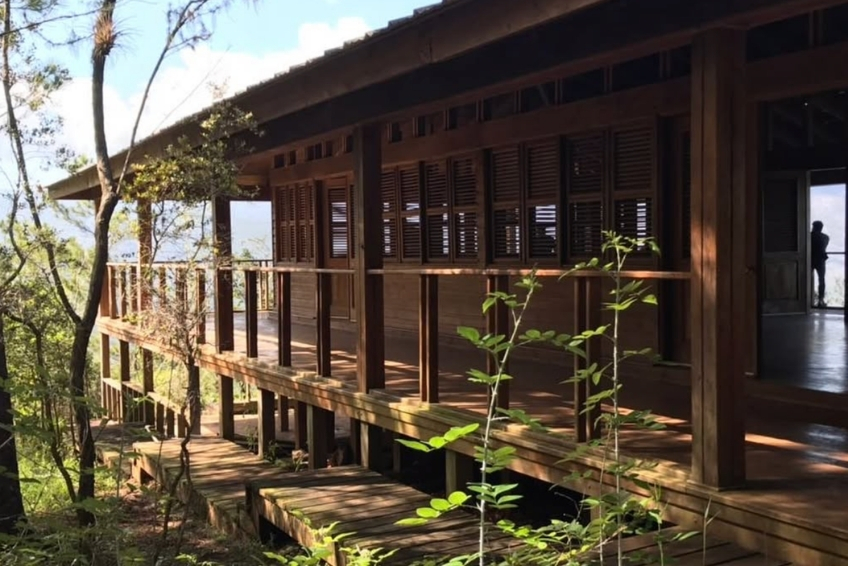
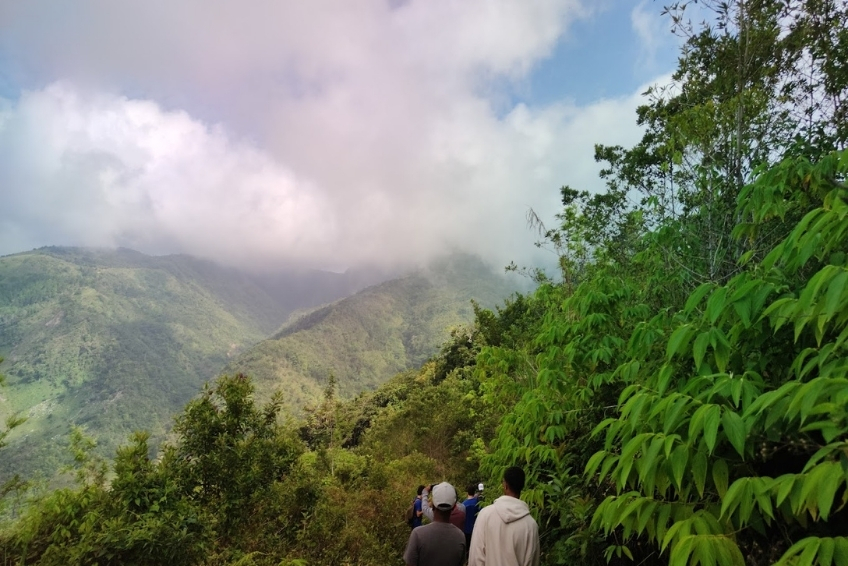
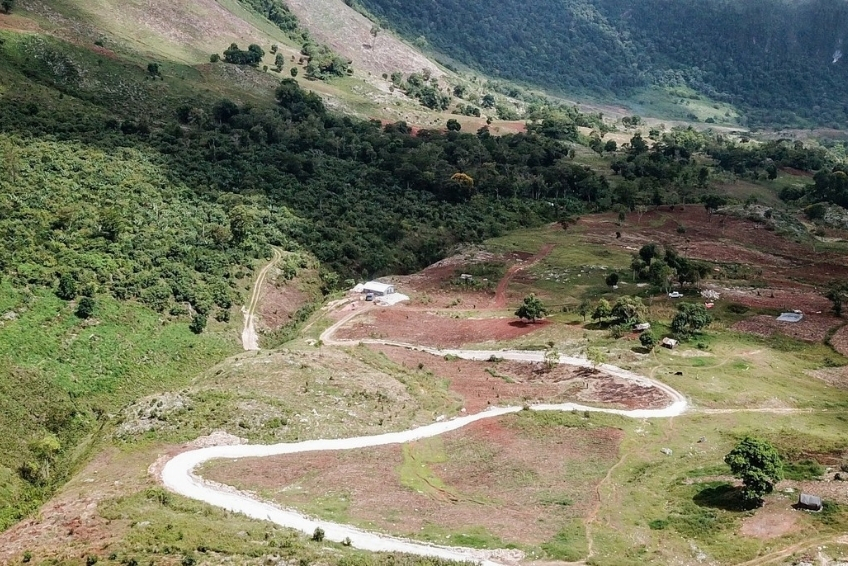
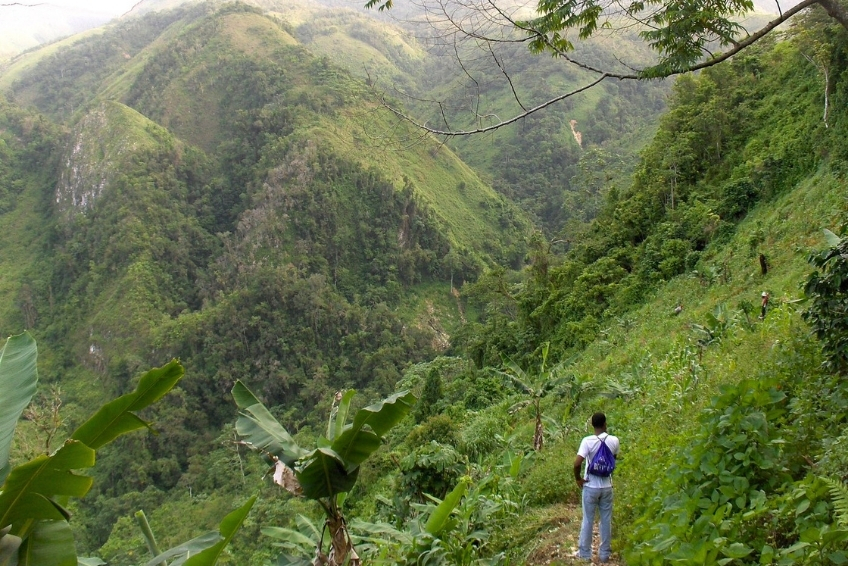
You bounce up a mountain road for 75–120 minutes through red-earth bauxite craters and four distinct forest zones, and then you step out onto a wooden platform at the edge of a cliff. The wind hits you first, hard enough to make the structure creak. Then you look down into a 700-meter geological depression, roughly 7 kilometers long and 4.8 kilometers wide, with cloud forest walls rising on all sides and a floor that was submerged by seawater in a previous geological era.
On clear days you can even see the Caribbean coast far behind you. It is one of the most disorienting and spectacular views in the entire Caribbean, and almost no one knows it exists.
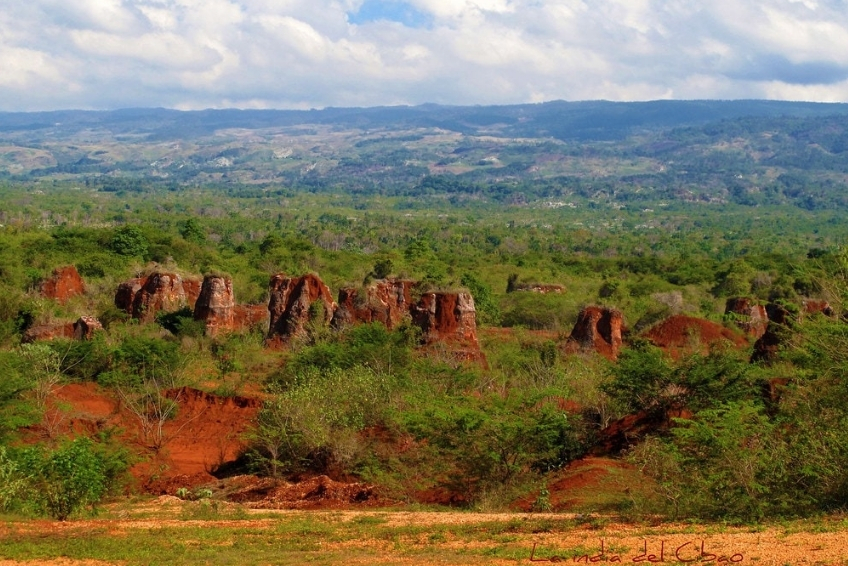
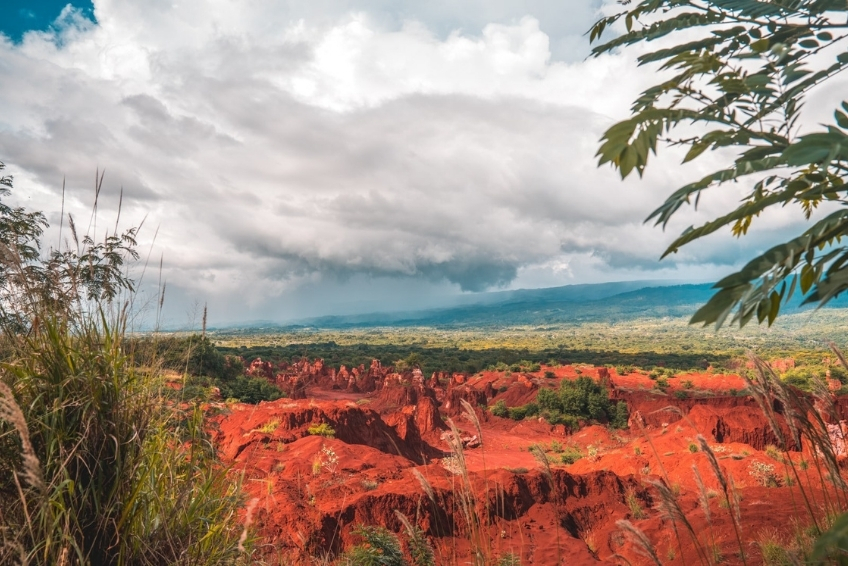
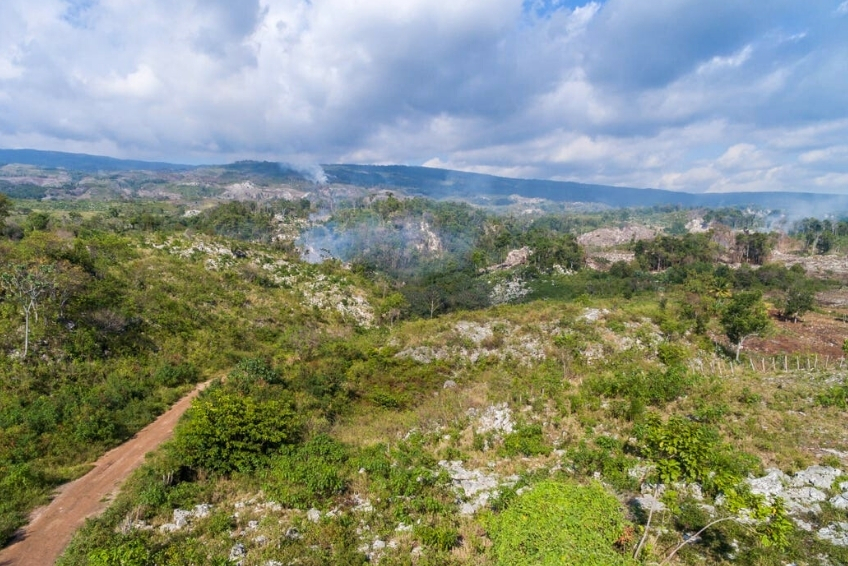
The drive up is as good as the destination. The road passes through Alcoa’s abandoned bauxite mining landscape, vivid red-orange earthworks and columnar formations on both sides. Then broadleaf forest closes in, then pine, and the temperature drops noticeably with every kilometer. By the time you reach the viewpoint, you’ve passed through ecosystems that don’t normally exist within the same hour’s drive.
Check out our complete Hoyo de Pelempito Visitors Guide for everything you need to know about the drive, the viewpoint, wildlife, and how to visit.
Have an adventure to remember with this Hoyo de Pelempito, Bahia de la Aguilas, and other Cabo Rojo hidden gems tour.
click to see more images
Sierra de Bahoruco National Park
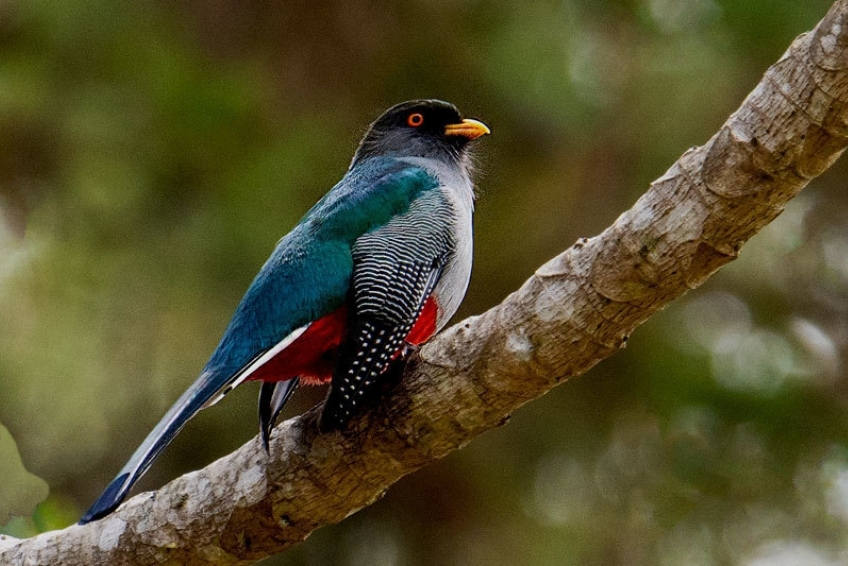
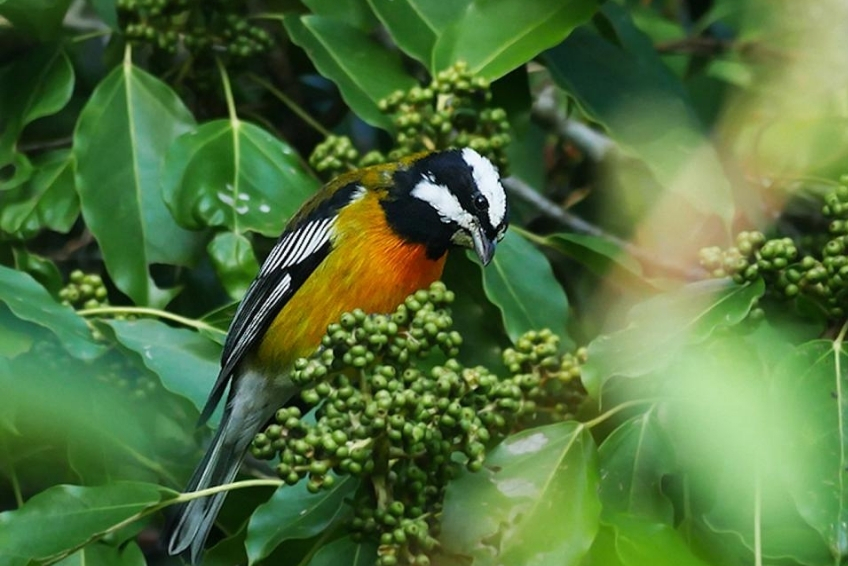
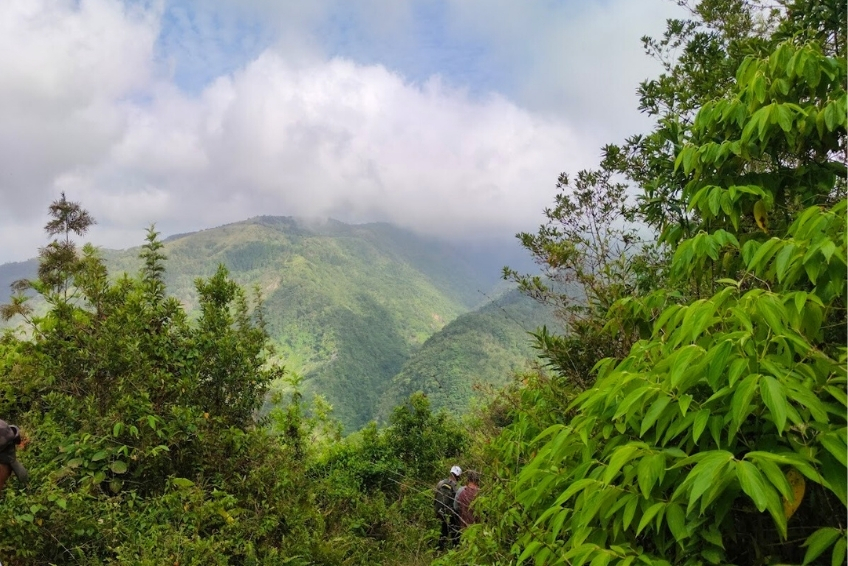
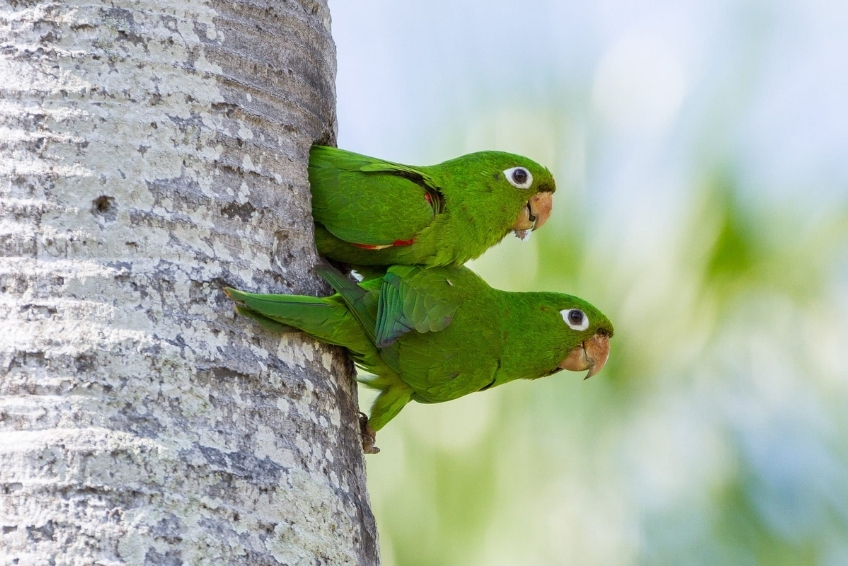
The mountains you can see from the ship rising steeply to the north are in the Sierra de Bahoruco National Park, and they contain one of the most extraordinary concentrations of biodiversity in the Caribbean. The park covers roughly 1,126 square kilometers of terrain that shifts dramatically with altitude. Coastal scrub at sea level gives way to broadleaf forest, then pine forest, then genuine cloud forest at the highest elevations. The park holds 166 orchid species (52% of all orchids found in the Dominican Republic) and 28 of Hispaniola’s 34 endemic bird species, making it one of the premier birding destinations in the entire Caribbean. Serious birders have been making dedicated trips here for decades, specifically for species found nowhere else on Earth like the Hispaniolan Crossbill, the La Selle Thrush, the Hispaniolan Trogon, and the Bay-breasted Cuckoo.
For cruise passengers, the most practical way to experience the park is through Hoyo de Pelempito excursions, which travel deep into the southern slope via the old Alcoa mining road. That alone gives you the four-ecosystem drive and the viewpoint. A full exploration of the Sierra de Bahoruco (the Cachote cloud forest, the northern slope birding areas, multi-day trekking through the range) is the work of two or more days based in Pedernales or Barahona, and well worth planning as a future trip.
Check out our complete Sierra de Bahoruco National Park Visitors Guide for birding routes, hiking trails, wildlife, and how to plan a multi-day visit.
Serious birders will love this Half Day Sierra de Bahoruco Bird Watching Tour or if you want even more time bird watching don’t miss this top rated 3 Day Sierra de Bahoruco Bird Watching Tour.
click to see more images
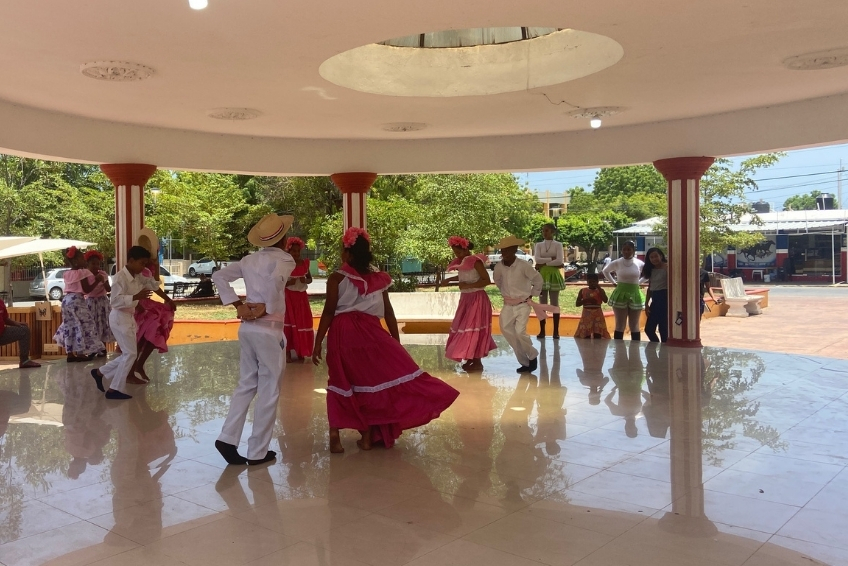
6. Shop for Larimar in Pedernales Town
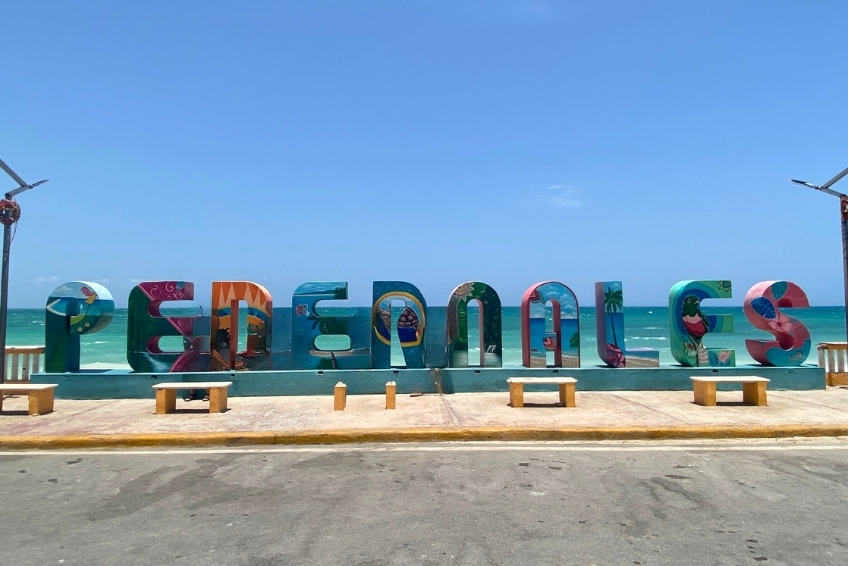
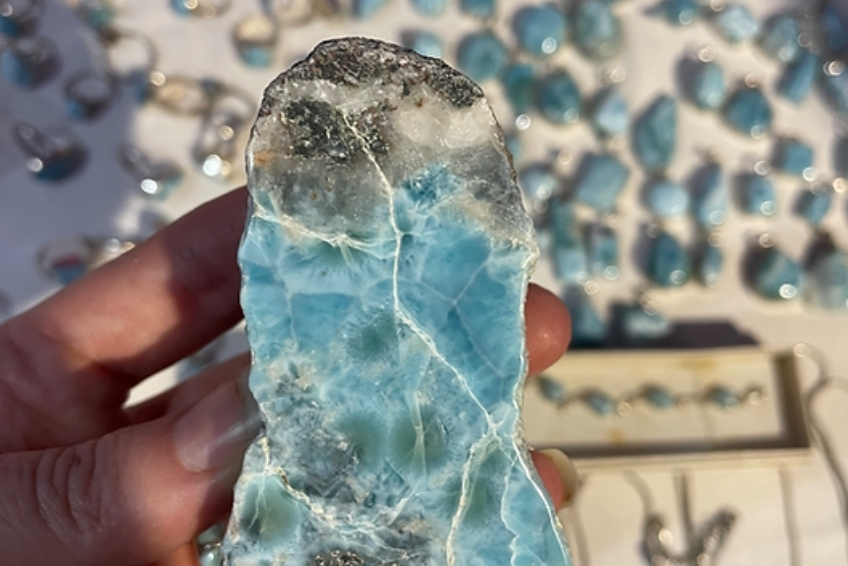
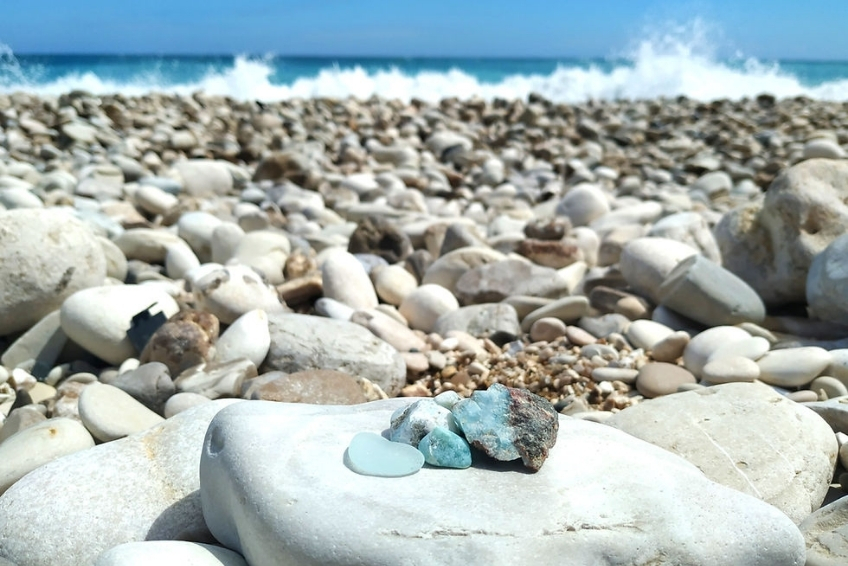
The pale-blue gemstone sitting in every souvenir stall at the port exists nowhere else on Earth. Larimar is a blue variety of pectolite found only in the mountains above Barahona, mined since the 1970s, and genuinely beautiful when you see a high-quality piece. The problem is that the port’s vendors have a well-documented reputation for selling fake stones at significant prices.
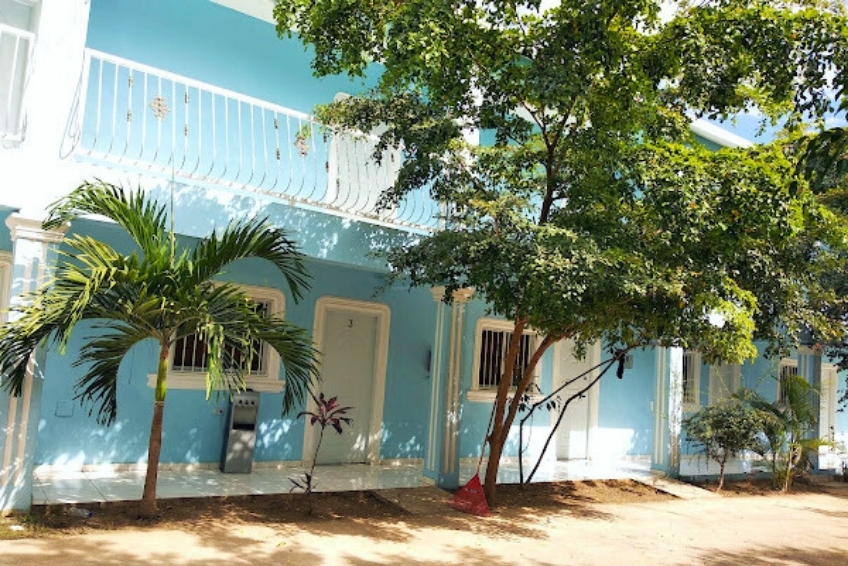
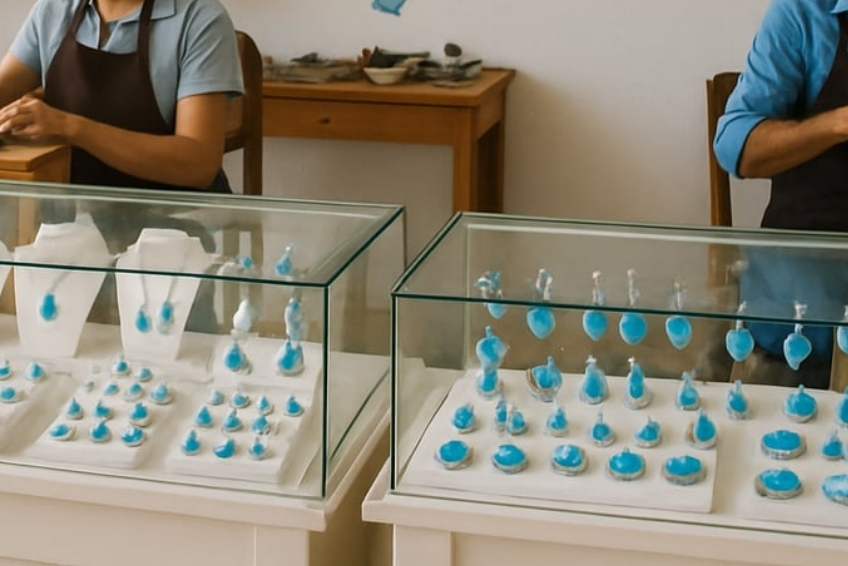
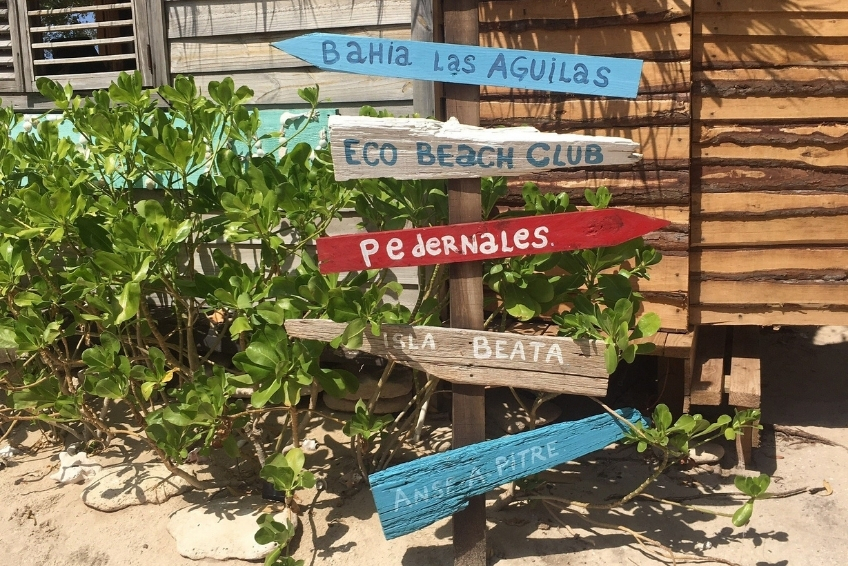
The better approach is heading to Pedernales Town, 20 minutes east on Highway 44, where small artisan workshops sell direct, and you can watch the stone being cut and set. The actual mine is roughly 2.5 hours from the port, too far for a cruise day, but the workshops bring the experience close enough. For any serious purchase, ask to see the stone under UV light. Genuine larimar will not fluoresce.
Check out our complete Pedernales Town Visitors Guide for restaurants, things to do and all kinds of helpful info.


click to see more images
7. ATV and Buggy Tours
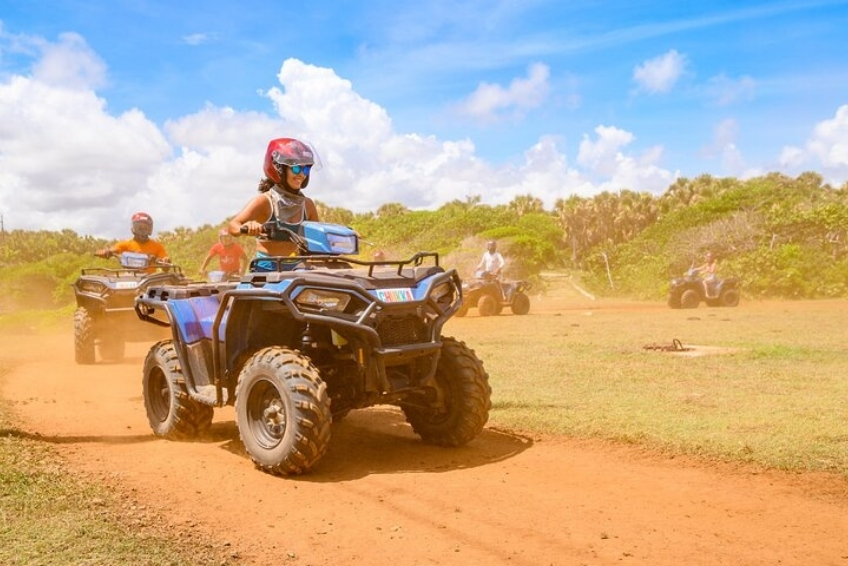
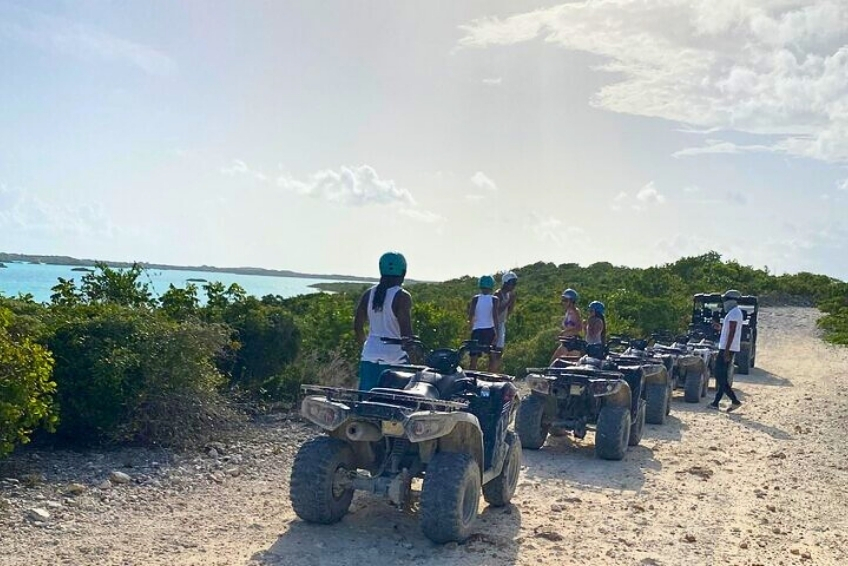
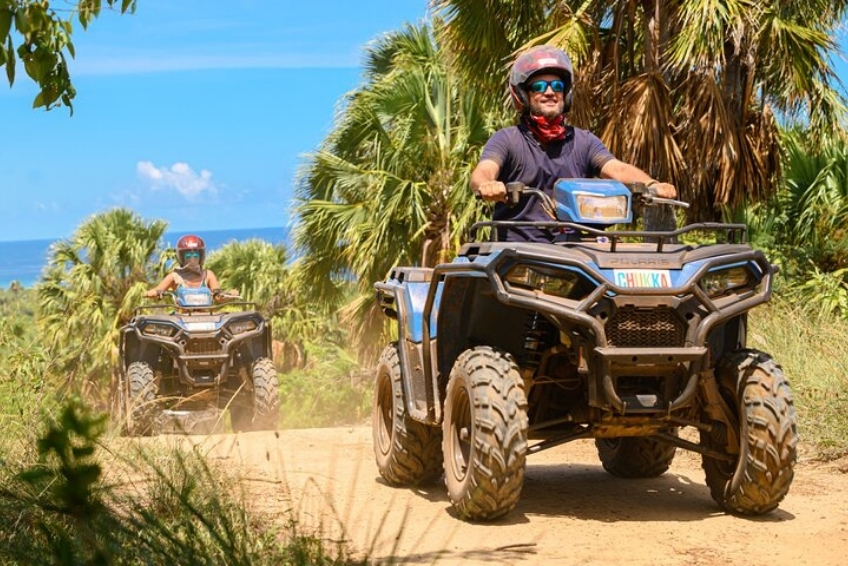
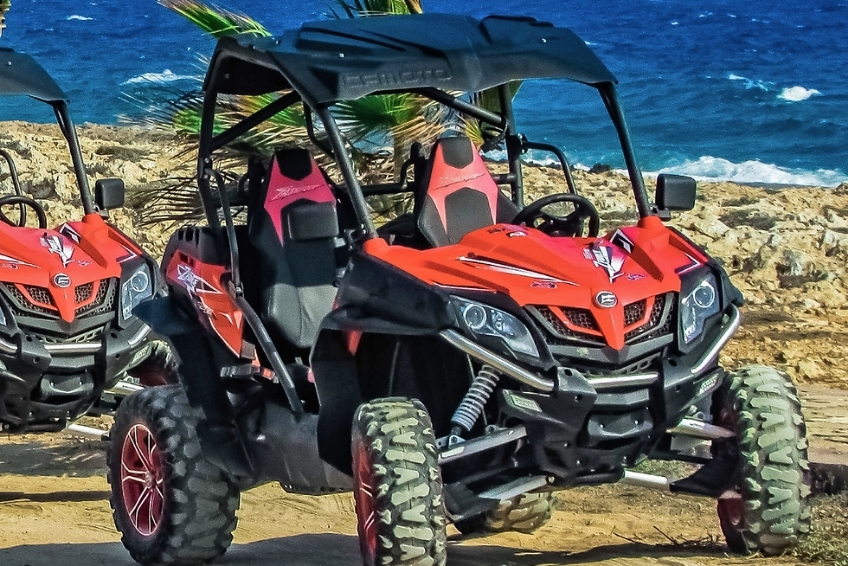
ATV and buggy excursions run through the Las Mercedes abandoned bauxite mine, a landscape that gets described as lunar, Martian, and unlike anything else at a Caribbean cruise port. The vivid red-orange craters and boulder-strewn hills are the result of decades of open-pit mining by Alcoa, which extracted ore here from 1959 until 1983. Riding through the terrain is genuinely distinctive, and the visual payoff is high. Most full excursions combine around 50 minutes of riding with several hours at Baby Beach.
NCL and Holland America both offer ATV and buggy variants starting at $149–$170 per person, with the buggy version using four-person Can-Am Mavericks. Royal Caribbean offers similar options, including a combined buggy-and-beach package.
Key restrictions apply across all operators. Drivers must be 18 or older with a valid license, closed-toe shoes are mandatory, the maximum weight is typically 280 lbs, and NCL caps the ATV version at age 65. Expect to get dusty! Worth noting that the port complex has a free ATV track near the entrance that gives a quick taste of the experience without the cost or commitment.
click to see more images
8. Eco del Mar Beach Club
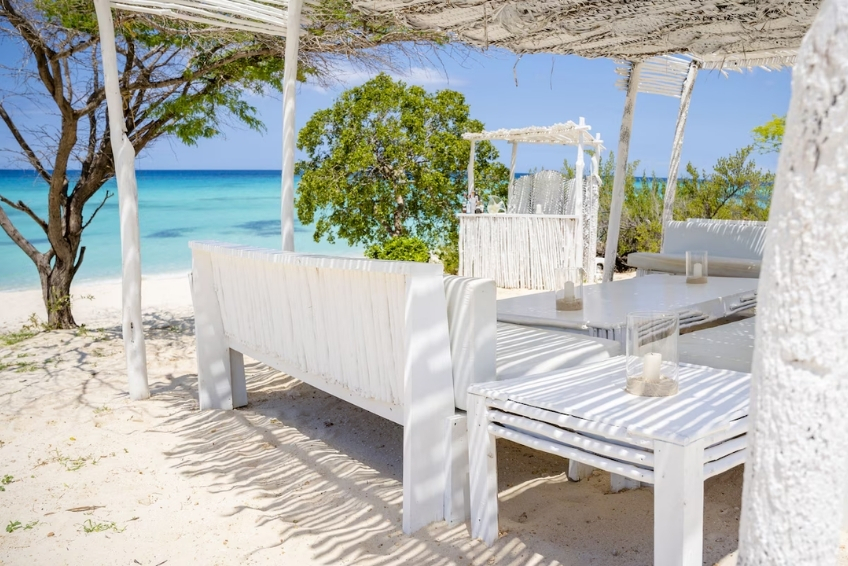
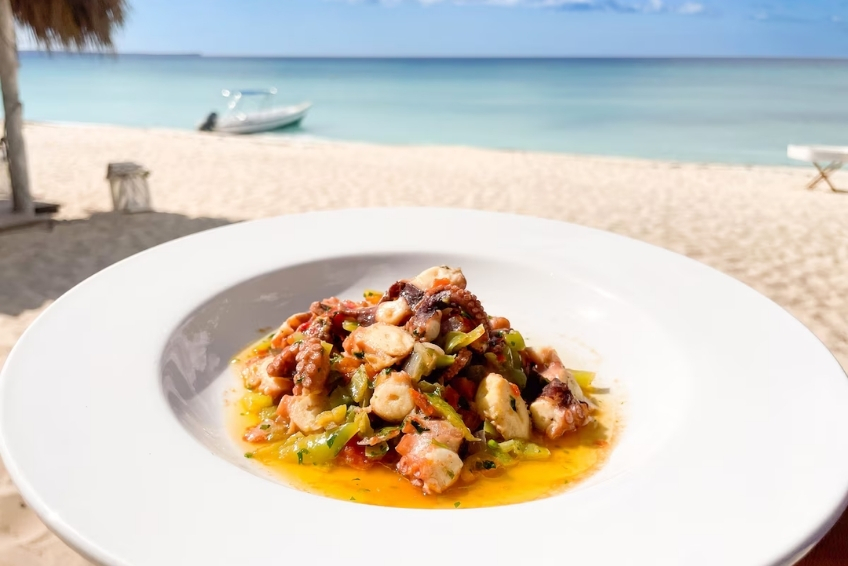
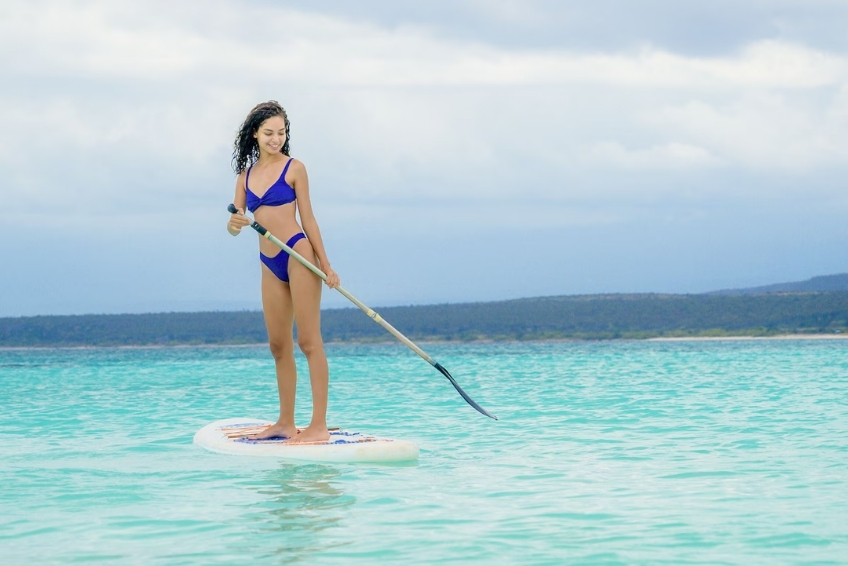
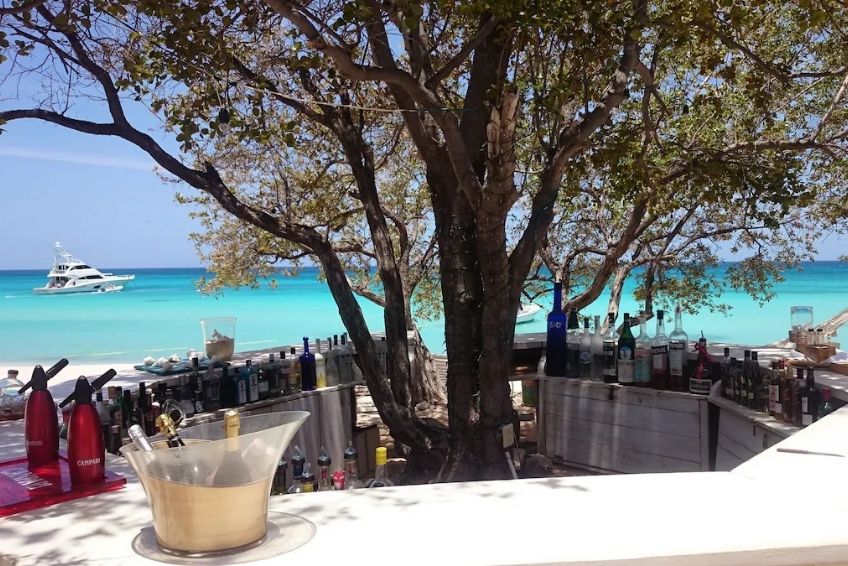
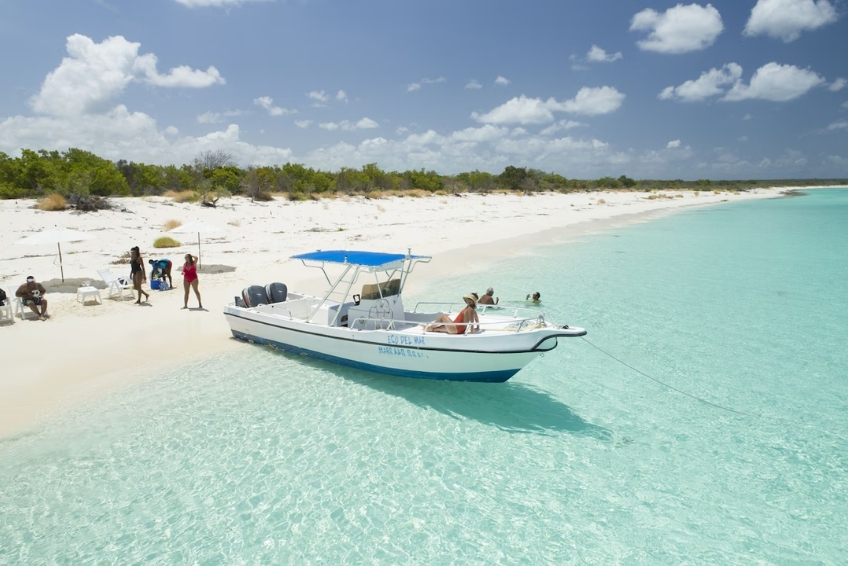
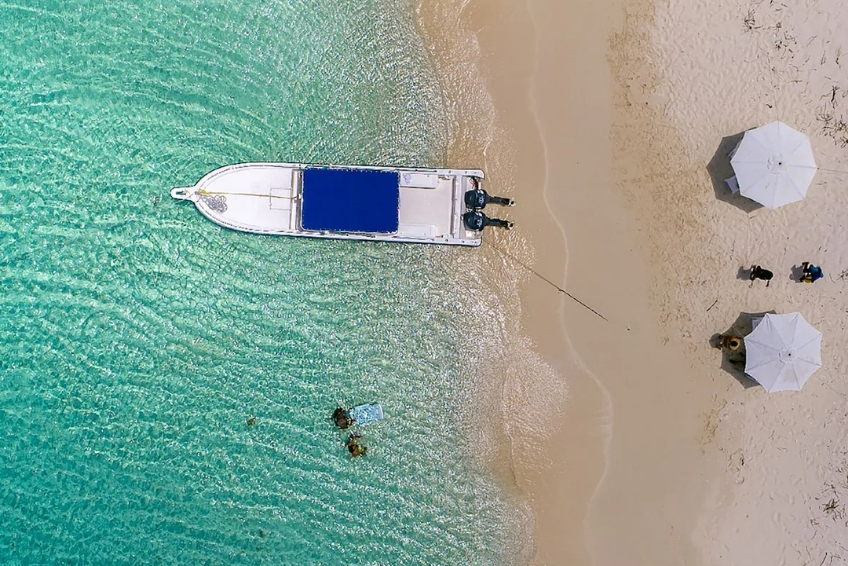
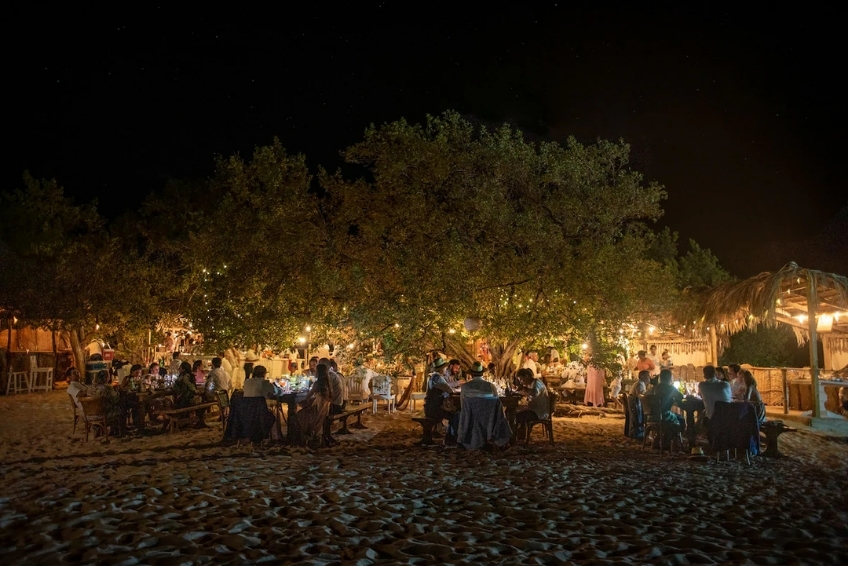
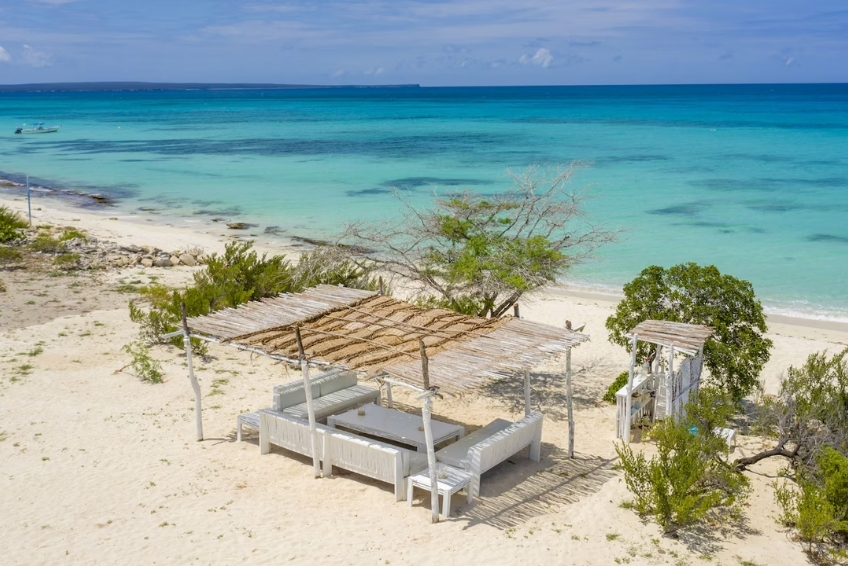
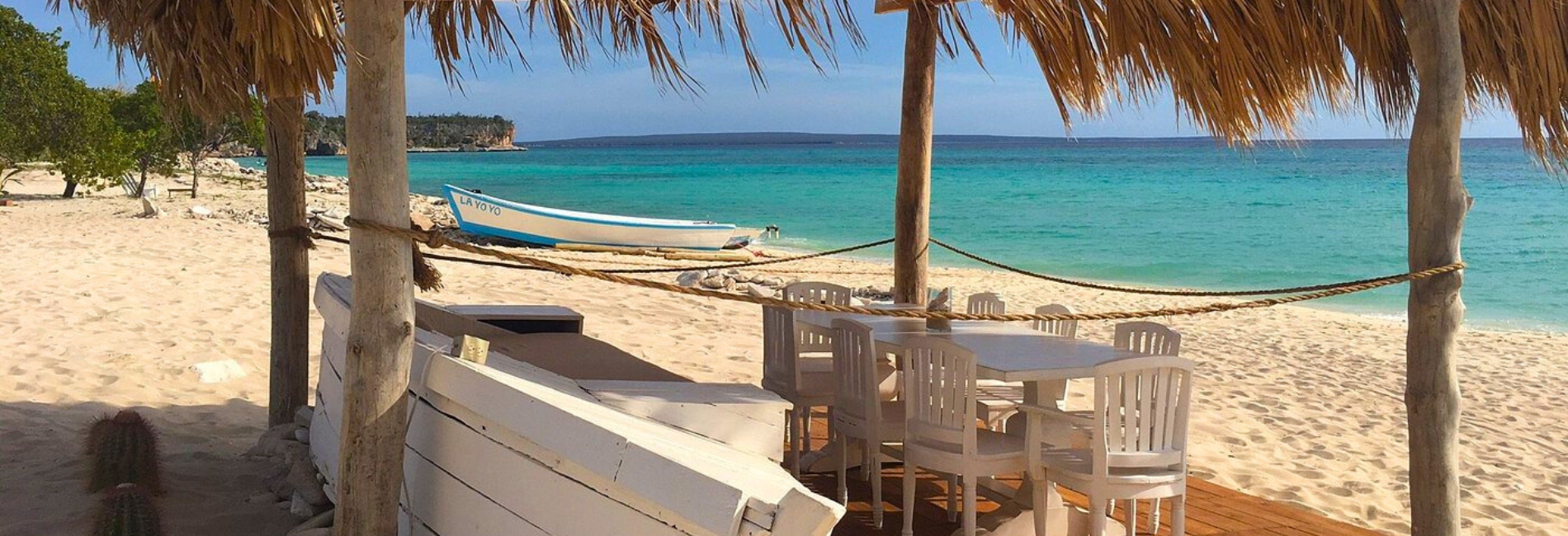
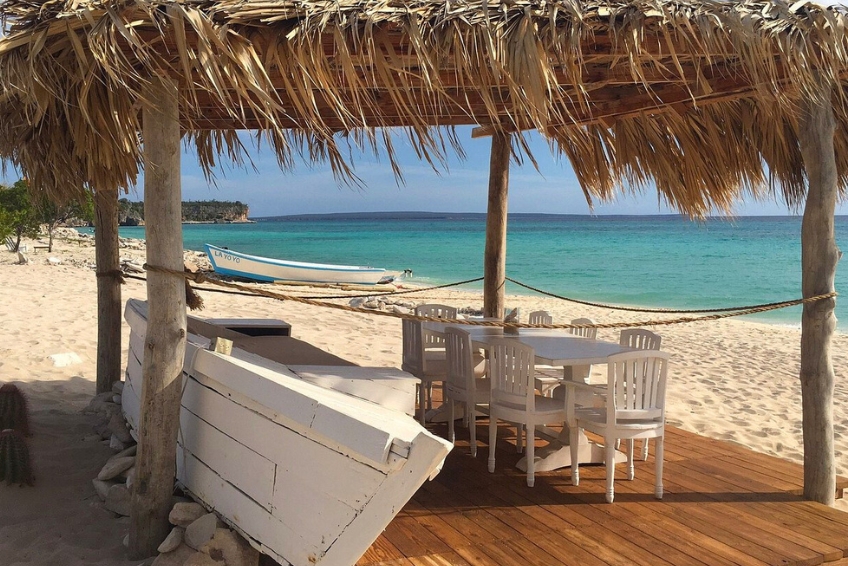
About 25 minutes from the port at Playa de la Cueva, Eco del Mar is a beachfront eco-lodge with 460 meters of pristine shoreline, a bar, a restaurant, and access to kayaks and paddleboards. The setting is genuinely beautiful with clear water and white sand. It’s bookable through NCL ($159.99 pp), Holland America ($139 pp), and Royal Caribbean, with all cruise-line packages including an open bar, reserved beach chairs and umbrellas, and watersports access.
A few things to know before booking, though. Food is not included and must be purchased separately at the restaurant, which has a limited menu and is notorious for being out of things on the menu and having slow service on busy days. There’s no pool. The venue is a small eco-lodge, not a purpose-built beach club, and when multiple cruise excursions arrive at the same time, it can feel crowded for a property of this size. If your priority is a pristine natural beach without the full Bahia de las Aguilas logistics, Eco del Mar is a decent option. If you want a polished, all-inclusive beach club experience with a pool and reliable food service, Baby Beach at $89 per person is the better value.
Where to Eat
You have three eating options for food in the area. Eat in the Cabo Rojo Port itself, go to the village of La Cueva near the Bahia de las Aguilas boat landing, or head to Pedernales Town 20 minutes to the east. The port is the most convenient but the least interesting. La Cueva has several genuinely good local restaurants that are worth stopping at if you’re already heading to the beach. Pedernales is worth the trip on its own if you want real Dominican food at real Dominican prices.


At the Cabo Rojo Cruise Port
Note: All food and drink at Port Cabo Rojo costs extra. Nothing is included with port entry.
Blue Parrot is the main sit-down restaurant, located in the Oasis Paradise zone in the middle of the port alongside the pool area. Dominican and Caribbean dishes are the focus, so expect grilled fish, rice and beans, chicken, and a selection of seafood plates. Main dishes run around $15–$25 per person. On big-ship days, service can slow considerably. Get there early or go late in the day.
The Mine Bar and Grill is the second full-service restaurant, in the Mining Factory zone toward the Baby Beach end of the port. The mining theme carries through the design. Menu and pricing are similar to Blue Parrot. Useful if you’ve walked the full length of the complex and don’t want to trek back.
Snack Baby at Baby Beach offers simpler, faster food, such as grilled snacks, sandwiches, and light bites, rather than a full menu. Food is not included in the $89 Baby Beach entry fee and must be purchased separately. Expect to pay around $8–$15 for a snack or light meal.
The pool bars (Tiki Tiki, Mojito Bar, Margarita Bar in the Oasis Paradise zone; Baby Blues, Baby Sky, Baby Grill at Baby Beach) all charge for drinks. Cocktails run around $8–$12, beers around $4–$6. Bar service on crowded ship days is slow. Bottled beer and simple mixed drinks are the safest order.
In Pedernales Town
Bocanye, Grill & Seafood, on Calle Libertad, is a solid Caribbean seafood spot with a varied menu and good portions. It’s one of the better homestyle restaurants in town and worth a visit, especially if you’re staying more than one night.
Restaurante Jalicar on Calle Libertad is our pick for the best value meal in town. Generous family-style plates of pescado frito, lambi al ajillo, and chicken with rice and beans for around RD$1,000 ($17 USD) for the table. No frills, just excellent home-cooked Dominican seafood at prices that feel like a steal.
El Navio Bar and Seafood sits right on Pedernales Beach with a sustainable-fishing-focused menu of lobster, red snapper, and conch. It’s the best spot in town for a sunset meal with your feet practically in the sand. It can be a little crowded, and it is definitely pricey for Pedernales.
Hotel Pedernales Italia serves homemade Italian-Dominican dinners to guests that are genuinely excellent. If you’re staying there, don’t miss the evening meal.
Meals across the region typically cost RD$300-1,000 ($5-17 USD). Cash only at virtually every establishment. Check out our Pedernales Visitors Guide for a full dining rundown.
At La Cueva
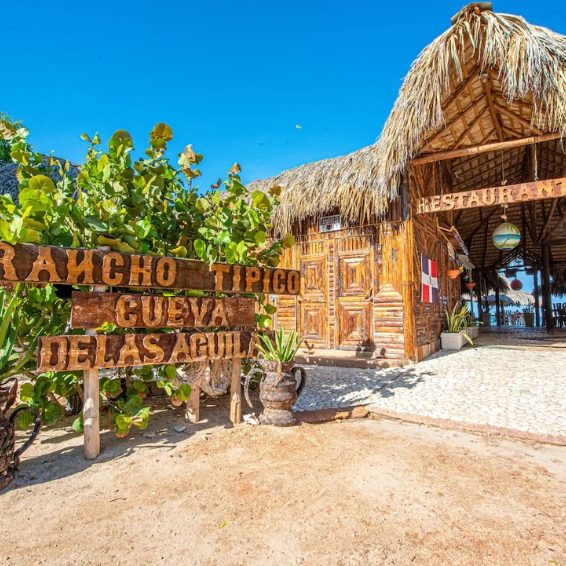
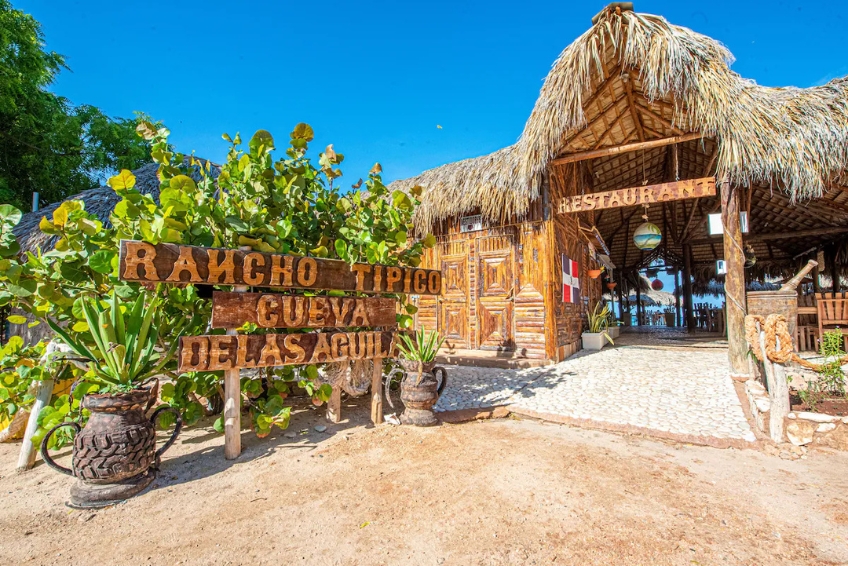
Rancho Tipico Cueva de las Aguilas is probably the top-rated restaurant in the province, and it earns the ranking. This beachside spot at La Cueva serves the legendary Bahiafongo, a mofongo stuffed with mixed seafood that we’d drive the coastal highway again just to eat. They also do lobster mofongo, seafood paella, and fried fish straight off the boats. Mofongos run $7-13 USD. The restaurant also arranges boat tours to Bahia de las Aguilas and offers tent accommodations for around $35/night (no air conditioning).
Restaurante De Bahia Dona Charo is run by Dona Charo and her son Antolin, and the food is outstanding. Three family style plates of pescado frito and lambi cost about $17 USD for the table. The kind of meal you’ll talk about for months.
Restaurante Casa Chiquita offers Italian-owned, budget-friendly seafood with meals running $5-9 USD. The coconut rice here is some of the best we’ve ever had, and we don’t say that lightly.


What to Order
Traditional dishes worth seeking out
- Mofongo (mashed plantains with garlic, often stuffed with seafood)
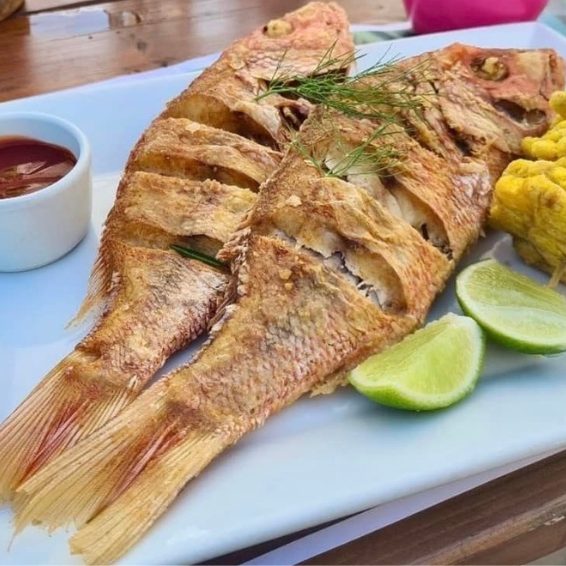
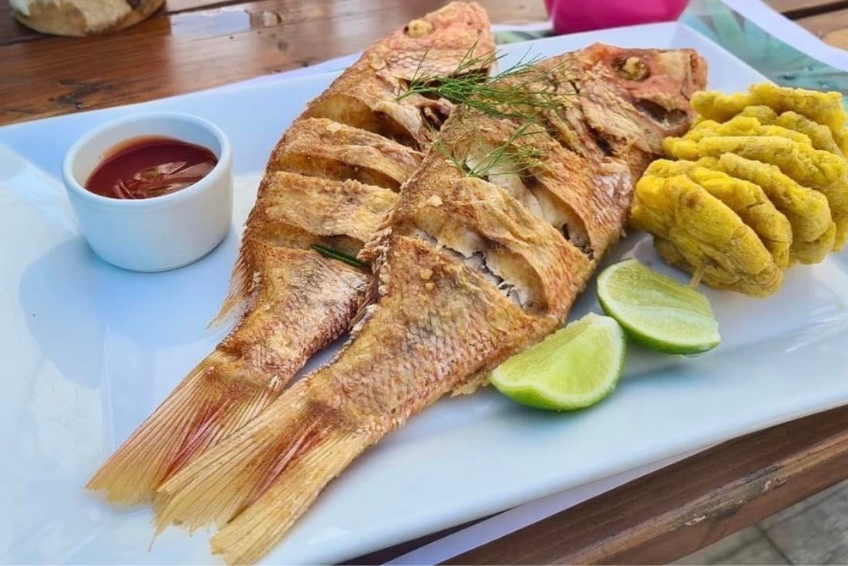
- Pescado frito (whole fried fish with moro rice and tostones)
- Lambi (conch, prepared various ways)
- Cangrejo con tostones (crab with fried plantains).
For something quick and easy, many street vendors sell empanadas and yaniqueques (fried dough) for pocket change.
Meals across the region typically cost RD$300-1,000 ($5-17 USD). Cash only at virtually every establishment. Check out our Dominican Republic Food Guide for more on what to eat and how to order.
Practical Tips for Visiting
A few things about Cabo Rojo will catch you off guard if you arrive unprepared. This region is more remote than most Caribbean cruise stops, cash is essential, and the heat is serious. Here’s what you need to know before you step off the ship.
Money
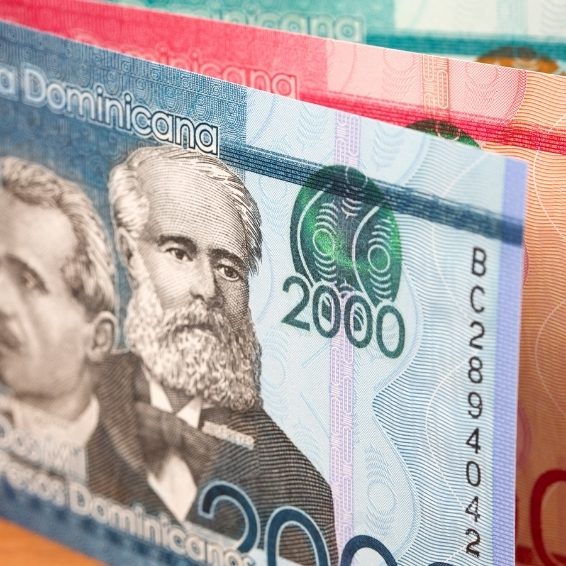
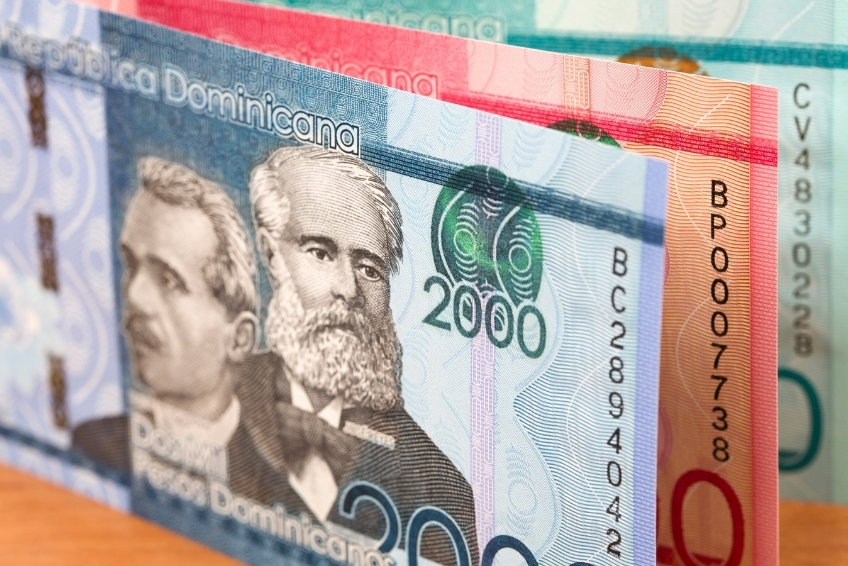
Bring USD in small bills: $1, $5, $10, $20. The port ATM is frequently out of service or out of cash. Do not count on it as your source of funds. There is a currency exchange booth at the terminal with fair rates. Dominican pesos in small denominations are useful for park entrance fees, roadside comedores, and anything in Pedernales town. Credit cards work at some port vendors. Do not count on them anywhere else.


Sun and Heat
The southwest DR is hotter and drier than the north coast, with average daily highs of 85–90°F. The arid climate means the sun is more intense than the temperature suggests, and both Baby Beach and Bahia de las Aguilas have minimal to zero natural shade. Reef-safe sunscreen is required in national park waters. Standard sunscreen is harmful to the reef systems in Jaragua National Park and is likely to be regulated or banned for use there. Bring SPF 50+, a wide-brimmed hat, UV sunglasses, and significantly more water than feels necessary.


Connectivity
Free Wi-Fi at the terminal works well. Outside the port, cell coverage becomes patchy quickly and disappears entirely in the mountains. Download offline maps (Google Maps or Maps.me) before you disembark. Don’t plan to navigate by phone signal once you’re in the field.


Language
English is limited outside the port. Organized tour guides speak English; in Pedernales town and at the natural sites, Spanish dominates, with some Haitian Creole near the border. A few basic Spanish phrases go a long way here, and a translation app downloaded for offline use is worth having.

Safety
The port area is secure, and Pedernales is safe for visitors during daylight hours. Exercise caution with jewelry purchases at port vendors, though. We’ve heard of fake larimar and fake diamonds sold at significant prices, so we’d steer you away entirely. For any gemstone purchase, use an artisan workshop in Pedernales Town rather than port shops.
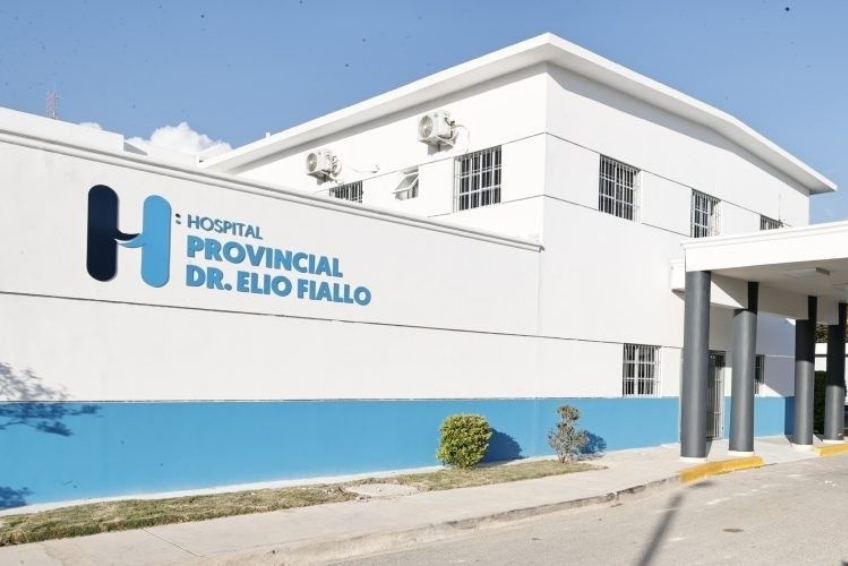
If you need medical attention, the nearest facility is Hospital Provincial Dr. Elio Fiallo in Pedernales town, about 20 minutes from the port on Avenida Duarte. The hospital was recently renovated and re-equipped as part of the government’s tourism development program and now has an emergency room, surgical unit, lab, X-ray, ultrasound, and pharmacy.
What to Pack
What you need depends entirely on how you’re spending the day. A port pool day requires almost nothing beyond sunscreen and a hat, but if you leave the port, there are a number of things you may need. Please check out our individual destination guides for specific packing lists for where you’re going. Here are some basics to get you started.
- Small USD bills (Port, taxis, and most vendors prefer small USD. $1s, $5s, and $10s are most useful. The on-site ATM is unreliable.)
- Reef-safe/biodegradable sunscreen SPF 50+ (Essential everywhere, but especially at Bahia de las Aguilas, where standard sunscreen is harmful to the reef and is banned in the water.)
- Wide-brimmed hat and polarized sunglasses (Needed at the port, the beach, and in the mountains. The southwest DR sun is serious all day.)
- Water shoes (For Bahia de las Aguilas specifically, the boat embarkation at La Cueva is rocky, and so is the approach to the shoreline.)
- At least 2 liters of water per person (Critical for Bahia de las Aguilas and Hoyo de Pelempito. There is nothing for sale at either site.)
- Snacks (For beach and mountain excursions only. There are no vendors at either location.)
- Waterproof bag or dry bag for phone and camera (For Bahia de las Aguilas: the open-water boat ride to the beach will splash you. Protect electronics before you board.)
- A warm layer (For Hoyo de Pelempito only. The viewpoint sits at over 1,200 meters and can be 10°C cooler than the coast, with strong wind on top of that.)
- Binoculars (For Sierra de Bahoruco and the drive up to Hoyo de Pelempito. The birding on the mountain road is exceptional and wasted without magnification.)
- Offline maps downloaded before disembarking (For any independent excursion. Cell coverage disappears quickly outside the port gates.)
- Your guide’s WhatsApp number saved (For any independently booked excursion. Confirm their contact before you step off the gangway.)
Best Time to Visit Cabo Rojo
Cabo Rojo sits in one of the driest corners of the Caribbean. Annual rainfall averages around 470–580mm, temperatures run from 81°F in January to 86°F at the August peak, and the landscape of cacti, scrubland, and limestone cliffs looks more like the Sonoran Desert than a tropical island. The big variable isn’t temperature, which barely moves, but rain, humidity, and cruise ship availability.
Dry Season (December through April)
This is when you want to be here. February is the driest month, averaging just 12mm of rain. Skies are reliably clear, temperatures sit comfortably in the low to mid 80s°F, and January through March sees the best conditions across every attraction in the region. Flamingos peak at Laguna de Oviedo from November through March. Road conditions are at their best for the Hoyo de Pelempito drive. Sea visibility is optimal for snorkeling and boat trips to Bahia de las Aguilas. The cruise season runs primarily December through April, which means most ship calls at Cabo Rojo fall within this window.
Shoulder Season (May–June and November)
A good compromise. Rain risk increases slightly, mostly as short afternoon showers that pass quickly, and visitor numbers drop. The landscape is greener, and the vegetation transitions on the drive up to Pelempito are more dramatic. If your cruise calls in these months, conditions are still perfectly good. Lower your flamingo expectations at Laguna de Oviedo.
Rainy Season (July through October)
The most demanding window. Daytime temperatures push into the 90s°, humidity rises, and August through October sits in the heart of hurricane season. The southwest DR receives far less rain than the rest of the country, but the heat at exposed sites like Bahia de las Aguilas becomes punishing. The road to Hoyo de Pelempito can deteriorate significantly after heavy rain, sometimes becoming impassable. Hurricane season officially runs June 1 through November 30, peaking in August through October. If your ship calls during this window, monitor forecasts and carry travel insurance. Bahia de las Aguilas is still worth the trip on a clear day, but expect more heat and fewer cruise options.
Wildlife and Seasonal Calendar
Flamingos at Laguna de Oviedo peak from November through March, with some present year-round. Sea turtle nesting at Bahia de las Aguilas runs from March through July, with night-watching tours typically available from April through June. Migratory birds are present from December through March. Snorkeling and boat visibility are at their best from December through April. The southwest coast faces the Caribbean Sea rather than the Atlantic, which means it dodges the sargassum seaweed problem that affects Punta Cana and the north coast from spring through summer.
Cabo Rojo Cruise Port FAQ
Frequently Asked Questions
Does the ship dock at a pier or do passengers tender ashore?
The ship docks directly at the pier. There is no tendering. You walk off the gangway, take a free tuk-tuk to the main entrance, and you’re in the port. This means you can come and go freely throughout the day, which is worth knowing if you’re heading out on an excursion and want to return to the ship for any reason before heading back out.
Is Cabo Rojo a good port for families?
Yes, with some caveats. The port complex has pools, carnival rides, the lazy river, and a swimming area that all work well for kids. The merry-go-round has no harnesses, so stand alongside young children. The mechanical bull is there and kids will want to try it. Baby Beach is a calm, capacity-controlled option for families who want a proper beach without logistics. The national park excursions are generally too long and too remote for young children, though Laguna de Oviedo can work with older kids.
Do I need to book excursions in advance?
For Bahia de las Aguilas, yes. It is the most popular excursion at this port and cruise line versions sell out early. If you’re booking independently through Cocotours or Larimar EcoTour, book at least several days ahead during December through April. Other excursions have more availability but pre-booking is still recommended, especially on days when multiple ships are in port.
Can I leave the port on my own without a tour?
Yes. The port exit is clearly marked near the Old Cape Mine zone, and taxis wait outside. You can negotiate a round trip to Pedernales town, to La Cueva for the Bahia de las Aguilas boat landing, or anywhere else in the area. If you do this, agree on a return pickup time before your driver leaves and have a phone number to reach them. The area outside the port has limited transportation options and no public transit.
Is there an ATM at the port?
There is an ATM on-site but it is frequently unreliable. Do not count on it. Bring USD in small bills ($1, $5, $10, $20) before disembarking. Dominican pesos are useful for park entrance fees and restaurants in Pedernales and La Cueva, but USD is widely accepted throughout the port and on most excursions.
Is there Wi-Fi at the port?
Yes, free Wi-Fi is available at the port and works reasonably well. Outside the port gates, cell coverage becomes patchy quickly and disappears entirely in the mountains. Download offline maps before you disembark if you’re heading out independently.
What currency should I bring?
Small USD bills work everywhere in the port complex and on most excursions. For restaurants in Pedernales town and La Cueva, Dominican pesos are preferred and cash is expected at virtually every establishment. The exchange rate can go either way at the port, so arriving with a mix of small USD and some pesos is the most practical approach.
Is it safe to go outside the port on your own?
The area around the port is rural and remote but not unsafe. Pedernales town and La Cueva are both straightforward. The roads outside the port have very limited facilities, so the main risk is logistical rather than security: if something goes wrong with your transport, you’re a long way from help. Book with established operators, keep your guide’s contact details saved, and don’t cut your return time close. For solo travelers, sticking to established tour operators is the more sensible approach.
What cruise lines call at Cabo Rojo?
Norwegian Cruise Line, Royal Caribbean, Holland America, MSC, Costa, and AIDA have all scheduled calls. The lineup continues to grow as the port matures. Check your cruise line’s itinerary page for the most current schedule.
Is the port still under construction?
No, Phase 2 is complete, and the port is fully operational. Ongoing resort and infrastructure development is visible in the surrounding area, including the new international airport under construction nearby. The port itself is open and running, but it’s a destination still finding its footing rather than a fully finished product.
What should I do if my ship calls at Cabo Rojo and I'm not feeling adventurous?
Stay at the port. The free pools, lazy river, swimming area, carnival attractions, and live entertainment are all perfectly reasonable for a low-key day. Get off the ship early to secure pool chairs. Bring sunscreen and a hat, because the shade situation is limited. If you want a beach upgrade, Baby Beach at $89 per person is a short walk away. You don’t have to go anywhere ambitious to have a decent day.